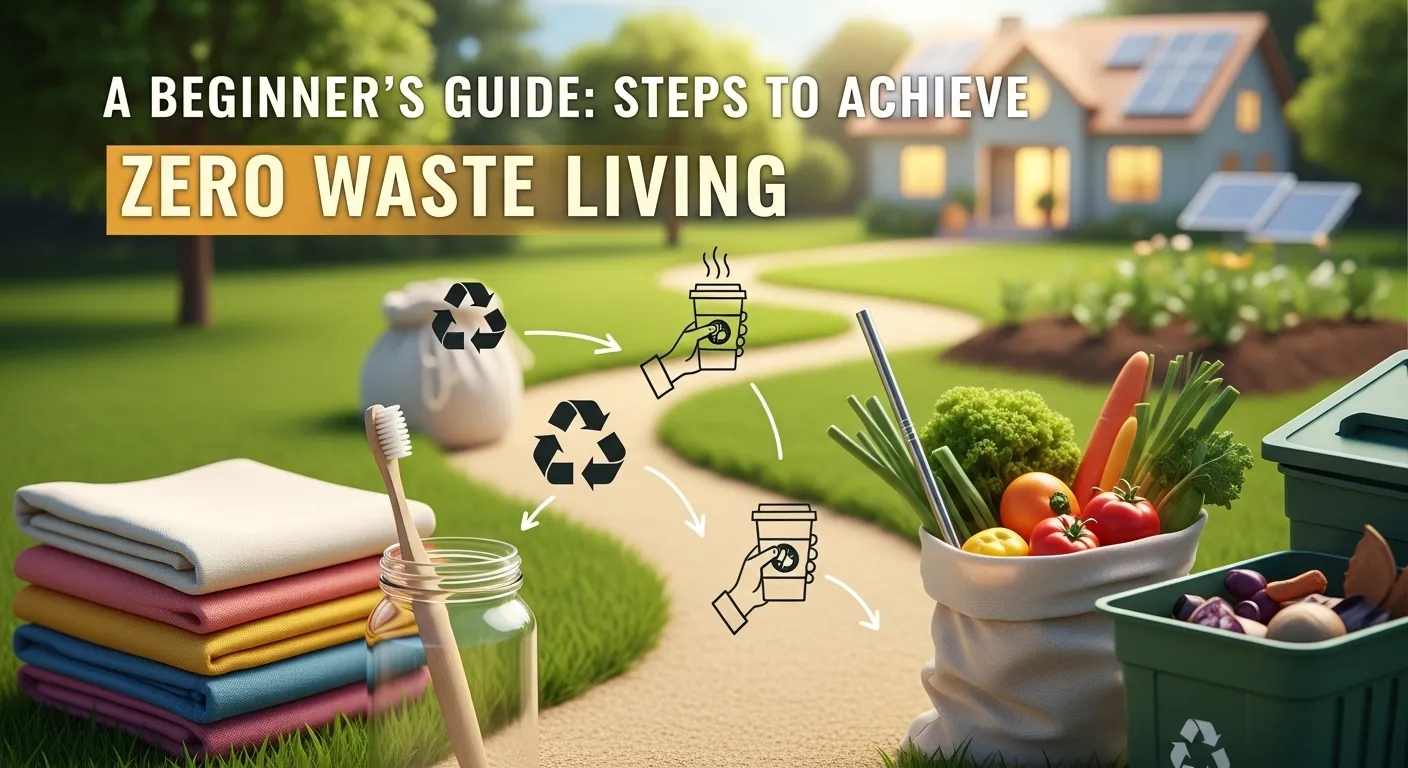
Embarking on a journey towards a more sustainable lifestyle can feel both inspiring and overwhelming. You see images of people fitting a year's worth of trash into a single mason jar and wonder, "Could I ever do that?" The good news is that zero waste living isn't about achieving immediate perfection. It's a gradual process, a conscious shift in mindset and habits aimed at drastically reducing what you send to the landfill. It’s about making intentional choices that honor our planet's finite resources. This journey is accessible to everyone, regardless of where you live or what your budget is. Embarking on this path can feel daunting, but this guide will provide clear, actionable steps to achieve zero waste living, transforming a seemingly impossible goal into a series of manageable actions. A Beginner's Guide: Steps to Achieve Zero Waste Living Understanding the Core Philosophy of Zero Waste Before diving into the practical steps, it's crucial to understand what zero waste living truly means—and what it doesn't. At its heart, zero waste is a philosophy and a design principle aimed at preventing waste from being created in the first place. It challenges the linear "take-make-dispose" model of consumption that has become the norm in modern society. Instead, it promotes a circular system where resources are respected, reused, and returned safely to the environment, much like a natural ecosystem where nothing is wasted. The term "zero waste" can be intimidating. It conjures images of absolute purity, which is an unrealistic standard for most people living in a consumer-driven world. It's vital to reframe this goal. Think of it as a direction, not a destination. A more helpful mantra, popularized by zero waste chef Anne-Marie Bonneau (The Zero-Waste Chef), is: "We don't need a handful of people doing zero waste perfectly. We need millions of people doing it imperfectly." This perspective removes the pressure of perfection and empowers you to start making small, impactful changes today. The journey is about conscious consumption, reducing your environmental footprint one decision at a time, and celebrating progress along the way. Ultimately, adopting a zero waste lifestyle is about shifting your perspective from being a passive consumer to an active, conscious participant in the product lifecycle. It means asking critical questions before you buy: Do I really need this? Where did it come from? What will happen to it when I'm done with it? This mindful approach naturally leads to less clutter, more savings, and a deeper connection to the items you own and the environment you inhabit. It's a powerful way to vote with your wallet and signal to corporations that there is a growing demand for sustainable, thoughtfully designed products. The 5 R's: Your Foundational Framework The zero waste movement is elegantly summarized by a hierarchy of principles known as the "5 R's." This framework, popularized by Bea Johnson in her book Zero Waste Home, provides a clear order of operations for minimizing your waste. Approaching decisions with this hierarchy in mind is one of the most fundamental steps to achieve zero waste living successfully. Instead of jumping straight to recycling, you start at the top with the most effective action. The 5 R's are: Refuse what you do not need. Reduce what you do need. Reuse what you consume. Recycle what you cannot refuse, reduce, or reuse. Rot (compost) the rest. By following these principles in order, you systematically tackle waste at its source. Refusing and reducing are the most powerful actions because they prevent waste from ever entering your home. Reusing extends the life of items, saving resources and money. Recycling and composting are last resorts for items that have already been acquired, serving as a way to responsibly manage what little waste is left. Refuse: The Most Powerful Step The first and most effective principle in the zero waste hierarchy is to refuse. This is your front line of defense against waste. It means learning to politely say "no" to things you don't need, particularly single-use disposables and freebies that are designed to be thrown away after a short time. This simple act of refusal sends a powerful market signal and prevents clutter and waste from accumulating in your life before it even starts. Applying this principle can be as simple as saying "No, thank you" to a plastic straw at a restaurant, refusing a plastic bag for a single item you can easily carry, or declining a promotional pen at a conference. It extends to junk mail (you can opt-out of most of it), flyers, and complimentary items that provide little value. Mastering the art of refusal requires a bit of forethought and practice, but it quickly becomes a powerful and empowering habit that significantly reduces your trash output. Reduce: Conscious and Mindful Consumption After refusing what you don't need, the next step is to reduce what you do need. This principle is about mindful consumption and questioning your purchasing habits. It involves taking stock of what you truly require for a happy and functional life versus what you are conditioned to want by advertising and societal pressures. Reducing consumption is not about deprivation; it's about intentionality and appreciating a "less is more" mindset. To put this into practice, start by evaluating your purchasing patterns. Before buying something new, ask yourself if you can borrow it, rent it, or simply live without it. This applies to everything from clothing and electronics to kitchen gadgets and home decor. When you do need to purchase something, opt for quality over quantity. A well-made, durable item may have a higher upfront cost but will last longer, ultimately saving you money and preventing the waste associated with replacing cheap, disposable alternatives. Reuse: Giving Items a Second (or Third, or Fourth) Life The principle of reuse is where creativity and resourcefulness truly shine. It’s about shifting away from a "disposable" culture and embracing items that can be used over and over again. This involves both choosing reusable products over single-use ones and finding new purposes for