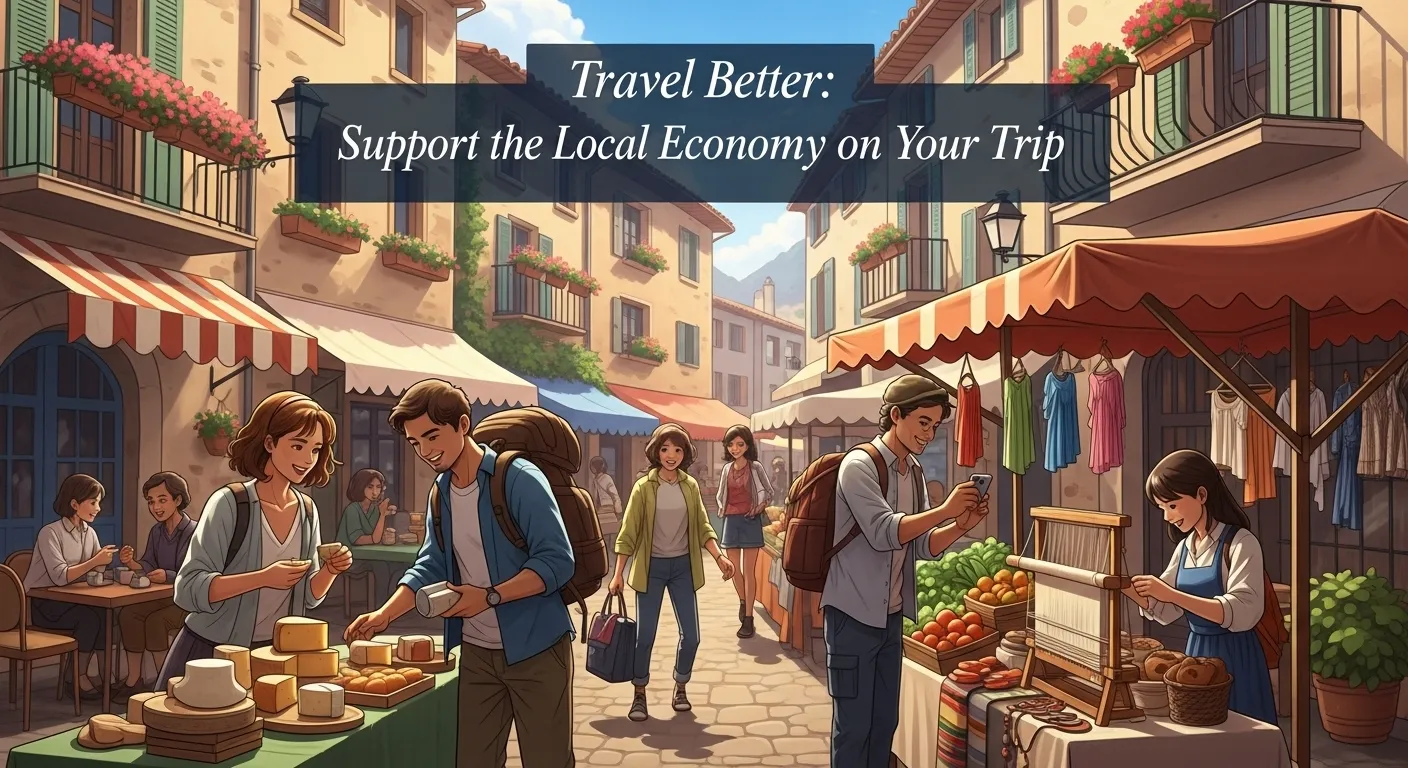
Traveling is one of life's most enriching experiences. It opens our minds, broadens our horizons, and creates memories that last a lifetime. But what if our travels could do more? What if every trip we took could also become a powerful tool for positive change in the places we visit? Too often, the money tourists spend ends up in the pockets of large, multinational corporations, a phenomenon known as "tourism leakage," where revenue fails to benefit the host community. The good news is that with a few conscious choices, you can ensure your travel dollars make a real difference. This guide will show you exactly how to support local economy while traveling, turning your trip into a positive force for the communities you visit. Why Supporting the Local Economy Matters The concept of supporting a local economy while traveling goes far beyond simple altruism; it is the cornerstone of sustainable and responsible tourism. When you travel, every dollar you spend is a vote for the kind of world you want to see. Spending it on a foreign-owned, all-inclusive resort might be convenient, but a significant portion of that money often leaves the country, flowing back to the corporation's headquarters. This economic "leakage" can be substantial, with some studies suggesting that for every $100 spent by a tourist in a developing country, as little as $5 actually stays within the local community. The positive impacts of redirecting that spending are immense. When you choose to support local businesses, you directly contribute to job creation for residents, from the guesthouse owner to the market vendor. This income helps families afford better education, healthcare, and quality of life. Furthermore, it empowers small entrepreneurs, fostering a more resilient and diverse local economy that isn't solely dependent on a few large employers. This creates a virtuous cycle where community prosperity grows, which in turn enhances the very things that make a destination attractive to future travelers. Ultimately, making these conscious choices profoundly enriches your own travel experience. Instead of a sanitized, one-size-fits-all vacation, you get an authentic glimpse into the an authentic glimpse into the culture of your destination. You connect with real people, hear their stories, and understand their way of life. Supporting the local economy isn't about charity; it's about a symbiotic relationship where both the visitor and the host benefit, creating a more meaningful and memorable journey for you and a more sustainable future for them. Conscious Choices: Where You Stay and Eat Your two biggest expenses on any trip are typically accommodation and food. This means your choices in these areas have the most significant potential financial impact on the local community. Shifting your spending here is the single most effective way to ensure your money stays local. Choose Locally-Owned Accommodations The difference between staying at a multinational hotel chain and a locally-owned guesthouse is stark. While a large hotel employs local staff, the profits are often repatriated. In contrast, when you stay at a family-run bed & breakfast, a boutique hotel owned by a local entrepreneur, or a traditional homestay, nearly 100% of the money you spend goes directly into the hands of a local family and, by extension, the local community. This income is then used to buy groceries from the local market, pay for school fees, and support other local services, creating a powerful ripple effect. Finding these accommodations is easier than ever. Many major booking platforms now have filters that allow you to search for smaller, independent properties like guesthouses, apartments, and B&Bs. Look for properties where the owner's name is mentioned, or the description emphasizes its family-run nature. Reading reviews can also provide clues about the ownership and the level of personal interaction you can expect. Choosing these options not only supports the economy but often provides a richer cultural exchange, offering you priceless insights and recommendations from a true local. Dine at Local Restaurants and Markets Food is the heart of any culture, and the best way to experience it is by eating where the locals eat. Avoid the generic, overpriced restaurants clustered around major tourist traps, which are often owned by outside investors. Instead, venture a few streets away to find the small, family-owned eateries—the trattorias in Italy, the warungs in Indonesia, or the taquerías in Mexico. These establishments are the lifeblood of the culinary scene and the local economy. Don't be afraid to embrace street food from clean, busy stalls or explore the vibrant chaos of a local food market. Markets are economic hubs where farmers, fishermen, and producers sell their goods directly. By eating here, you're not just getting the freshest, most authentic food; you are supporting an entire chain of local suppliers. Ask your guesthouse owner or a local guide for recommendations. Phrases like "Where do you go for the best [local dish]?" will almost always lead you to a delicious and economically impactful meal. Spending Choice Typical Beneficiary Local Economic Impact International Hotel Chain Foreign Corporation / Shareholders Low (Only local staff salaries stay) Locally-Owned Guesthouse Local Family / Local Entrepreneur High (Revenue circulates within the community) Mass-Produced Souvenir Distant Factory / Importer Very Low (Often not made in the country) Handmade Local Craft Local Artisan / Craft Cooperative Very High (Directly supports artist and preserves culture) Spending Smartly: Shopping and Souvenirs Bringing home a memento from your travels is a cherished tradition. However, the souvenir market is flooded with mass-produced trinkets that are often made in a different country altogether. Shopping with intention is key to ensuring your souvenir budget supports local artisans and preserves cultural heritage. Buy Directly from Artisans and Crafters The most impactful way to shop is to buy directly from the person who made the item. Seek out local craft markets, artisan cooperatives, or visit workshops and studios. This not only guarantees the authenticity of your purchase but also ensures that the creator receives the full profit from their labor, rather than a tiny fraction of a sale made through a middleman. In many