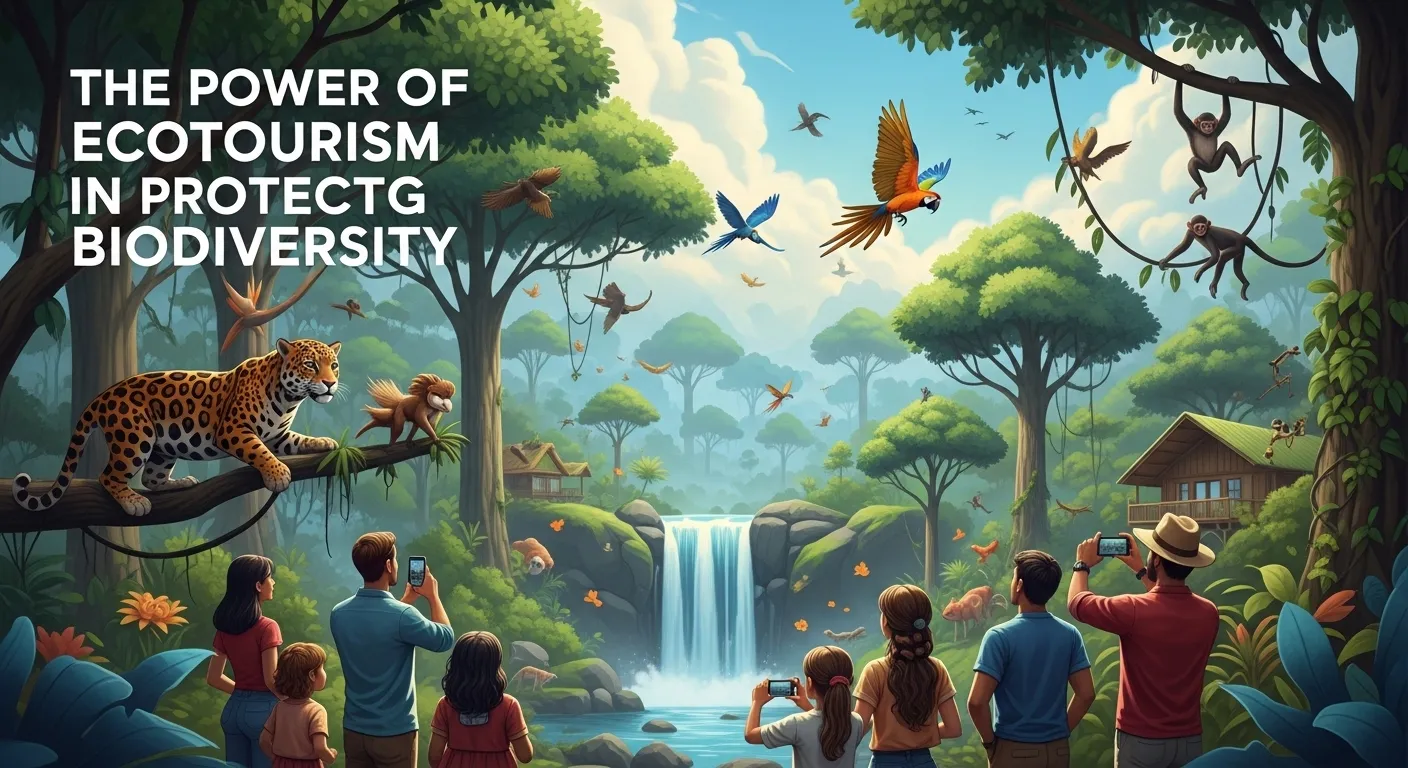
As our world grapples with the accelerating crisis of biodiversity loss, humanity is urgently seeking sustainable solutions that can harmonize economic needs with environmental preservation. For decades, traditional tourism has often been part of the problem, leaving a trail of environmental degradation, cultural disruption, and resource depletion. However, a powerful and transformative alternative has emerged, one that places conservation at its very core: ecotourism. This model of travel is not merely about visiting natural areas; it is a conscientious approach that actively contributes to the protection of ecosystems and the well-being of local populations. This brings us to the core of the discussion: the profound importance of ecotourism for biodiversity conservation. By creating a direct economic link between a healthy environment and prosperous communities, ecotourism provides one of the most compelling arguments for protecting our planet's precious natural heritage. Understanding the Foundational Concepts: Ecotourism and Biodiversity To truly grasp the impact of ecotourism, it is essential to first understand the two pillars upon which it stands: biodiversity and the principles of ecotourism itself. These are not just buzzwords; they are complex concepts that define the very purpose and practice of this sustainable travel model. Misunderstanding these foundations can lead to "greenwashing," where unsustainable practices are masked by clever marketing, ultimately harming the very ecosystems they claim to protect. Biodiversity, or biological diversity, is the rich tapestry of life on Earth. It is not simply about the number of different species, but encompasses the variety at three fundamental levels: genetic diversity (the variety of genes within a species), species diversity (the variety of different species in an ecosystem), and ecosystem diversity (the variety of habitats, biological communities, and ecological processes). This intricate web of life provides critical "ecosystem services" that we often take for granted, such as clean air and water, pollination of crops, soil fertility, and climate regulation. When biodiversity declines, the resilience of these systems weakens, threatening not only wildlife but human survival as well. Ecotourism, as defined by The International Ecotourism Society (TIES), is "responsible travel to natural areas that conserves the environment, sustains the well-being of the local people, and involves interpretation and education." This definition highlights three non-negotiable elements. First, it must actively contribute to conservation, not just minimize harm. Second, it must provide tangible benefits—financial and social—to the local communities who live alongside these natural wonders, making them partners in protection. Third, it must be an educational experience for the traveler, fostering a deeper appreciation for nature and culture. It is a stark contrast to mass tourism, which often prioritizes high volume and profit over environmental and social integrity. The Direct Economic Incentives for Conservation One of the most powerful mechanisms through which ecotourism protects biodiversity is by creating direct and tangible economic incentives. In many parts of the world, natural habitats are threatened by activities like logging, mining, slash-and-burn agriculture, or poaching because these offer immediate, albeit unsustainable, financial returns. Ecotourism offers a compelling and more sustainable alternative by demonstrating that a living, intact ecosystem can generate more long-term value than a depleted one. Assigning a Financial Value to Intact Ecosystems Ecotourism fundamentally changes the economic equation. A living shark, for example, can be worth hundreds of thousands of dollars over its lifetime to the dive tourism industry, whereas a dead shark is worth only a few hundred dollars for its fins one time. Similarly, a primary rainforest with its cacophony of birds, monkeys, and elusive jaguars can attract high-paying tourists for decades, generating consistent revenue for local guides, lodges, and communities. That same forest, if clear-cut for timber or cattle ranching, provides a one-off profit followed by ecological collapse and long-term economic instability. This principle creates a powerful local constituency for conservation. When communities see that their livelihoods are directly tied to the health of the coral reef, the presence of elephants, or the purity of the river, they become the most effective guardians of these resources. The forest is no longer seen as an obstacle to development but as the very engine of it. This shift in perspective is crucial, as top-down conservation efforts often fail without the buy-in and active participation of the people who live on the front lines of conservation. These communities are empowered to resist external pressures from extractive industries because they have a viable, profitable alternative. Directly Funding Parks and Protected Areas Many national parks and protected areas, especially in developing nations, are severely underfunded. They lack the resources for adequate anti-poaching patrols, scientific monitoring, habitat restoration, and basic infrastructure. Ecotourism provides a direct and desperately needed revenue stream to bridge this gap. Park entrance fees, trekking permits (like the high-value permits for gorilla trekking in Rwanda and Uganda), and special activity fees are often funneled directly back into the conservation and management of these protected areas. This funding is critical for on-the-ground protection efforts. It pays the salaries of rangers who risk their lives to combat poachers. It finances the purchase of vehicles and equipment for patrols, the removal of invasive species, and the implementation of fire management strategies. Furthermore, a portion of these funds is often legally mandated to be shared with adjacent communities, further strengthening the link between conservation and local well-being. In this model, every tourist who pays a park fee becomes an active contributor to the preservation of the biodiversity they have come to admire. Empowering Local Communities as Guardians of Nature True, long-term conservation is impossible without the active involvement and empowerment of local communities. For too long, conservation was approached with a "fortress" mentality, where local people were excluded from protected areas, often leading to resentment and conflict. Ecotourism turns this paradigm on its head by positioning communities as the primary stakeholders and beneficiaries of conservation. This social dimension is arguably as important as the ecological one. The Rise of Community-Based Ecotourism Community-Based Ecotourism (CBET) is a model where local communities have substantial control over, and involvement in, the development and management of tourism. They may own and operate