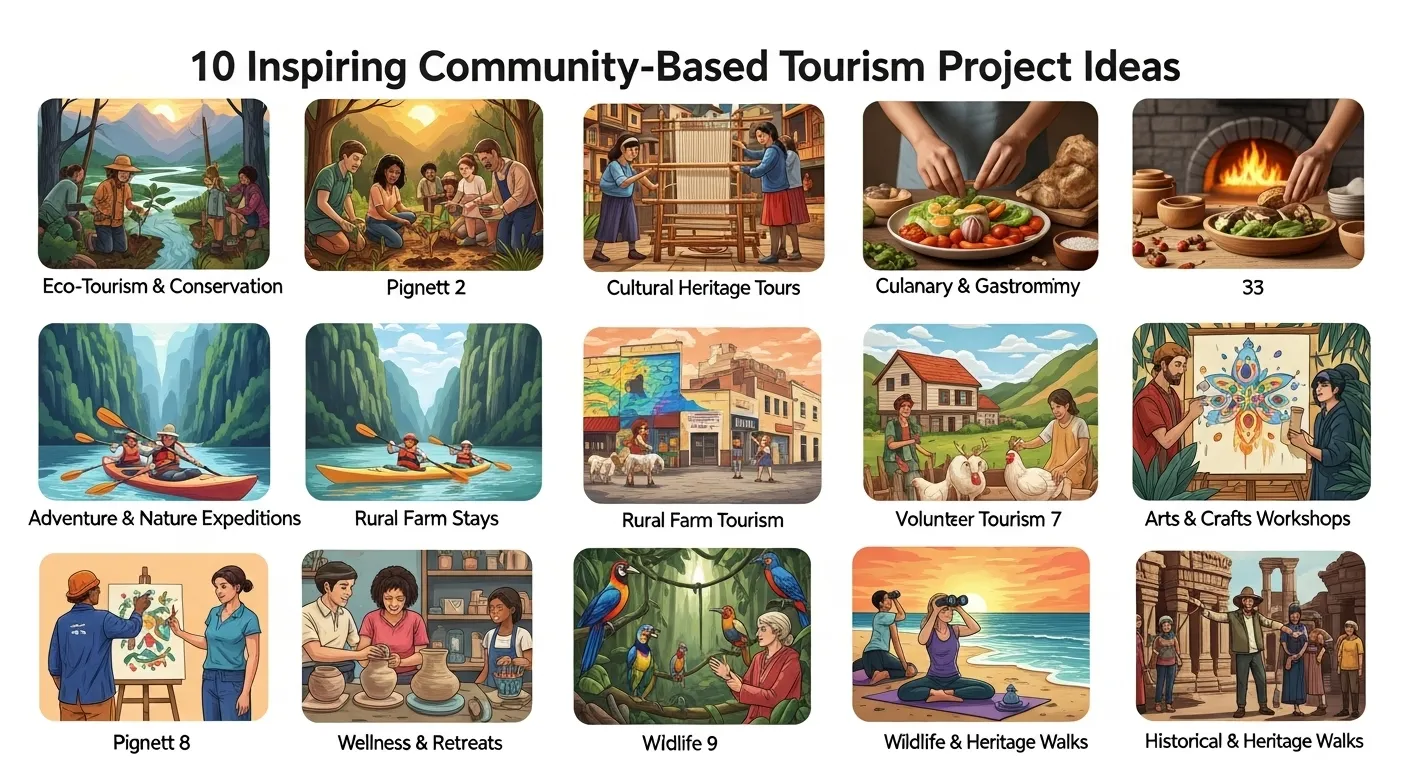
10 Inspiring Community-Based Tourism Project Ideas From rural villages to coastal hamlets and urban districts, travelers worldwide are seeking authentic, locally led experiences that make a positive difference. If you’re exploring community based tourism project ideas, this guide compiles practical, future-proof concepts that balance cultural integrity, environmental stewardship, and fair livelihoods. Below, you’ll find actionable frameworks, real-world inspiration, and marketing strategies aligned with the latest SEO and sustainability trends to help your project thrive for the long term. Understanding Community-Based Tourism TodayCommunity-Based Tourism (CBT) puts local people at the center of planning, ownership, and benefits. While tourism can bring jobs and investment, it can also strain environments and erode traditions if unmanaged. CBT flips the script: communities co-create experiences, set carrying capacities, and retain profits fairly. The result is a tourism model that prioritizes dignity, heritage, and ecosystems. Over the last decade, the rise of responsible travel, regenerative tourism, and slow travel has accelerated demand for CBT. Visitors want to learn from artisans, farmers, fishers, and storytellers, not just observe them. They value transparency, traceable impact, and quality over quantity—and they’re willing to support destinations that prove it. CBT also aligns with global frameworks like the UN Sustainable Development Goals (SDGs), particularly those related to decent work, reduced inequalities, climate action, and life on land and below water. By embedding conservation, cultural safeguarding, and inclusive governance, CBT projects can deliver social, economic, and ecological dividends for decades. Building a Strong Project FoundationGreat ideas rely on solid foundations. Before you launch, invest time in community-led research, capacity building, and fair governance. These pre-launch steps ensure that the experiences you design are resilient, culturally respectful, and financially viable. Start with a participatory planning process. Host open forums where residents share hopes, concerns, and boundaries. Map local assets—natural sites, craft skills, culinary traditions, festivals, language, and stories—and decide collectively what to showcase, what to protect, and where to set limits. Define who benefits and how revenue flows long before you accept your first booking. Design a clear operating model and ethical framework. Establish visitor caps, no-go zones, and protocols for culturally sensitive sites. Invest in guide training, safety standards, and first aid. Create a transparent revenue-sharing mechanism so every contributor understands compensation. Finally, adopt a risk register for environmental hazards, occupational risks, and cultural missteps, with response plans co-owned by the community council. Practical steps to structure your CBT foundation:1) Conduct participatory asset mapping with elders, youth, women’s groups, and artisans. 2) Co-write a cultural protocol: photography rules, sacred site access, dress codes, and language respect.3) Develop a fair pricing model with community revenue shares, guide wages, and fund allocations for education or conservation.4) Build capacity: guest relations, storytelling, digital booking systems, first aid, and waste management.5) Pilot with small groups, gather feedback, then refine pricing, pacing, and interpretation. 10 Inspiring Community-Based Tourism Project IdeasCommunity-based tourism thrives when experiences are locally designed, fairly governed, and environmentally considerate. The following ideas can be adapted to different geographies and cultures. Each combines authenticity with safety, storytelling, and measurable positive impact. 1) Community Food Trails and Heritage KitchensNothing connects travelers to place like food. A community-led food trail weaves family kitchens, street vendors, small farms, and local markets into a tasting journey that supports micro-entrepreneurs. Curate a route through a morning market, a household kitchen workshop, and a farmer’s field focusing on indigenous crops, heirloom grains, or traditional fermentation methods. In some regions, you might feature dishes cooked in earthen stoves, a countryside posada lunch, or a harbor tasting with women fish processors. To ensure inclusivity, rotate vendors and households so benefits are spread broadly. Offer vegetarian or low-carbon menu options, and highlight food sovereignty stories: seed saving, women-led co-ops, or drought-resilient crops. Train hosts on food safety, guest dietary needs, and storytelling. Package the trail as a half-day experience with a maximum group size to protect household rhythms and maintain dignified interactions. 2) Regenerative Agro-Tourism and Forest StewardshipGo beyond farm stays and create hands-on activities that restore ecosystems. Visitors can join in agroforestry planting, seedball workshops, invasive species removal, or building terraced swales that prevent soil erosion. Pair fieldwork with lessons on local climate challenges and traditional conservation practices—perhaps a community-managed forest or sacred grove protected for generations. Keep the experience welcoming and safe. Issue simple tools and gloves, set clear instructions, and monitor for injuries. Use part of the ticket price to fund saplings, water tanks, or biodiversity monitoring. Offer a seasonal calendar so guests know when planting, pruning, or harvesting occurs, and add a campfire storytelling evening where elders share weather lore and biodiversity knowledge. 3) Artisan Heritage Studios and Craft IncubatorsCreate a living studio where guests meet artisans—woodcarvers, weavers, potters, or instrument makers—and try their hand at a skill. Position the space as an incubator for apprenticeships and product innovation, blending heritage motifs with modern uses. For instance, weave natural fiber baskets designed for laptops or create pottery glazes using local ash in contemporary color palettes. To avoid commodification, offer context-rich interpretation: the origin of patterns, the symbolism of motifs, and the community’s historical trade routes. Guests can book short workshops or longer masterclasses, and a portion of fees can fund youth apprentices, tool maintenance, and a cultural archive. Pricing should reflect teaching time, materials, and fair wages, with an option to purchase products labeled with artisan profiles and transparent price breakdowns. 4) Living History Walks and Story CirclesTurn your town or village into an open-air museum, led by elders and youth historians. Guests follow a walking route—perhaps a coastal path used by fisher families, a former caravan trail, or an old neighborhood built around a souk. Use hand-drawn maps, QR codes with audio stories, or simple augmented content that reveals hidden histories: resistance movements, migration stories, or the origin of place names. End with a story circle over tea where visitors ask questions and reflect. Protect vulnerable narratives: decide as a community which stories are public and which are private. Encourage respectful “no-photos” moments and a code of conduct. This