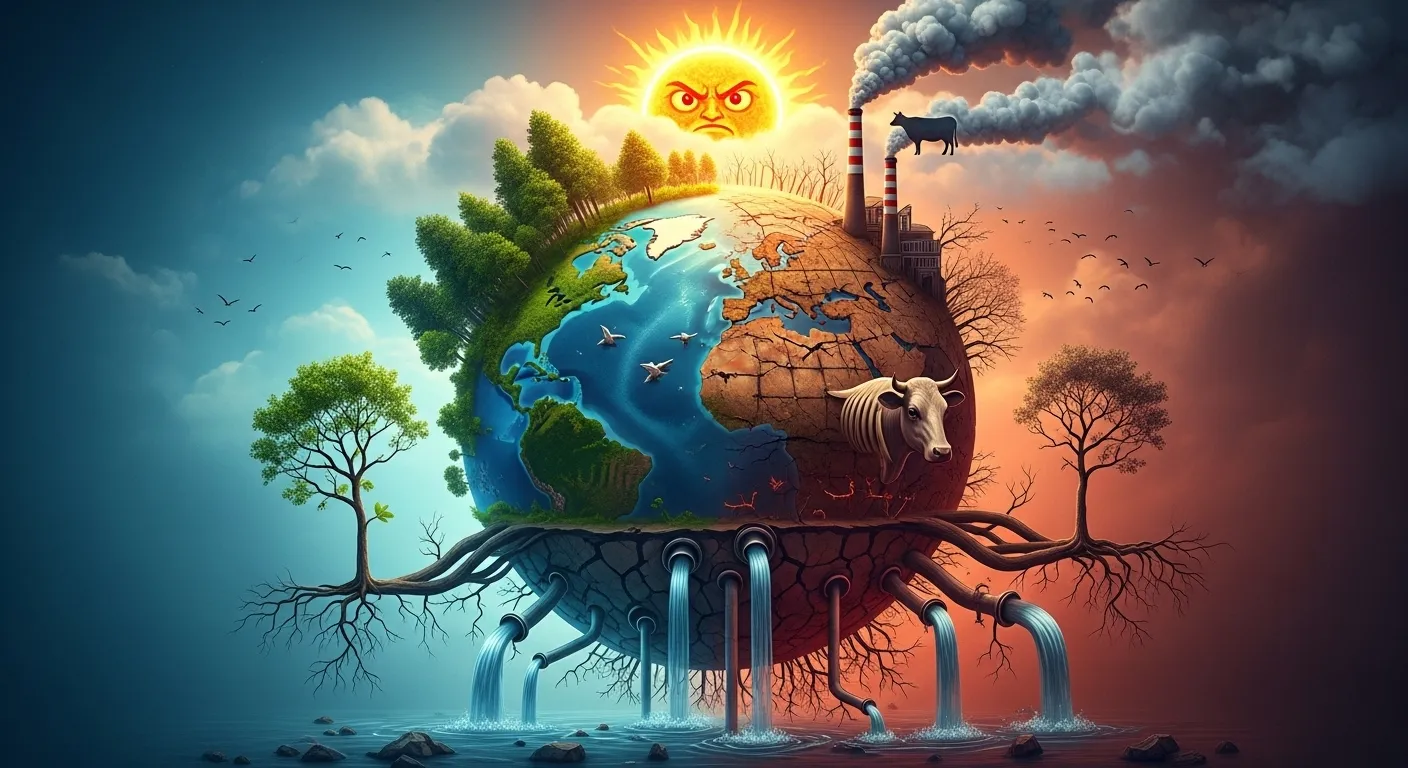
Our dinner plates hold more than just our meals; they hold a story about our planet's health. The journey of meat from farm to fork is a complex process with significant, often overlooked, consequences. As global populations grow and dietary patterns shift, understanding the full environmental impact of meat production has become more critical than ever. This isn't just a conversation for scientists and policymakers; it's a global issue that affects our air, water, land, and the very future of the ecosystems that sustain us. This article explores the multifaceted environmental footprint of the meat industry, from greenhouse gas emissions to water consumption, and discusses the pathways toward a more sustainable future. Greenhouse Gas Emissions: The Atmospheric Burden One of the most significant and widely discussed environmental impacts of the meat industry is its contribution to global greenhouse gas (GHG) emissions. The livestock sector is a major player in anthropogenic climate change, responsible for a substantial portion of the world's emissions. According to the United Nations' Food and Agriculture Organization (FAO), livestock supply chains are estimated to account for 14.5% of all human-caused GHG emissions. This figure is comparable to the emissions from the entire global transportation sector, including all cars, trucks, planes, and ships combined. These emissions aren't from a single source but are a cocktail of powerful gases released at various stages of production. The primary gases involved are methane (CH₄), nitrous oxide (N₂O), and carbon dioxide (CO₂). Methane is famously produced by ruminant animals like cattle and sheep through a natural digestive process called enteric fermentation—in simpler terms, burping. Nitrous oxide is released from animal manure and the nitrogen-based fertilizers used to grow massive quantities of feed crops. Carbon dioxide is emitted through deforestation to create pastures (land-use change), the energy used to power farm machinery and facilities, and the transportation of animals and final products. Understanding this complex web of emissions is the first step toward appreciating the sheer scale of the industry's atmospheric impact. Each component presents a unique challenge. While CO₂ persists in the atmosphere for centuries, methane is a much more potent gas in the short term, with a warming potential more than 80 times that of CO₂ over a 20-year period. This makes reducing methane emissions a critical lever for mitigating near-term climate change. The global appetite for meat directly fuels this entire cycle, making our dietary choices a powerful factor in the planet's climate equation. 1. Methane (CH₄): A Potent Short-Term Warmer Methane from livestock is a particularly pressing concern due to its high global warming potential. The main source, enteric fermentation, is a biological process in the digestive systems of ruminant animals. Microbes in the first stomach chamber, the rumen, break down tough, fibrous plants into nutrients the animal can absorb. A byproduct of this process is methane, which is then released primarily through belching. With a global cattle population exceeding one billion, the cumulative effect of this process is immense. Cattle are the number one agricultural source of greenhouse gases worldwide. The impact of methane is front-loaded; it traps a significant amount of heat in its first couple of decades in the atmosphere before breaking down. This is in contrast to carbon dioxide, which has a less intense but much longer-lasting effect. Therefore, strategies aimed at reducing methane emissions can have a more immediate cooling effect on the planet. Researchers are actively exploring solutions, from dietary supplements for cattle, such as certain types of seaweed (Asparagopsis taxiformis), which have been shown to dramatically reduce methane output, to selective breeding programs for lower-emitting animals. However, the most direct way to reduce methane from this source remains scaling back the global herd size. 2. Nitrous Oxide (N₂O) and Carbon Dioxide (CO₂) While methane often steals the spotlight, nitrous oxide is another formidable greenhouse gas linked to meat production. With a warming potential nearly 300 times that of CO₂ over a 100-year period, N₂O is no small matter. Its primary sources in the livestock sector are animal manure and the synthetic nitrogen fertilizers used extensively to grow feed crops like corn and soy. When these fertilizers are applied to fields, soil microbes convert a portion of the nitrogen into N₂O, which then escapes into the atmosphere. Similarly, the breakdown of nitrogen in animal waste stored in lagoons or spread on fields also releases significant quantities of this potent gas. Carbon dioxide emissions are tied to the broader infrastructure of industrial meat production. The most significant source is land-use change, primarily deforestation to create new pastures or agricultural land for feed production. When forests are cleared and burned, the vast stores of carbon held in trees and soil are released into the atmosphere as CO₂. Beyond this, the entire supply chain is energy-intensive. Fossil fuels are burned to operate farm machinery, produce fertilizers, heat and ventilate industrial-scale barns, and transport animals to slaughterhouses and meat products to retailers. Every step, from field to factory to fork, contributes to the industry's carbon footprint. Land Use and Deforestation: A Disappearing World The sheer amount of land required for meat production is staggering and represents perhaps its most profound environmental impact. The livestock sector is the single largest human user of land on the planet. Globally, grazing land and cropland dedicated to producing animal feed account for almost 80% of all agricultural land. This means that a vast portion of the Earth's terrestrial surface is dedicated not to feeding people directly, but to feeding the animals that people eat. This immense land footprint is a primary driver of habitat loss, soil degradation, and, most critically, deforestation. As the global demand for meat continues to rise, especially in developing economies, the pressure to convert natural ecosystems into agricultural land intensifies. Forests, wetlands, and native grasslands—all of which are vital carbon sinks and hotspots of biodiversity—are being cleared at an alarming rate. The Amazon rainforest is a tragic and well-documented example, where cattle ranching is the leading cause of deforestation. This process of "land-use change" not only