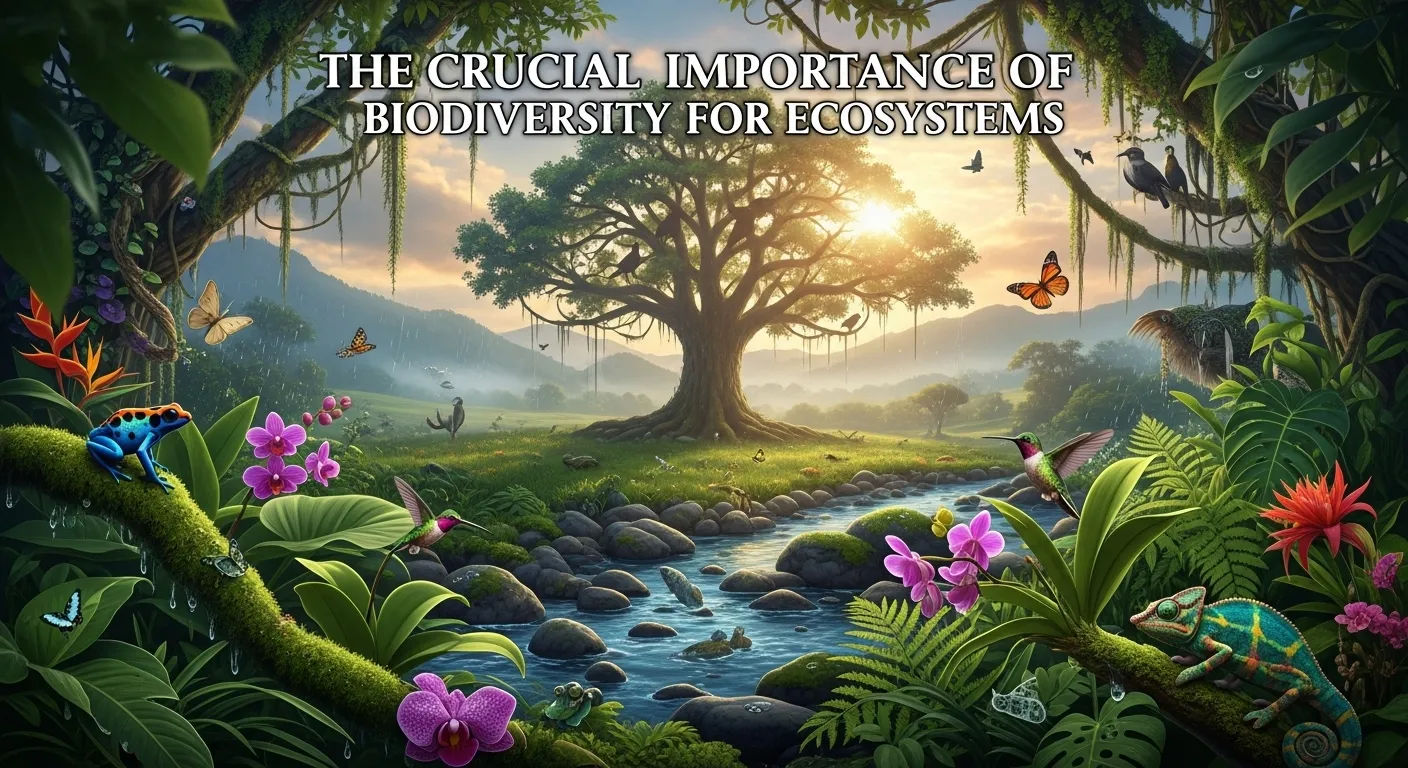
Life on Earth is an intricate tapestry woven from countless threads of different colors, textures, and strengths. From the smallest microbe in the soil to the largest blue whale in the ocean, every organism plays a role in this grand design. This incredible variety of life, in all its forms and interactions, is what we call biodiversity. It is far more than just a beautiful collection of species; it is the very engine that powers our planet's life-support systems. Understanding the immense importance of biodiversity for ecosystems is not merely an academic exercise; it is fundamental to comprehending how our world functions and how we can ensure its continued health and our own survival. This article delves deep into the critical role biodiversity plays, exploring its foundational support for ecosystem services, its function as nature's insurance policy, its direct benefits to humanity, and the severe threats it currently faces. What is Biodiversity and Why Does It Matter? At its core, biodiversity—a portmanteau of "biological diversity"—refers to the full spectrum of life on Earth. It encompasses the variety at every level of biological organization, from the genetic codes within a single species to the vast array of different ecosystems like forests, deserts, and coral reefs. This concept isn't just about counting species; it's about appreciating the complexity and interdependence that define healthy, functioning natural systems. A thriving ecosystem is not a random assortment of plants and animals but a highly organized community where each member has a specific role, or niche, that contributes to the whole. The true significance of biodiversity lies in this interconnectedness. Imagine an ecosystem as an intricate Jenga tower, where each block represents a different species or genetic trait. Removing one or two blocks might not cause an immediate collapse, but as more are taken away, the entire structure becomes progressively weaker and more unstable. Eventually, the removal of a single, seemingly insignificant block can trigger a catastrophic failure. This analogy perfectly illustrates how the loss of biodiversity erodes the stability and functionality of our planet's ecosystems, a concept we will explore through its three primary levels. Genetic Diversity Genetic diversity is the variety of genes within a single species. It is the reason why individuals in a population show different traits, such as variations in color, size, disease resistance, or resilience to environmental stress. Think of the thousands of apple varieties or the different breeds of dogs; this is genetic diversity in action. This internal variety is the raw material for evolution and adaptation. It provides the flexibility a species needs to survive in a changing world. When a population has high genetic diversity, it has a better chance of withstanding threats like new diseases, pests, or shifts in climate. If a deadly pathogen emerges, some individuals may naturally carry genes that confer resistance, allowing them to survive and reproduce, ensuring the continuation of the species. Conversely, in populations with low genetic diversity (often seen in endangered species or agricultural monocultures), a single threat can wipe out the entire population. The infamous Irish Potato Famine of the 1840s, caused by a blight that destroyed a genetically uniform potato crop, serves as a stark historical lesson in the dangers of neglecting genetic diversity. Species Diversity This is the level of biodiversity most people are familiar with—the number of different species (species richness) and their relative abundance (species evenness) within a given area. An ecosystem with high species diversity, like a tropical rainforest, contains a vast array of different plants, animals, fungi, and microorganisms. Each species performs specific functions: some are producers (plants), some are consumers (herbivores, carnivores), and others are decomposers (bacteria, fungi). This division of labor is crucial for a healthy ecosystem. Key roles are often played by so-called keystone species, whose impact on the ecosystem is disproportionately large relative to their abundance. For example, sea otters in the Pacific Northwest prey on sea urchins, which in turn graze on kelp. Without otters, urchin populations explode, decimating the kelp forests that provide habitat for countless other species. Similarly, indicator species act as an early warning system for environmental degradation. The presence or absence of certain types of lichen, for instance, can indicate levels of air pollution. Therefore, a high diversity of species creates a more robust, functional, and resilient ecosystem. Ecosystem Diversity Ecosystem diversity refers to the variety of habitats, biotic communities, and ecological processes in the biosphere. It is the diversity of entire landscapes. On a global scale, this includes everything from the icy tundra of the Arctic and the sun-drenched savannas of Africa to the deep-sea vents and the sprawling Amazon rainforest. Each of these ecosystems provides a unique set of conditions that supports a specific assembly of species, which are specially adapted to live there. This large-scale diversity is vital for maintaining global ecological balance. For example, wetlands act as natural water purifiers and flood controls, forests regulate climate by absorbing carbon dioxide, and estuaries serve as critical nurseries for many marine species. The loss of an entire ecosystem, such as the draining of a major swamp or the clearing of a vast forest, results in the loss of all the unique species and the critical services it once provided, with ripple effects that can be felt across the entire planet. The Pillars of a Healthy Planet: Ecosystem Services Ecosystem services are the myriad benefits that humans freely gain from the natural environment and from properly functioning ecosystems. The concept was popularized by the Millennium Ecosystem Assessment in 2005 to highlight humanity's complete dependence on nature. Biodiversity is the bedrock upon which all these services are built; without the rich variety of life, these processes would slow, falter, or cease altogether. A more biodiverse ecosystem is a more productive and reliable provider of these essential services. The sheer range of these services is staggering and is often taken for granted in our daily lives. From the air we breathe to the water we drink and the food we eat, nearly every aspect