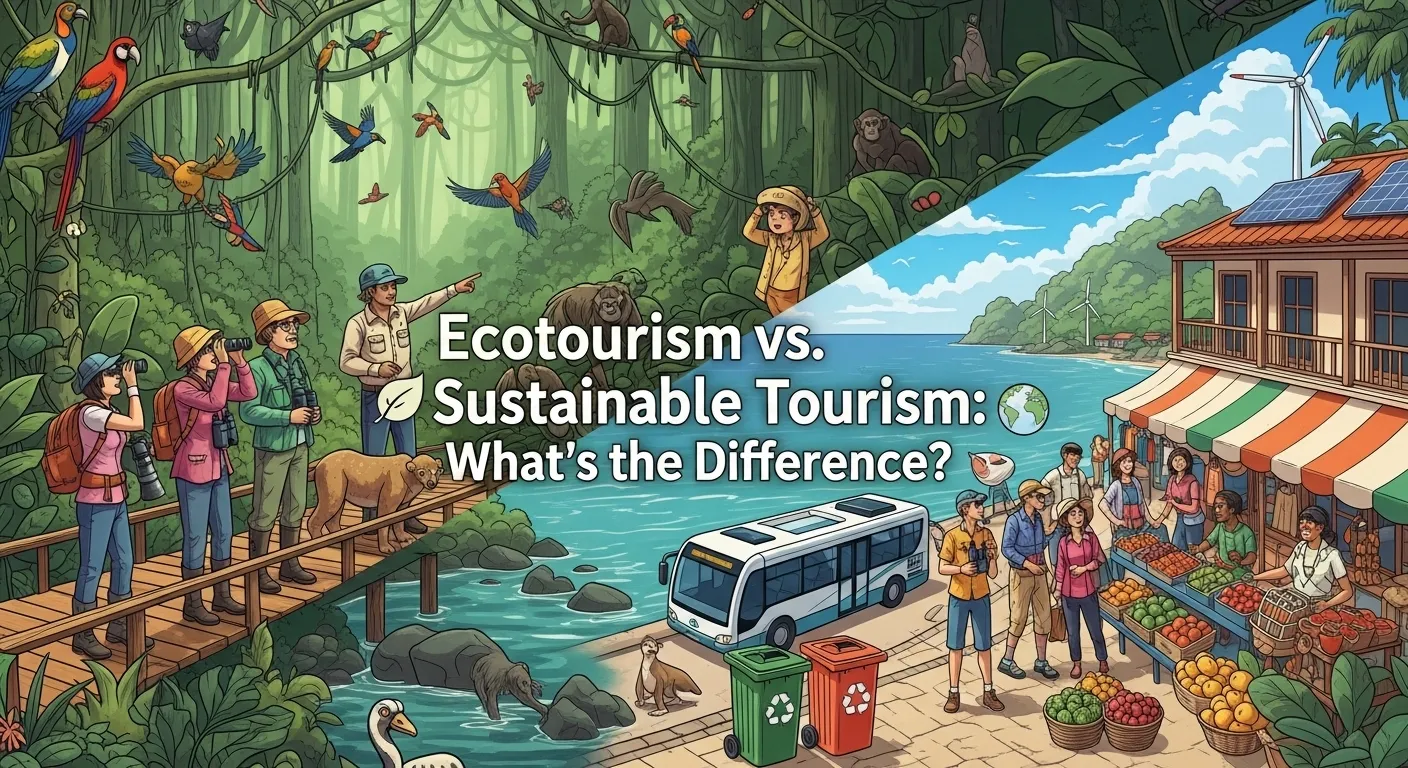
As the world becomes more interconnected and travel more accessible, a growing consciência is emerging among travelers. We are no longer content to simply visit a destination; we want to ensure our presence does more good than harm. This has led to the rise of terms like "ecotourism" and "sustainable tourism," often used interchangeably in travel blogs and marketing materials. However, while they are closely related and share a common goal of making travel better, they are not the same. Understanding the nuances in the ecotourism vs. sustainable tourism debate is crucial for anyone who wants to travel responsibly and make informed choices. This guide will demystify these concepts, offering clear definitions, practical examples, and actionable advice to help you become a more conscious globetrotter. The modern traveler is faced with a dizzying array of choices, and the language of "ethical travel" can sometimes add to the confusion. Are you looking for an "eco-lodge" or a "sustainable hotel"? Is that jungle trek an example of ecotourism, or is it just nature-based tourism? The distinction is more than just semantics; it shapes the very impact of your journey on a destination's environment, culture, and economy. At its core, the difference lies in scope and focus. Sustainable tourism is the overarching philosophy, a broad framework that can apply to any type of travel, anywhere in the world. Ecotourism, on the other hand, is a very specific niche within that framework. Think of it this way: all true ecotourism must be sustainable, but not all sustainable tourism is ecotourism. A luxury hotel in a bustling city can be a model of sustainable tourism by minimizing its environmental footprint and contributing positively to the local community, but it is not ecotourism. Ecotourism is intrinsically linked to travel in natural environments, with a primary focus on conservation and education. Understanding this core difference is the first step toward navigating the world of responsible travel and ensuring your travel dollars support genuine, positive-impact initiatives. This article will break down these two critical concepts. We will explore the foundational pillars of sustainable tourism, define the strict criteria of ecotourism, and provide a clear comparative analysis. Through real-world examples and practical tips, you will learn not only to differentiate between the two but also to identify and support authentic responsible travel opportunities, avoiding the deceptive pitfalls of greenwashing and making every trip a force for good. Unpacking Sustainable Tourism: The Broader Framework Sustainable tourism is the big-picture concept. It is a holistic approach to managing the tourism industry in its entirety. The World Tourism Organization (UNWTO) defines it as "tourism that takes full account of its current and future economic, social and environmental impacts, addressing the needs of visitors, the industry, the environment and host communities." Essentially, it’s about creating a travel industry that can endure indefinitely without depleting the natural, cultural, or economic resources it depends on. This philosophy is not limited to exotic, nature-filled destinations; it is just as relevant for a weekend getaway to London or a business trip to Tokyo. The goal of sustainable tourism is to find a balance. It acknowledges that tourism is a powerful economic driver but also recognizes its potential for negative impacts, such as pollution, resource depletion, cultural commodification, and economic leakage (where money spent by tourists does not stay in the local economy). Therefore, sustainable practices are designed to mitigate these harms and enhance the benefits. This could involve anything from a hotel chain implementing a company-wide water recycling program to a tour operator ensuring it pays fair wages to its local guides. The scope is intentionally broad, making it a universal benchmark for a better travel industry. A key aspect of sustainable tourism is its long-term vision. It’s not about short-term fixes but about building resilient destinations and industries. This means making economically sound decisions that also benefit the environment and local people. For instance, a coastal resort practicing sustainable tourism would invest in protecting the coral reef offshore, not just for its ecological value, but because it understands the reef is a primary attraction that draws visitors and supports a local dive industry, ensuring its own economic future. The Three Pillars of Sustainable Tourism Sustainable tourism is built upon a foundation of three interconnected pillars: environmental, socio-cultural, and economic. For tourism to be truly sustainable, it must achieve a balance across all three. Neglecting one pillar, even while excelling in the others, undermines the entire structure. They are not a checklist to be ticked off but a guiding philosophy for all decision-making. The Environmental Pillar is often the most well-understood. It focuses on conserving natural resources and biodiversity and minimizing the industry's footprint. This includes practices like: Reducing water and energy consumption. Managing waste and reducing pollution (including plastic and CO2 emissions). Conserving and protecting natural ecosystems, habitats, and wildlife. Using renewable resources and sustainable building materials. A hotel that installs solar panels, harvests rainwater, and eliminates single-use plastics is actively supporting this pillar. The Socio-Cultural and Economic Pillars The Socio-Cultural Pillar is about respecting and empowering local communities. It ensures that tourism does not erode the cultural fabric of a place but instead helps to celebrate and preserve it. It involves respecting host communities, their traditions, and their heritage. Key practices include obtaining prior and informed consent from local and indigenous communities for tourism projects, ensuring they have a say in how tourism develops in their area. This pillar also emphasizes authentic cultural exchange, not staged performances, and works to strengthen community identity and pride. A tour operator that hires guides from the local community, pays them a living wage, and supports a local school is championing this pillar. The Economic Pillar ensures the long-term economic viability of the tourism industry and its host communities. It’s not just about profit, but about fair profit that stays local. This pillar focuses on creating stable employment and income-earning opportunities for local people, reducing poverty, and ensuring that economic benefits are distributed equitably. It stands in direct