
What Is the Greenhouse Effect? A Simple Explanation
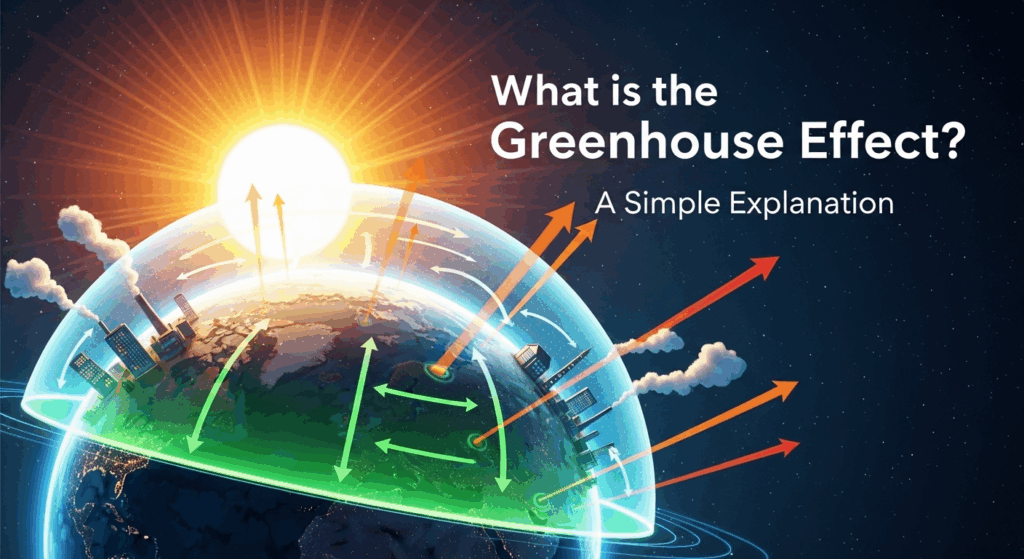
Have you ever gotten into a car that’s been sitting in the sun on a hot day? The inside is significantly warmer than the air outside. This happens because the sun's rays enter through the windows, but the heat they generate gets trapped inside, unable to escape easily. In a nutshell, you've just experienced a small-scale version of the Earth's greenhouse effect. It's a fundamental process that makes our planet habitable, but it's also a term at the center of conversations about climate change. If you're looking for what is the greenhouse effect explained simply, you've come to the right place. This article will break down this crucial concept, from its natural function to the human impact that's turning up the planet's thermostat.
The Natural Greenhouse Effect: Earth's Essential Blanket
The greenhouse effect is not, by its nature, a bad thing. In fact, it's an absolutely essential natural process that has kept the Earth's temperature at a comfortable average of about 15°C (59°F). Without this natural warming mechanism, the planet's surface would be a frigid, inhospitable -18°C (0°F), making it impossible for life as we know it to thrive. Think of the natural greenhouse effect as Earth's invisible, life-sustaining blanket, perfectly calibrated to keep us warm enough but not too hot.
The process works in a few simple steps. First, the sun emits solar radiation that travels through space and reaches our atmosphere. A portion of this energy is reflected back into space by clouds and the Earth's surface (like ice caps), but the majority passes through the atmosphere and is absorbed by the land and oceans, warming the planet. As the Earth's surface heats up, it radiates some of this energy back outwards in the form of infrared radiation, which we feel as heat. This is where certain gases in our atmosphere, known as greenhouse gases, play their crucial role.
Instead of allowing all this outgoing heat to escape into space, greenhouse gases absorb it and re-radiate it in all directions, including back down towards the Earth's surface. This trapping of heat is what creates the warming "greenhouse effect." The primary natural greenhouse gases include water vapor (H₂O), carbon dioxide (CO₂), methane (CH₄), and nitrous oxide (N₂O). They act like the glass of a greenhouse, letting sunlight in while preventing a significant amount of heat from getting out, maintaining a stable and livable temperature for ecosystems, plants, and animals to flourish.
The Main Greenhouse Gases: A Closer Look at the Key Players
While many gases make up our atmosphere (mostly nitrogen and oxygen), only a small fraction are greenhouse gases. However, their small concentration belies their powerful impact on the planet's climate. These gases are defined by their ability to absorb and emit infrared radiation. Understanding the main players is crucial to grasping the full picture of the greenhouse effect, especially the changes we are currently witnessing. Each gas has a different heat-trapping ability and a different atmospheric lifetime, which are combined into a metric called the Global Warming Potential (GWP).
It's important to distinguish between naturally occurring greenhouse gases and those amplified or solely produced by human activities. For millennia, the concentration of these gases was in a delicate balance, regulated by natural cycles like volcanic eruptions, animal respiration, and plant photosynthesis. However, since the Industrial Revolution began around the late 18th century, human activities have drastically increased the concentration of these gases, thickening the Earth's "blanket" and disrupting this delicate balance. Let's break down the most significant greenhouse gases.
- #### Carbon Dioxide (CO₂)
Carbon dioxide is the most significant long-lived greenhouse gas in the atmosphere, primarily because of its sheer volume and persistence. Naturally, CO₂ is exchanged between the atmosphere, oceans, and land through processes like photosynthesis (where plants absorb it) and respiration (where animals release it). However, human activities have become the dominant source of new CO₂ emissions. The burning of fossil fuels—coal, oil, and natural gas—for electricity, transportation, and industry is the largest contributor.
Furthermore, deforestation plays a dual negative role. When forests are cleared and burned, the vast amounts of carbon stored in the trees are released into the atmosphere as CO₂. At the same time, we lose a critical natural "carbon sink" that would otherwise be absorbing CO₂ from the atmosphere. Once released, CO₂ can remain in the atmosphere for hundreds to thousands of years, meaning the emissions we produce today will continue to warm the planet for many generations to come.
- #### Methane (CH₄)
Methane is the second most significant greenhouse gas resulting from human activities. On a molecule-for-molecule basis, methane is much more potent at trapping heat than CO₂—over 25 times more effective over a 100-year period. However, it has a much shorter atmospheric lifetime of about 12 years. Natural sources of methane include wetlands and termites, but human-linked sources now account for the majority of emissions.
Key anthropogenic sources of methane include agriculture, particularly from livestock digestion (e.g., cow burps) and rice cultivation in flooded paddies. The energy sector is another major contributor, with methane leaking during the extraction, processing, and transportation of natural gas and coal. Decomposing organic waste in landfills also produces significant amounts of methane. Reducing methane emissions could provide a relatively quick, short-term benefit in the fight against global warming due to its shorter lifespan in the atmosphere.
- #### Nitrous Oxide (N₂O)
Nitrous oxide is another powerful greenhouse gas. While its concentration in the atmosphere is lower than CO₂ or methane, it is extremely effective at trapping heat—nearly 300 times more potent than CO₂ over a century. It also has a long atmospheric lifetime of around 114 years. Natural sources include bacteria in soils and the oceans as part of the Earth’s nitrogen cycle.
Human activities, however, have significantly boosted its concentration. The largest source is agriculture, particularly the use of synthetic nitrogen fertilizers on soils. When excess fertilizer is applied, soil microbes convert it into nitrous oxide, which is then released into the atmosphere. Other sources include industrial processes, the combustion of fossil fuels, and the burning of biomass.
- #### Fluorinated Gases
Unlike the other gases, fluorinated gases are a group of chemicals that have no natural sources; they are entirely man-made. This group includes hydrofluorocarbons (HFCs), perfluorocarbons (PFCs), sulfur hexafluoride (SF₆), and nitrogen trifluoride (NF₃). They are often used as substitutes for ozone-depleting substances in applications like refrigeration, air-conditioning, and industrial manufacturing.
Although they are emitted in smaller quantities, they are the most potent and longest-lasting of all greenhouse gases. Their Global Warming Potential can be thousands or even tens of thousands of times greater than that of CO₂. For instance, sulfur hexafluoride (SF₆), used in the electrical industry, has a GWP of 23,500 and an atmospheric lifetime of 3,200 years. International agreements like the Kigali Amendment to the Montreal Protocol are aimed at phasing down the production and use of HFCs due to their powerful warming impact.
Comparing the Main Greenhouse Gases
To better understand their relative impacts, this table summarizes the key characteristics of the primary greenhouse gases.
| Greenhouse Gas | Main Human Sources | Atmospheric Lifetime (Approx.) | Global Warming Potential (GWP) over 100 years (relative to CO₂) |
|---|---|---|---|
| Carbon Dioxide (CO₂) | Burning fossil fuels, deforestation, industrial processes | 100-1,000+ years | 1 (Baseline) |
| Methane (CH₄) | Agriculture (livestock, rice), fossil fuel extraction, landfills | ~12 years | 25-28 |
| Nitrous Oxide (N₂O) | Agriculture (fertilizers), fossil fuel combustion, industrial processes | ~114 years | 265-298 |
| Fluorinated Gases (e.g., HFCs, SF₆) | Refrigerants, aerosols, industrial solvents, manufacturing | Varies (decades to 50,000 years) | 1,000s to 23,500+ |
The Enhanced Greenhouse Effect: Humanity Turning Up the Heat
The core of our modern climate problem lies not in the greenhouse effect itself, but in the enhanced greenhouse effect. This term describes the unnatural warming of the planet due to the excessive buildup of greenhouse gases from human activities. Since the dawn of the Industrial Revolution in the late 1700s, humanity has been pumping unprecedented amounts of these gases into the atmosphere, fundamentally altering its composition. We have effectively taken the Earth's life-sustaining blanket and added several thick, heavy layers on top.
This enhancement is driven primarily by our reliance on an energy system powered by fossil fuels. When we burn coal for electricity, gasoline for our cars, or natural gas to heat our homes, we release vast quantities of stored carbon into the atmosphere as CO₂. Simultaneously, large-scale industrial agriculture has increased methane and nitrous oxide emissions, while modern manufacturing introduced entirely new, potent fluorinated gases. This massive influx of gases happens far faster than the Earth's natural cycles can absorb them, causing them to accumulate in the atmosphere.
The result is simple and predictable: more greenhouse gases mean more heat is trapped. The natural balance that kept our climate stable for thousands of years has been disrupted. The excess heat being trapped is what leads directly to global warming—the long-term heating of Earth’s climate system observed since the pre-industrial period. The enhanced greenhouse effect is the cause, and global warming is the effect. It's a critical distinction to understand when discussing climate change.
Consequences of a Warmer World
The consequences of the enhanced greenhouse effect and the resulting global warming are not distant, abstract threats; they are already unfolding around the world. The extra energy trapped in the Earth's system doesn't just raise the temperature; it supercharges the entire climate system, leading to a cascade of interconnected effects that impact ecosystems, economies, and human societies in profound and often devastating ways. It is the primary driver of what we now call the climate crisis.
These impacts are wide-ranging and interconnected. A change in one part of the climate system, like melting ice in the Arctic, can trigger feedback loops that accelerate warming elsewhere. The consequences are felt differently across the globe, with some regions experiencing more severe droughts while others face unprecedented flooding. Understanding these major consequences highlights the urgency of addressing the root cause: the enhanced greenhouse effect. Let's examine some of the most significant impacts.
- #### Rising Global Temperatures and Heatwaves
The most direct consequence is the increase in average global air and surface temperatures. This doesn’t just mean slightly warmer winters. It manifests as more frequent and intense heatwaves during the summer, posing serious risks to human health, especially for vulnerable populations like the elderly and young children. Heat stress can lead to exhaustion, heatstroke, and can exacerbate existing medical conditions.
These rising temperatures also put immense strain on ecosystems. Coral reefs, for example, undergo "bleaching" and can die when ocean temperatures become too high, devastating marine biodiversity. On land, forests become more susceptible to wildfires, and many plant and animal species are forced to migrate to cooler areas or face extinction if they cannot adapt quickly enough to the rapid changes in their habitat.

- #### Melting Ice and Rising Sea Levels
A warmer world means ice is melting at an accelerated rate. This is happening to mountain glaciers around the globe, which are crucial sources of fresh water for millions of people. More alarmingly, the massive ice sheets covering Greenland and Antarctica are also losing mass. This melting ice contributes directly to a rise in global sea levels.
But melting ice is only part of the story. The other major contributor to sea-level rise is thermal expansion. Just as hot air expands, water also expands as it warms. Since the oceans have absorbed over 90% of the extra heat trapped by the enhanced greenhouse effect, they are warming and expanding in volume. The combined effect of melting ice and thermal expansion is causing sea levels to rise, leading to increased coastal flooding, erosion, and the contamination of freshwater supplies with saltwater, threatening coastal communities and economies worldwide.
- #### More Frequent and Intense Extreme Weather Events
The extra energy in the atmosphere and warmer oceans act as fuel for more extreme weather. A warmer atmosphere can hold more moisture, which leads to heavier rainfall events and increases the risk of severe flooding in some regions. Conversely, the same changes in atmospheric patterns can lead to prolonged periods of little to no rain in other areas, resulting in more severe and long-lasting droughts.
Hurricanes, cyclones, and typhoons are also becoming more intense. While the overall number of storms may not necessarily increase, their potential for destruction does. Warmer ocean waters provide more energy to fuel these storms, leading to higher wind speeds and greater amounts of precipitation. This combination of rising sea levels and more powerful storms creates a recipe for catastrophic storm surges that can inundate coastal cities.
What Can We Do? Taking Action on Climate Change
While the reality of the enhanced greenhouse effect is daunting, it is not a reason for despair. Instead, it is a call to action. The same human ingenuity that triggered this problem can be harnessed to create solutions. Addressing climate change requires a two-pronged approach: mitigation, which means reducing the flow of greenhouse gases into the atmosphere, and adaptation, which involves adjusting to the climate change already in the pipeline. Action is needed on every level, from international agreements and national policies to corporate practices and individual choices.
The transition to a low-carbon future is a monumental task, but it is also one of the greatest economic and social opportunities of the 21st century. Investing in clean energy, sustainable infrastructure, and resilient communities can create jobs, improve public health by reducing air pollution, and build a more equitable and stable world. The solutions are available, and the momentum for change is growing.
- #### Transitioning to Renewable Energy
The single most important step to mitigate climate change is to decarbonize our energy system. This means transitioning away from fossil fuels and embracing renewable energy sources. Solar and wind power are now the cheapest forms of new electricity generation in many parts of the world. Expanding their deployment, along with other renewables like geothermal and hydropower, is essential.
This shift requires massive investment in new infrastructure, including modernizing the electrical grid to handle variable energy sources and developing energy storage solutions like batteries. Governments can accelerate this transition through policies like carbon pricing, subsidies for renewables, and phasing out support for the fossil fuel industry.
- #### Enhancing Energy Efficiency and Conservation
Alongside switching our energy source, we must also reduce our overall energy consumption. Energy efficiency is the "first fuel"—it’s often the cheapest and easiest way to reduce emissions. This means using less energy to achieve the same or better results. At a large scale, this involves setting stricter efficiency standards for buildings, vehicles, and appliances.
Individuals can also play a huge role in conservation. Simple actions like switching to LED lighting, properly insulating homes, using energy-efficient appliances, and simply turning off lights and electronics when not in use can collectively make a huge difference. Reducing energy demand lessens the strain on the power grid and makes the transition to 100% renewable energy more achievable.
- #### Sustainable Land Use, Reforestation, and Agriculture
Our lands and forests are critical allies in the fight against climate change. Protecting existing forests and undertaking massive reforestation and afforestation (planting trees where they didn’t exist before) projects can draw down significant amounts of CO₂ from the atmosphere. Sustainable forest management ensures that forests remain healthy carbon sinks.
Reforming agriculture is also key. Practices like regenerative agriculture can improve soil health, enabling it to store more carbon. Reducing methane emissions from livestock can be achieved through better feed and manure management. Shifting away from heavy reliance on synthetic nitrogen fertilizers can cut nitrous oxide emissions. On a personal level, reducing food waste and adopting more plant-rich diets can significantly lower an individual's carbon footprint.
***
Frequently Asked Questions (FAQ)
Q1: What's the difference between the greenhouse effect and global warming?
A: The greenhouse effect is a natural process where certain gases in the atmosphere trap heat, keeping the Earth warm enough for life. Global warming is the long-term heating of the planet caused by the enhanced greenhouse effect, which is the buildup of excessive greenhouse gases from human activities. In short, the greenhouse effect is the mechanism, and global warming is the outcome of that mechanism being put into overdrive.
Q2: Can we reverse the enhanced greenhouse effect?
A: Reversing it completely to pre-industrial levels would be incredibly difficult and take centuries, if not millennia, because of the long lifetime of gases like CO₂. However, we can absolutely slow, halt, and eventually begin to reduce the concentration of greenhouse gases in the atmosphere. By drastically cutting our emissions to net-zero and investing in carbon removal technologies and nature-based solutions (like reforestation), we can stabilize the climate and prevent the worst impacts of climate change.
Q3: I've heard the climate has changed before. Isn't this just a natural cycle?
A: Yes, the Earth's climate has changed naturally over millions of years. However, the current warming trend is different. Scientific evidence shows that the speed and scale of today's warming are unprecedented in at least the last 2,000 years. The concentration of CO₂ in the atmosphere is the highest it's been in over 800,000 years. Climate scientists have overwhelmingly concluded that this rapid change can only be explained by the massive increase in greenhouse gas emissions from human activities, not by natural cycles alone.
Q4: Which greenhouse gas should we be most worried about?
A: This is a complex question. Carbon dioxide (CO₂) is the primary concern due to its enormous volume and its long-lasting effect, making it the main driver of long-term warming. However, methane (CH₄) is also a major worry because it's much more potent in the short term. Reducing methane emissions now could lead to a faster slowdown in the rate of warming, buying us crucial time while we work on the longer-term challenge of decarbonizing our economy to eliminate CO₂ emissions. Both are critical targets for climate action.
Conclusion
The greenhouse effect is a simple concept with profound implications. In its natural state, it is the gentle, life-giving warmth of a planetary blanket. However, through over two centuries of industrialization, deforestation, and unsustainable practices, humanity has thickened that blanket to a dangerous degree. The resulting enhanced greenhouse effect is trapping excess heat, driving global warming, and unleashing a cascade of consequences that threaten our ecosystems, economies, and very way of life.
Understanding this process is the first step toward taking meaningful action. The challenge is immense, but the path forward is clear. It involves a global transformation of our energy systems, a reimagining of our relationship with the land, and a commitment to innovation and efficiency. From international accords to individual choices, every action to reduce greenhouse gas emissions matters. By working together, we can loosen the grip of the enhanced greenhouse effect and ensure a stable, habitable, and thriving planet for generations to come.
***
Summary
The greenhouse effect is a natural process vital for life on Earth. Solar energy warms the planet, and atmospheric gases, known as greenhouse gases (like water vapor and CO₂), trap some of this heat, maintaining a livable average temperature. Without this natural "blanket," Earth would be a frozen and uninhabitable world.
The problem arises from the enhanced greenhouse effect, caused by human activities since the Industrial Revolution. The burning of fossil fuels (coal, oil, gas), deforestation, and industrial agriculture have released unprecedented amounts of greenhouse gases—primarily carbon dioxide (CO₂), methane (CH₄), and nitrous oxide (N₂O)—into the atmosphere. These excess gases trap more heat, causing the planet's average temperature to rise, a phenomenon known as global warming.
This accelerated warming has severe consequences, including more frequent and intense heatwaves, melting glaciers and ice sheets leading to sea-level rise, and an increase in extreme weather events like hurricanes, droughts, and floods. These impacts threaten global ecosystems, economies, and human societies.
Solutions require a concerted global effort to mitigate emissions. Key strategies include transitioning from fossil fuels to renewable energy sources like solar and wind, improving energy efficiency in buildings and transportation, and adopting sustainable land use practices such as reforestation and regenerative agriculture. By understanding the science and embracing these solutions, humanity can work to stabilize the climate and secure a sustainable future.
