
The Power of Ecotourism in Protecting Biodiversity
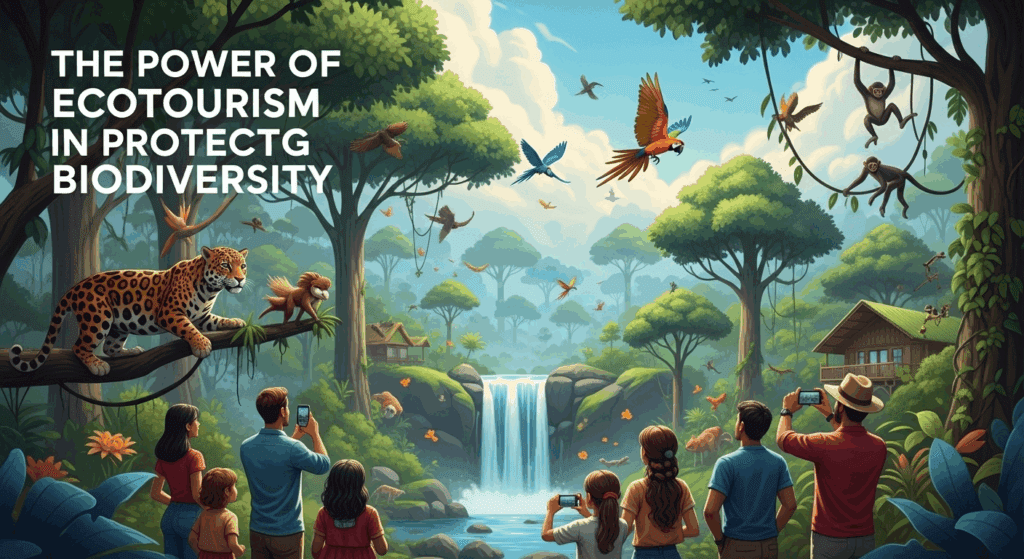
As our world grapples with the accelerating crisis of biodiversity loss, humanity is urgently seeking sustainable solutions that can harmonize economic needs with environmental preservation. For decades, traditional tourism has often been part of the problem, leaving a trail of environmental degradation, cultural disruption, and resource depletion. However, a powerful and transformative alternative has emerged, one that places conservation at its very core: ecotourism. This model of travel is not merely about visiting natural areas; it is a conscientious approach that actively contributes to the protection of ecosystems and the well-being of local populations. This brings us to the core of the discussion: the profound importance of ecotourism for biodiversity conservation. By creating a direct economic link between a healthy environment and prosperous communities, ecotourism provides one of the most compelling arguments for protecting our planet's precious natural heritage.
Understanding the Foundational Concepts: Ecotourism and Biodiversity
To truly grasp the impact of ecotourism, it is essential to first understand the two pillars upon which it stands: biodiversity and the principles of ecotourism itself. These are not just buzzwords; they are complex concepts that define the very purpose and practice of this sustainable travel model. Misunderstanding these foundations can lead to "greenwashing," where unsustainable practices are masked by clever marketing, ultimately harming the very ecosystems they claim to protect.
Biodiversity, or biological diversity, is the rich tapestry of life on Earth. It is not simply about the number of different species, but encompasses the variety at three fundamental levels: genetic diversity (the variety of genes within a species), species diversity (the variety of different species in an ecosystem), and ecosystem diversity (the variety of habitats, biological communities, and ecological processes). This intricate web of life provides critical "ecosystem services" that we often take for granted, such as clean air and water, pollination of crops, soil fertility, and climate regulation. When biodiversity declines, the resilience of these systems weakens, threatening not only wildlife but human survival as well.
Ecotourism, as defined by The International Ecotourism Society (TIES), is "responsible travel to natural areas that conserves the environment, sustains the well-being of the local people, and involves interpretation and education." This definition highlights three non-negotiable elements. First, it must actively contribute to conservation, not just minimize harm. Second, it must provide tangible benefits—financial and social—to the local communities who live alongside these natural wonders, making them partners in protection. Third, it must be an educational experience for the traveler, fostering a deeper appreciation for nature and culture. It is a stark contrast to mass tourism, which often prioritizes high volume and profit over environmental and social integrity.
The Direct Economic Incentives for Conservation
One of the most powerful mechanisms through which ecotourism protects biodiversity is by creating direct and tangible economic incentives. In many parts of the world, natural habitats are threatened by activities like logging, mining, slash-and-burn agriculture, or poaching because these offer immediate, albeit unsustainable, financial returns. Ecotourism offers a compelling and more sustainable alternative by demonstrating that a living, intact ecosystem can generate more long-term value than a depleted one.
Assigning a Financial Value to Intact Ecosystems
Ecotourism fundamentally changes the economic equation. A living shark, for example, can be worth hundreds of thousands of dollars over its lifetime to the dive tourism industry, whereas a dead shark is worth only a few hundred dollars for its fins one time. Similarly, a primary rainforest with its cacophony of birds, monkeys, and elusive jaguars can attract high-paying tourists for decades, generating consistent revenue for local guides, lodges, and communities. That same forest, if clear-cut for timber or cattle ranching, provides a one-off profit followed by ecological collapse and long-term economic instability.
This principle creates a powerful local constituency for conservation. When communities see that their livelihoods are directly tied to the health of the coral reef, the presence of elephants, or the purity of the river, they become the most effective guardians of these resources. The forest is no longer seen as an obstacle to development but as the very engine of it. This shift in perspective is crucial, as top-down conservation efforts often fail without the buy-in and active participation of the people who live on the front lines of conservation. These communities are empowered to resist external pressures from extractive industries because they have a viable, profitable alternative.
Directly Funding Parks and Protected Areas
Many national parks and protected areas, especially in developing nations, are severely underfunded. They lack the resources for adequate anti-poaching patrols, scientific monitoring, habitat restoration, and basic infrastructure. Ecotourism provides a direct and desperately needed revenue stream to bridge this gap. Park entrance fees, trekking permits (like the high-value permits for gorilla trekking in Rwanda and Uganda), and special activity fees are often funneled directly back into the conservation and management of these protected areas.
This funding is critical for on-the-ground protection efforts. It pays the salaries of rangers who risk their lives to combat poachers. It finances the purchase of vehicles and equipment for patrols, the removal of invasive species, and the implementation of fire management strategies. Furthermore, a portion of these funds is often legally mandated to be shared with adjacent communities, further strengthening the link between conservation and local well-being. In this model, every tourist who pays a park fee becomes an active contributor to the preservation of the biodiversity they have come to admire.
Empowering Local Communities as Guardians of Nature
True, long-term conservation is impossible without the active involvement and empowerment of local communities. For too long, conservation was approached with a "fortress" mentality, where local people were excluded from protected areas, often leading to resentment and conflict. Ecotourism turns this paradigm on its head by positioning communities as the primary stakeholders and beneficiaries of conservation. This social dimension is arguably as important as the ecological one.
The Rise of Community-Based Ecotourism
Community-Based Ecotourism (CBET) is a model where local communities have substantial control over, and involvement in, the development and management of tourism. They may own and operate lodges, work as guides, sell local handicrafts, or manage conservation areas on their ancestral lands. This direct ownership ensures that a significant portion of the tourism revenue remains within the community, funding schools, healthcare clinics, and clean water projects. It provides diverse employment opportunities that are not dependent on resource extraction.
A prime example is the establishment of community conservancies in places like Namibia and Kenya. Here, local pastoralist communities have set aside land for wildlife conservation in exchange for the exclusive rights to manage tourism within those areas. This has led to a dramatic recovery in wildlife populations, including elephants, lions, and the endangered black rhino, because the community now directly benefits from their presence. Poaching plummets when the local guide is the cousin of the former poacher, and the entire community sees wildlife as a shared asset rather than a threat or a target.
Fostering Environmental Stewardship and Education
Involvement in ecotourism often fosters a renewed sense of pride and a deeper understanding of the local environment. As young people are trained to become nature guides, they learn the scientific and traditional names of plants and animals, their ecological roles, and their conservation status. They become storytellers, sharing their deep knowledge with international visitors and, just as importantly, with the younger generations in their own community. This process helps preserve traditional ecological knowledge that might otherwise be lost.
This educational feedback loop is incredibly powerful. Visitors learn from knowledgeable local guides, gaining a profound respect for the culture and the environment. In turn, the community, seeing the high value that outsiders place on their natural heritage, reinforces its own commitment to protecting it. Ecotourism becomes a vehicle for cross-cultural exchange and mutual respect, building a global community of advocates for a particular place and its biodiversity. The guide who can identify 200 bird species by their call is a respected professional, creating a positive role model and an aspirational career path centered on conservation.
The Critical Role of Ecotourism in Research and Monitoring
Beyond its economic and social benefits, ecotourism plays a vital and often-overlooked role in supporting scientific research and the long-term monitoring of biodiversity. The presence of tourists, guides, and researchers in remote areas provides both a funding mechanism and a practical platform for gathering essential data that is crucial for effective conservation management.
Citizen Science and Data Collection
Modern ecotourists are often eager to contribute to conservation in a hands-on way. This has given rise to a surge in "citizen science" programs integrated into tourism experiences. For instance, divers on a trip to see whale sharks might be asked to take photos of the unique spot patterns on each shark, which are then uploaded to a global database (Wildbook for Whale Sharks) used by scientists to track population numbers, migration patterns, and survival rates. Similarly, tourists on safari might contribute their photos of leopards or cheetahs to help researchers identify individual animals and monitor their territories.
These programs are a win-win. Travelers feel a deeper sense of purpose and connection, knowing their vacation is contributing to valuable research. For scientists, it provides a massive amount of data from a wide geographic area at a fraction of the cost of traditional field research. The consistent presence of tour boats can also help monitor the health of coral reefs, report illegal fishing activities, or track the nesting success of sea turtles. This turns every observant tourist into a potential field assistant, multiplying the eyes and ears on the ground dedicated to conservation.
Financial and Logistical Support for Scientific Studies
Long-term scientific research is expensive and often difficult to fund. Ecotourism operations can provide a stable source of funding and logistical support for crucial research projects. Many high-end eco-lodges have resident biologists or partner with research institutions. A portion of the guests' fees may directly support these scientists' salaries and their research on local species. The lodge's vehicles and boats, which are already in place for tourism, can be used by researchers to access remote study sites.
This symbiotic relationship is essential for adaptive conservation management. The research conducted helps the eco-lodge and park authorities make informed decisions about managing tourism—for instance, determining safe viewing distances for wildlife, identifying sensitive breeding areas to avoid, and understanding the carrying capacity of the ecosystem. The science informs the tourism practice, and the tourism funds the science. This creates a virtuous cycle where tourism becomes more sustainable and conservation becomes more effective over time.

Navigating the Challenges: The Path to True Sustainability
While the potential of ecotourism is immense, it is not a silver bullet. The path to true sustainability is fraught with challenges, and if not implemented with the utmost care and strict regulation, it can cause significant harm. Acknowledging these risks is the first step toward mitigating them and ensuring that ecotourism lives up to its promise. The two most significant challenges are the prevalence of "greenwashing" and the danger of exceeding an ecosystem's carrying capacity.
The Pervasive Risk of "Greenwashing"
As "eco" and "sustainable" have become marketable buzzwords, many traditional tourism operators have engaged in "greenwashing"—the practice of making misleading claims about the environmental benefits of a product or service. A hotel might ask guests to reuse their towels to "save the planet" while simultaneously dumping untreated sewage into a nearby river or sourcing its food from thousands of miles away. A tour might be labeled an "eco-tour" simply because it takes place in nature, even if it disrupts wildlife, exploits local workers, and returns no benefits to the community.
Fighting greenwashing requires education and certification. Travelers must learn to ask critical questions: Where does the money go? Is the lodge locally owned? How does the company contribute to conservation? What are its waste and water management policies? Reputable third-party certification programs, such as those from the Global Sustainable Tourism Council (GSTC) or Fair Trade Tourism, can help consumers identify genuine ecotourism operators. These programs conduct rigorous audits to ensure that a business meets high standards of environmental, social, and economic sustainability, providing a trustworthy benchmark for responsible travelers.
Managing Visitor Impact and Carrying Capacity
Even the most well-intentioned ecotourism can become a victim of its own success. A pristine, remote location can be "loved to death" if visitor numbers are not carefully managed. Too many hikers can cause soil erosion on trails, too many dive boats can damage coral reefs with anchors, and the constant presence of safari vehicles can cause chronic stress to wildlife, altering their feeding and breeding behaviors. This is the concept of ecological and social carrying capacity—the maximum number of visitors an area can sustain without causing unacceptable degradation to the environment and the quality of the visitor experience.
Effective management requires a proactive, science-based approach. This may involve implementing a low-volume, high-value model, as seen with gorilla trekking, where high permit costs limit the number of visitors and maximize revenue for conservation. It could mean establishing strict regulations, such as designated trails, limits on the number of vehicles at a wildlife sighting, and seasonal closures of sensitive areas during breeding periods. It also necessitates continuous monitoring to assess the impacts of tourism and adjust management strategies accordingly. The goal is to find the delicate balance where tourism can thrive without compromising the long-term health of the ecosystem upon which it depends.
***
Comparing Ecotourism and Mass Tourism
| Feature | Mass Tourism | Ecotourism |
|---|---|---|
| Primary Goal | Maximize profit and visitor volume. | Conservation, community well-being, and education. |
| Economic Flow | Often concentrated in large, foreign-owned corporations ("economic leakage"). | Aims to maximize benefits for local communities and conservation projects. |
| Environmental Impact | High-impact; large-scale infrastructure, high resource consumption, waste generation. | Low-impact; small-scale facilities, emphasis on conservation and resource management. |
| Community Involvement | Often minimal or exploitative (low-wage jobs). | Integral; focus on local ownership, empowerment, and cultural respect. |
| Visitor Experience | Passive and standardized (e.g., all-inclusive resorts). | Active, educational, and interpretive; fosters a deep connection to nature and culture. |
| Attitude to Nature | Nature is a backdrop or a commodity. | Nature is the main focus, an entity to be respected, understood, and preserved. |
***
Frequently Asked Questions (FAQ)
Q1: What is the main difference between ecotourism and sustainable tourism?
A: The terms are often used interchangeably, but there's a subtle distinction. Sustainable tourism is a broad umbrella term that applies to all forms of tourism; it's about making any type of travel more sustainable (e.g., a city hotel reducing its water usage). Ecotourism is a specific subset of sustainable tourism that is nature-based, involves education, and has a primary objective of conserving the environment and sustaining the well-being of local people. All ecotourism must be sustainable, but not all sustainable tourism is ecotourism.
Q2: How can I ensure that I am a responsible ecotourist?
A: Being a responsible ecotourist starts before you travel. Research thoroughly. Choose tour operators and lodges that are transparent about their conservation and community initiatives. Look for reputable certifications. While traveling, respect local culture and customs, follow all park rules and guide instructions, minimize your waste, conserve water and energy, and buy local handicrafts and products directly from artisans. Never feed or touch wildlife, and maintain a respectful distance. Your choices as a consumer have a powerful impact.
Q3: Isn't all travel, including ecotourism, bad for the environment because of carbon emissions from flights?
A: This is a valid and important concern. Air travel has a significant carbon footprint. However, the issue is complex. For many remote, biodiversity-rich areas, ecotourism is the only viable economic alternative to destructive industries like poaching, logging, or mining. The funds and protection it brings can be essential for survival. Responsible ecotourists can take steps to mitigate their impact by choosing non-stop flights, flying economy, and investing in high-quality carbon offset programs that fund renewable energy or reforestation projects. The goal is to ensure the net impact of your trip is a positive one for the destination's biodiversity and people.
Q4: Does ecotourism really work in protecting biodiversity?
A: Yes, when implemented correctly, it has a proven track record of success. Landmark examples include Costa Rica, which reversed deforestation and now protects over 25% of its land, largely funded by its ecotourism industry. In Rwanda, the high-value, low-volume gorilla trekking model has been instrumental in bringing the mountain gorilla back from the brink of extinction. In the community conservancies of Namibia, wildlife populations have rebounded dramatically since communities were given the rights to manage and benefit from tourism. While challenges exist, these cases demonstrate that ecotourism can be a powerful and effective force for conservation.
Conclusion
The power of ecotourism lies in its holistic and pragmatic approach to conservation. It moves beyond idealistic appeals and creates a compelling, real-world case for protecting biodiversity. By assigning a sustainable economic value to intact ecosystems, it provides a powerful incentive for governments and corporations to choose preservation over exploitation. By empowering local communities as the primary beneficiaries and guardians of their natural heritage, it builds a resilient, grassroots foundation for long-term stewardship. And by supporting scientific research, it ensures that conservation efforts are guided by sound data and adaptive management.
While it is not a panacea and must be carefully guarded against greenwashing and overuse, genuine ecotourism represents one of the most promising tools in our global conservation toolkit. It transforms the traveler from a passive consumer into an active participant in preservation. It proves that a healthy planet and prosperous communities are not mutually exclusive but are, in fact, inextricably linked. As we choose how and where we travel, we hold the power to either contribute to the problem or become part of the solution. Choosing responsible ecotourism is an investment in the future of our planet's irreplaceable biodiversity.
***
Article Summary
This article, "The Power of Ecotourism in Protecting Biodiversity," explores the critical role that responsible, nature-based travel plays in conservation. It begins by defining the core concepts of biodiversity and ecotourism, establishing that ecotourism is more than just visiting nature—it's a practice that actively conserves the environment and supports local communities.
The main arguments are structured around several key themes:
- Economic Incentives: Ecotourism gives a direct financial value to living ecosystems and wildlife, making them more profitable long-term than if they were exploited for timber, mining, or poaching. This revenue, through park fees and permits, directly funds conservation efforts like anti-poaching patrols.
- Community Empowerment: By involving local communities as owners, guides, and primary beneficiaries, ecotourism turns them into the most effective guardians of their natural resources. This community-based model reduces conflict and ensures that conservation benefits the people who live on its front lines.
- Support for Science: Ecotourism provides funding and logistical support for scientific research. Through citizen science programs, tourists can actively contribute to data collection, helping to monitor wildlife populations and ecosystem health.
- Challenges and Solutions: The article acknowledges the risks of "greenwashing" and the danger of exceeding an ecosystem's carrying capacity. It emphasizes the need for third-party certification and science-based management to ensure tourism's impact remains positive.
A comparative table contrasts ecotourism with mass tourism, and an FAQ section addresses common reader questions. The conclusion synthesizes these points, asserting that while not a perfect solution, genuine ecotourism is a powerful, pragmatic tool that aligns economic prosperity with environmental preservation, making it vital for the future of global biodiversity.
