
Breathe Better: Solutions for Reducing Air Pollution
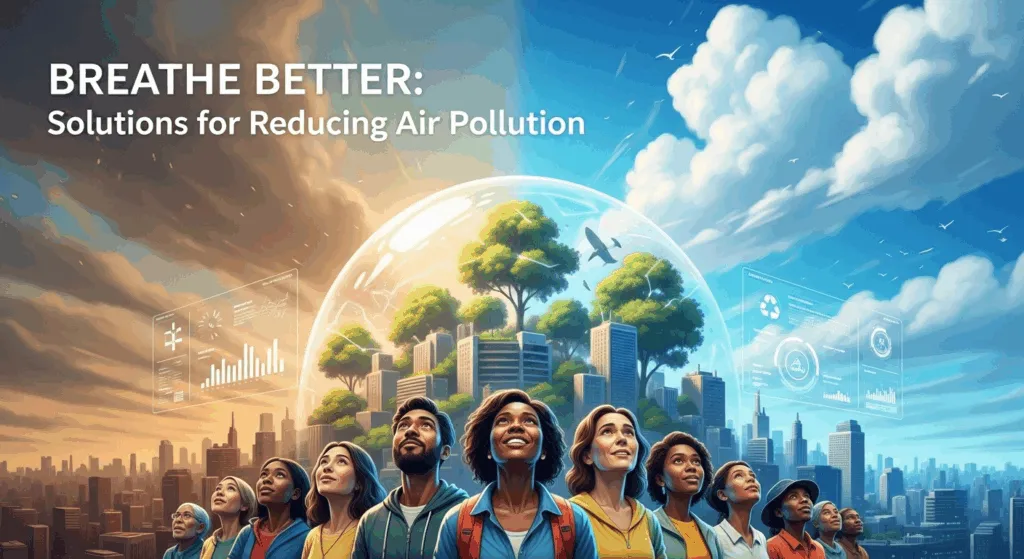
The air we breathe is the most fundamental element for our survival, yet its quality is under a constant and growing threat. Every day, a complex cocktail of pollutants from vehicle exhausts, industrial smokestacks, and even our own homes fills the atmosphere, leading to a silent global health crisis. The haze that blankets our cities is more than just an unsightly smudge on the horizon; it is a direct cause of respiratory illnesses, cardiovascular problems, and a reduced quality of life for millions. Facing this challenge requires more than just awareness; it demands a comprehensive and multi-layered approach. This article will explore a wide range of tangible and effective solutions for reducing air pollution, from global policies and technological breakthroughs to the powerful changes we can make in our own communities and daily lives.
Understanding the Enemy: Key Pollutants and Their Sources
Before we can effectively combat air pollution, we must first understand what it is and where it comes from. Air pollution is not a single substance but a mixture of various harmful gases and particles suspended in the atmosphere. These pollutants originate from both natural sources, like volcanic eruptions and wildfires, and, more significantly, from human activities. The battle for cleaner air begins with identifying these invisible enemies and tracing them back to their origins, allowing us to target our efforts with precision and create strategies that address the root causes rather than just the symptoms.
The most dangerous pollutants to human health include particulate matter (PM2.5 and PM10), which are tiny particles that can penetrate deep into our lungs and bloodstream; ground-level ozone (O3), a major component of smog; nitrogen oxides (NOx); sulfur dioxide (SO2); and volatile organic compounds (VOCs). Each of these has distinct sources. For instance, NOx and SO2 are primarily emitted from the burning of fossil fuels in power plants and vehicles, while VOCs are released from industrial processes, paints, and solvents. Understanding this breakdown is crucial because different solutions are required to tackle different pollutants. A strategy to reduce PM2.5 from traffic might be entirely different from one aimed at cutting SO2 from a coal plant.
Therefore, a foundational step in any clean air initiative is robust monitoring and source apportionment. This involves using a network of sensors and data analysis to determine not just the levels of pollution but also the specific contributions from various sources like traffic, industry, agriculture, and residential heating. By creating a detailed "pollutant map," cities and nations can prioritize their actions. For example, if data shows that 80% of urban nitrogen oxide pollution comes from diesel trucks, then policies promoting electric delivery vehicles or creating low-emission zones become the most impactful interventions. Knowledge is power, and in the fight for clean air, data provides the blueprint for victory.
Systemic Change: Government Policies and International Cooperation
While individual actions are important, the scale of the air pollution crisis demands a coordinated, top-down approach driven by governments and international bodies. Systemic change is the most powerful lever we have to transform our economies and infrastructure from being pollution-dependent to sustainable. This involves creating and enforcing a framework of laws, regulations, and economic incentives that make polluting expensive and clean alternatives attractive. Without strong government leadership, efforts often remain fragmented and are easily overpowered by short-term economic interests that favor the status quo.
Governments possess the unique authority to set binding limits on emissions, mandate the use of cleaner technologies, and reshape urban landscapes for healthier living. These policies create a level playing field, ensuring that all industries and citizens are held to the same standard. International cooperation amplifies these efforts, as pollution does not respect national borders. Pollutants emitted in one country can travel hundreds or thousands of miles, affecting air quality in neighboring regions. Agreements like the Paris Agreement on climate change, while focused on greenhouse gases, have significant co-benefits for reducing air pollution, as many of the sources are the same. A collective global effort is essential to tackle a shared global problem.
Ultimately, the goal of government intervention is to internalize the external costs of pollution. For too long, the health and environmental damage caused by pollution has not been reflected in the price of goods and services. Policies like carbon taxes, emissions trading schemes, and subsidies for renewable energy and electric vehicles help to correct this market failure. They send a clear signal to industries and consumers that clean choices are not only ethically right but also economically smart. This fosters a long-term transition towards a green economy where clean air is valued as the critical public good it is.
Implementing Clean Air Acts and Standards
One of the most effective tools governments have is legislation that sets clear, legally enforceable air quality standards and emission limits. A “Clean Air Act” typically defines maximum allowable concentrations for key pollutants like PM2.5, NO2, and SO2 in the ambient air. These standards are based on scientific evidence from organizations like the World Health Organization (WHO) and are designed to protect public health. By setting these targets, governments create a clear objective that all subsequent policies must work towards achieving.
To meet these air quality standards, legislation must also target the sources of pollution directly. This includes setting stringent emission standards for vehicles, forcing manufacturers to produce cleaner cars with technologies like catalytic converters and diesel particulate filters. Similarly, strict limits can be placed on industrial facilities, requiring them to install "Best Available Control Technology" (BACT), such as flue-gas desulfurization (scrubbers) to remove SO2 or selective catalytic reduction to cut NOx. These regulations drive technological innovation and ensure that economic activity does not come at the expense of public health.
Promoting Green Infrastructure and Urban Planning
The way we design our cities has a profound impact on air quality. Traditional urban planning has often prioritized cars, leading to sprawling cities, traffic congestion, and canyons of buildings that trap pollutants. Modern, green urban planning seeks to reverse this trend by designing cities for people, not just for cars. This involves creating compact, walkable neighborhoods with mixed-use developments where people can live, work, and shop without needing a vehicle for every trip.
Key elements of green infrastructure include expanding public transportation networks (trains, trams, electric buses), building protected cycling lanes, and increasing green spaces. Parks, green roofs, and urban forests act as natural air filters, absorbing pollutants and cooling the urban environment. Smart city planning also uses zoning regulations to separate industrial areas from residential zones and leverages technology to manage traffic flow efficiently, reducing idling and congestion. By rethinking the urban fabric, we can create cities that are not only cleaner but also more livable, equitable, and resilient.
The Technological Frontier: Innovations in Pollution Control
Technology is a double-edged sword; while the Industrial Revolution's technologies fueled our current pollution problems, modern innovation holds the key to solving them. The rapid advancement in science and engineering is providing us with an ever-growing arsenal of tools to reduce emissions at the source, capture pollutants from the air, and transition away from dirty energy altogether. These technological solutions are critical for decarbonizing the hardest-to-abate sectors, such as heavy industry and long-haul transport, where simple policy changes are not enough.
From sophisticated filters on industrial smokestacks to the artificial intelligence optimizing our energy grids, technology offers pathways to cleaner production and consumption. The falling costs and rising efficiency of renewable energy sources are perhaps the most significant technological shift of our time, making it possible to power our world without burning fossil fuels. This technological revolution is not just about creating new gadgets; it's about fundamentally re-engineering the systems that underpin our modern society to be compatible with a healthy planet.
Investing in research and development (R&D) is therefore paramount. Governments and private sectors alike must channel funding into next-generation batteries, green hydrogen production, carbon capture and storage (CCS), and direct air capture technologies. While some of these, like the giant "smog-free towers" that filter air in polluted cities, are currently more symbolic, they represent an innovative spirit that is essential. Technological optimism, grounded in scientific reality, is a powerful driver of change, offering a vision of a future where economic prosperity and clean air are not mutually exclusive.
Advancements in Renewable Energy
The single most impactful technological shift for reducing air pollution is the transition from fossil fuels to renewable energy sources. When we burn coal, oil, and natural gas for electricity, we release massive amounts of SO2, NOx, particulate matter, and mercury. Renewable energy sources like solar, wind, and geothermal power generate electricity with virtually zero air pollutant emissions. The exponential growth in the deployment of solar panels and wind turbines, driven by plummeting costs, is already cleaning the air in many regions.
This transition requires more than just building wind farms and solar parks. It necessitates a modernization of our electrical grids to handle the intermittent nature of these sources. This is where technologies like large-scale battery storage, smart grids that use AI to balance supply and demand, and improved long-distance transmission lines come into play. By creating a flexible, resilient, and intelligent energy system, we can reliably integrate a high percentage of renewables, making clean electricity the backbone of our society and drastically cutting a primary source of air pollution.
The Rise of Electric Vehicles (EVs) and Sustainable Transport
The transportation sector is a leading contributor to urban air pollution, responsible for a significant share of NOx and PM2.5 emissions, particularly at street level where we breathe. The shift to Electric Vehicles (EVs) represents a monumental step towards solving this problem. EVs have zero tailpipe emissions, meaning they don’t release harmful pollutants in our city centers and neighborhoods. As more cars, buses, and trucks go electric, the air quality in our urban areas will see a direct and dramatic improvement.
The solution, however, extends beyond just passenger cars. Electrification is also coming to commercial fleets, public transit, and even short-haul aviation and shipping. Furthermore, a truly sustainable transport system isn't just about replacing gasoline cars with electric ones; it's about reducing the overall number of vehicles on the road. This means investing heavily in efficient, affordable, and accessible public transportation, building safe infrastructure for cycling and walking, and promoting shared mobility services. Combining EV adoption with a broader push for sustainable mobility creates a powerful one-two punch against traffic-related air pollution.
Corporate Responsibility: The Role of Businesses and Industries
Businesses and industries, as major sources of emissions and resource consumption, have a profound responsibility and a critical role to play in the fight for clean air. While they have historically been part of the problem, they are now increasingly recognized as essential partners in the solution. Forward-thinking companies are realizing that sustainability is not just a matter of corporate social responsibility (CSR) but a strategic business imperative. A commitment to clean air can enhance brand reputation, attract talent, increase operational efficiency, and mitigate long-term regulatory risks.
The private sector is the engine of innovation and can deploy capital and expertise at a scale that governments and individuals cannot. When a major corporation decides to power its operations with 100% renewable energy, re-engineer its supply chain to be more sustainable, or invest in breakthrough clean technologies, the ripple effects can be enormous. This shift from a linear "take-make-dispose" model to a more sustainable approach is not just an option but a necessity for long-term survival and success in a world increasingly conscious of environmental limits.
Engaging the corporate world requires a combination of regulatory pressure and market incentives. Clear and consistent environmental regulations provide the "stick," while consumer demand for green products and investor focus on Environmental, Social, and Governance (ESG) criteria provide the "carrot." Companies that lead on environmental performance will be the winners of the 21st-century economy, while those that fail to adapt risk being left behind, burdened by outdated technology and a tarnished public image.
Adopting Circular Economy Principles
The traditional linear economy is inherently wasteful and polluting. A circular economy offers a transformative alternative. Instead of a “take-make-waste” model, it focuses on designing products and systems that eliminate waste and pollution from the outset. This means creating products that are durable, repairable, and ultimately recyclable. By keeping materials in use for as long as possible, we drastically reduce the need for virgin resource extraction and the energy-intensive manufacturing processes that cause significant air pollution.
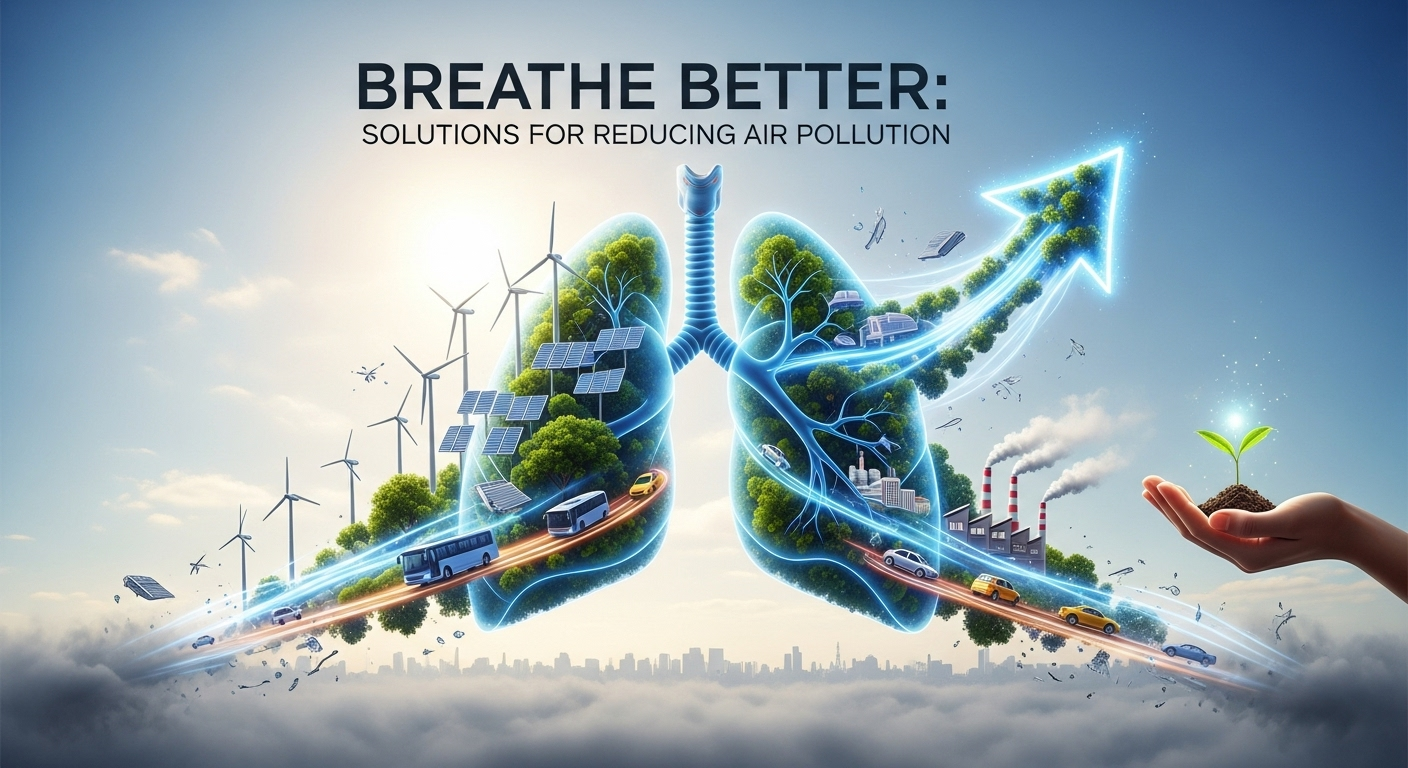
For industries, this involves rethinking product design, using recycled materials, and developing business models based on leasing or services rather than single-purchase sales (e.g., selling "lighting as a service" instead of just light bulbs). By closing the loop, companies can cut costs, create new revenue streams, and significantly shrink their environmental footprint. The circular economy is a systemic solution that tackles waste, resource depletion, and pollution simultaneously.
Investing in Green Technology and Reporting Emissions
Corporate responsibility must be transparent and accountable. A crucial step for any business is to accurately measure, report, and set targets for reducing its emissions. This includes not only direct emissions from its own operations (Scope 1) but also emissions from the electricity it purchases (Scope 2) and, most challenging, emissions from its entire value chain, including suppliers and customers (Scope 3). This transparency allows investors, consumers, and regulators to hold companies accountable for their environmental impact.
Beyond reporting, companies must actively invest in green technology and cleaner processes. This could mean upgrading a factory to be more energy-efficient, switching a vehicle fleet to electric, or funding R&D for less-polluting production methods. Many corporations are now establishing internal carbon prices to guide investment decisions, making low-carbon projects more financially attractive than their polluting counterparts. This proactive investment in clean solutions demonstrates a genuine commitment that goes beyond mere marketing.
Power to the People: Individual and Community-Level Actions
While large-scale government and corporate actions are indispensable, the power of individual and community choices should never be underestimated. The collective impact of millions of people making small, conscious changes in their daily lives can create a groundswell of transformation. These actions not only reduce our personal pollution footprint but also send a powerful message to policymakers and businesses about the public's demand for a cleaner, healthier environment. Community action amplifies this, allowing neighbors to work together on local solutions like community gardens, advocacy for bike lanes, or air quality monitoring projects.
Our daily choices—how we travel, what we buy, how we use energy at home—all have an atmospheric consequence. Opting to walk, cycle, or take public transport instead of driving a car for a short trip directly reduces tailpipe emissions. Being mindful of our energy consumption by turning off lights, using energy-efficient appliances, and properly insulating our homes reduces the demand on power plants. These may seem like small acts, but when multiplied across a city or a nation, their cumulative effect is substantial.
Furthermore, individual and community engagement is vital for holding leaders accountable. By participating in local government meetings, supporting environmental organizations, and voting for candidates with strong environmental platforms, citizens can shape the policies that govern their air quality. It is this synergy between top-down policy and bottom-up public action that creates the most resilient and lasting change. Every individual is a stakeholder in the air they breathe, and exercising that stake is a fundamental part of the solution.
| Action | Description | Impact on Air Pollution | Ease of Implementation |
|---|---|---|---|
| Sustainable Commuting | Choosing to walk, bike, or use public transport instead of a private car. | High | Medium |
| Reduce Energy Use | Turning off lights, using energy-efficient appliances, improving home insulation. | Medium | High |
| Conscious Consumption | Buying local produce, reducing meat intake, and avoiding single-use plastics. | Medium | Medium |
| Proper Waste Disposal | Recycling correctly and avoiding the open burning of trash. | Low (Individually), High (Collectively) | High |
| Use Low-VOC Products | Choosing paints, cleaners, and furniture with low or zero volatile organic compounds. | Low | Medium |
Conscious Consumerism and Lifestyle Adjustments
Every purchase we make is a vote for the kind of world we want to live in. By choosing products from companies with strong environmental credentials, we support sustainable business practices. This includes buying locally grown food to reduce “food miles,” which cuts down on transportation emissions. Reducing the consumption of red meat, particularly beef, can also have a surprising impact, as animal agriculture is a significant source of methane and requires vast resources, often linked to deforestation and transportation pollution.
Furthermore, being mindful of waste is crucial. The production, transportation, and disposal of goods all contribute to air pollution. By following the principle of "reduce, reuse, recycle," we can minimize this impact. This means avoiding single-use items like plastic bags and water bottles, repairing items instead of replacing them, and ensuring that our waste is properly sorted for recycling. These lifestyle adjustments cultivate a culture of sustainability that extends far beyond just our personal carbon footprint.
Improving Indoor Air Quality
We often focus on outdoor pollution, but the air inside our homes, schools, and offices can be two to five times more polluted. Indoor air quality is impacted by outdoor pollutants seeping in, as well as indoor sources like cooking fumes, cleaning products, and chemicals off-gassing from furniture and paint (VOCs). Taking steps to improve indoor air is a direct way to protect our own health and our family’s.
Simple solutions include ensuring proper ventilation by opening windows regularly, using exhaust fans when cooking or showering, and choosing low-VOC paints and furniture. Houseplants like Snake Plants and Spider Plants are known to be natural air purifiers, helping to filter out common toxins. For those in highly polluted areas or with respiratory sensitivities, investing in a high-quality air purifier with a HEPA filter can make a significant difference, capturing particulate matter, pollen, and other allergens before they can be inhaled.
***
Frequently Asked Questions (FAQ)
Q: What is the single most effective way to reduce air pollution?
A: There is no single silver bullet, as air pollution has many sources. However, the most impactful and widespread solution is the rapid transition away from burning fossil fuels (coal, oil, and gas) for energy and transportation. Shifting to renewable energy sources like solar and wind, and electrifying our transportation sector, tackles the root cause of a vast majority of the most harmful pollutants, including SO2, NOx, and fine particulate matter.
Q: Can planting trees really help with air pollution?
A: Yes, absolutely. Trees are nature's air purifiers. Through a process called deposition, they capture particulate pollutants on their leaves and bark. They also absorb gaseous pollutants like nitrogen oxides and ground-level ozone through the stomata in their leaves. While a single tree has a small effect, large-scale urban forestry and reforestation projects can significantly improve local and regional air quality, in addition to providing other benefits like cooling, biodiversity, and improved mental well-being.
Q: How does air pollution directly affect my health?
A: Air pollution has both short-term and long-term health effects. In the short term, it can cause irritation to the eyes, nose, and throat, shortness of breath, and can trigger asthma attacks. Long-term exposure is far more dangerous and is linked to chronic respiratory diseases (like COPD), lung cancer, heart disease, stroke, and even cognitive issues like dementia. The fine particulate matter (PM2.5) is especially hazardous as it can enter the bloodstream and cause systemic inflammation.
Q: Are electric vehicles (EVs) truly a zero-emission solution?
A: EVs are considered "zero-tailpipe-emission" vehicles, which is a crucial distinction. They do not emit harmful pollutants like NOx and PM2.5 at the point of use, making them a fantastic solution for cleaning up urban air quality. However, their overall environmental impact depends on two factors: the emissions from manufacturing the vehicle (especially the battery) and the source of the electricity used to charge it. If the electricity comes from a coal-fired power plant, emissions are simply moved from the tailpipe to the smokestack. Therefore, for EVs to be a true climate and clean air solution, they must be paired with a grid powered by renewable energy.
Conclusion
The fight for clean air is one of the most defining challenges of our time, but it is a challenge we are fully equipped to meet. The solutions for reducing air pollution are not mysterious or out of reach; they are available to us now. From the highest levels of international governance enacting bold policies to the individual choosing to ride a bike instead of drive, every action contributes to the collective goal of a healthier planet. The path forward requires a three-pronged attack: strong government regulation and investment, corporate innovation and accountability, and widespread public awareness and action.
We have the technology to transition to a world powered by clean energy. We have the knowledge to design cities that are sustainable and livable. And we have the capacity for collective action to demand and create change. The question is no longer what can be done, but whether we have the political and social will to do it with the urgency it requires. Breathing clean air is not a luxury; it is a fundamental human right. By working together across all sectors of society, we can clear the haze and ensure that future generations can breathe better, living healthier lives on a thriving planet.
—
Summary of the Article
The article, "Breathe Better: Solutions for Reducing Air Pollution," serves as a comprehensive guide to understanding and combating the global air pollution crisis. It begins by establishing the urgency of the issue and identifying the primary pollutants (like PM2.5, NOx, and SO2) and their sources, emphasizing that data-driven knowledge is the first step toward effective action.
The core of the article explores solutions at multiple levels:
- Government & Policy: It highlights the critical role of systemic change through strong legislation like Clean Air Acts, stringent emission standards for vehicles and industry, and smart urban planning that promotes green infrastructure and public transport.
- Technology & Innovation: The piece discusses the transformative power of technology, focusing on the shift to renewable energy (solar, wind) and the rise of Electric Vehicles (EVs) as key strategies to eliminate pollution at its source.
- Corporate Responsibility: It calls on businesses to move beyond compliance and embrace sustainability through circular economy principles, investment in green technology, and transparent emissions reporting (ESG).
- Individual & Community Action: The article empowers readers by outlining practical steps they can take, such as sustainable commuting, reducing energy consumption, making conscious consumer choices, and improving indoor air quality.
Supplemented with a comparative table of individual actions and an FAQ section addressing common questions, the article concludes that a multi-faceted, collaborative effort is essential. It posits that the combination of top-down policy, private sector innovation, and bottom-up public demand is the most powerful formula for achieving clean air, framing it as an attainable and necessary goal for global health and well-being.
