
Deforestation and Climate Change: The Vicious Cycle
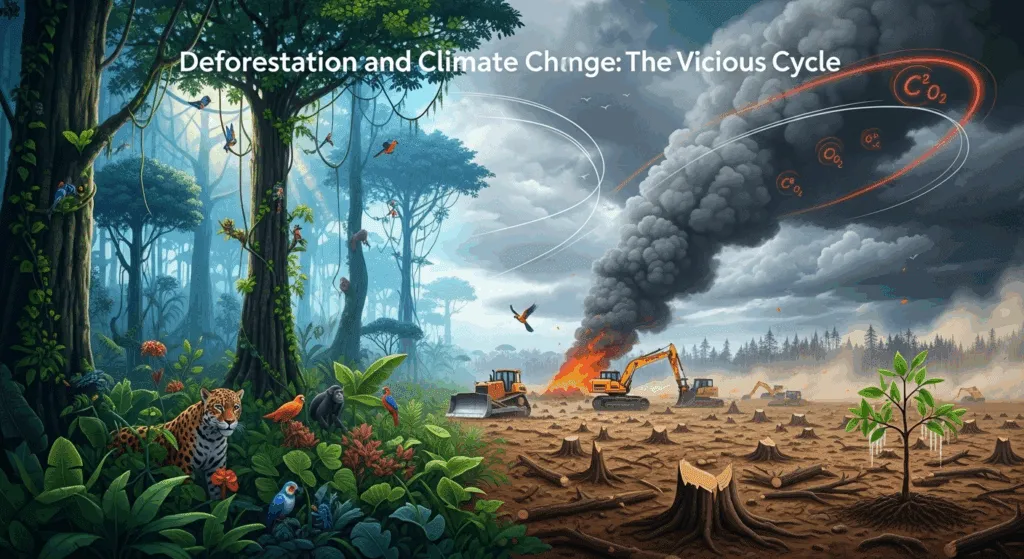
Deforestation and Climate Change: The Vicious Cycle
The lush, green canopies of our planet's forests are more than just beautiful landscapes; they are the lungs of the Earth, critical engines of ecological stability, and silent guardians against a rapidly changing climate. Yet, we are clearing them at an alarming rate. Every minute, an area of rainforest equivalent to several football fields vanishes, taking with it irreplaceable biodiversity and unleashing powerful forces that destabilize our world. The intricate and destructive relationship between deforestation and climate change forms a dangerous feedback loop, a vicious cycle where each problem exacerbates the other. Understanding this connection is not just an academic exercise; it is fundamental to grasping the scale of the environmental challenge we face and identifying the path toward a sustainable future.
What is Deforestation? Unpacking the Core Problem
At its most basic, deforestation is the permanent removal of trees to make way for another type of land use. This is not the same as sustainable logging where forests are managed and allowed to regenerate. Instead, it involves a complete conversion of a forested area into something else, such as agricultural land, cattle pastures, settlements, or mining operations. This process fundamentally alters the landscape, stripping it of its primary ecological function and setting off a cascade of negative environmental consequences that extend far beyond the cleared patch of land.
The drivers behind this widespread destruction are complex and often interconnected, primarily rooted in economic demands. Globally, the leading cause of deforestation is agriculture. The insatiable demand for commodities like palm oil (found in countless consumer goods), soy (largely for animal feed), and beef (for meat consumption) has driven the conversion of vast tracts of tropical rainforests in regions like the Amazon Basin and Southeast Asia. Other significant drivers include logging for timber and paper, the expansion of urban areas and infrastructure like roads and dams, and mining operations that require clearing large areas to access valuable minerals beneath the ground.
The scale of the problem is staggering. According to the Food and Agriculture Organization (FAO) of the United Nations, the world lost an estimated 10 million hectares of forest per year between 2015 and 2020. While the rate has slowed slightly compared to previous decades, it remains catastrophically high. The Amazon rainforest, which holds nearly half of the world's remaining tropical forests, is approaching a critical tipping point where large parts could permanently transition into a drier, savanna-like ecosystem, with devastating consequences for global climate patterns and biodiversity.
The Carbon Connection: How Deforestation Fuels Climate Change
Forests play a central and irreplaceable role in regulating the Earth's climate, primarily through the carbon cycle. Through the process of photosynthesis, trees absorb carbon dioxide (CO2)—the most significant greenhouse gas—from the atmosphere. They use the carbon to grow their trunks, branches, leaves, and roots, effectively locking it away. Because of this ability to absorb and store massive quantities of carbon, mature forests are known as vital carbon sinks. They are natural warehouses of carbon, preventing it from accumulating in the atmosphere where it traps heat and drives global warming.
When forests are cleared and burned, this entire process is thrown into reverse. Instead of absorbing CO2, they become a massive source of emissions. The carbon that has been stored for decades or even centuries within the trees and the underlying soil is rapidly released back into the atmosphere. This occurs through two primary mechanisms: the burning of forests (slash-and-burn agriculture), which instantly releases CO2, and the decomposition of leftover organic matter, which releases CO2 and methane over time. Consequently, deforestation and associated land-use changes are responsible for a significant portion—estimated at around 10-12%—of all global greenhouse gas emissions.
This makes deforestation a primary driver of climate change, on par with emissions from the entire global transportation sector. It's a double blow to the climate system. Not only are we adding huge amounts of heat-trapping gases into the atmosphere, but we are also simultaneously destroying the very ecosystems that are best equipped to remove those gases. This dual impact makes halting deforestation one of the most effective and immediate strategies we have for mitigating climate change.
The Loss of Carbon Sinks
The most profound long-term climatic impact of deforestation is the loss of the planet’s capacity for carbon sequestration. A healthy, growing forest is a dynamic system, constantly pulling CO2 out of the air. A single mature tree can absorb as much as 48 pounds (22 kilograms) of CO2 per year. When you multiply that by the billions of trees in a vast rainforest, the scale of this natural "carbon capture and storage" technology becomes apparent. It's a free and highly efficient service provided by nature that we are systematically dismantling.
Once a forest is gone, its carbon absorption capacity is lost forever, or at least for the many decades or centuries it would take for a new forest to mature. This means that even if we were to stop all fossil fuel emissions tomorrow, the CO2 already in the atmosphere would persist for longer because there are fewer forests to draw it down. The removal of these crucial carbon sinks ensures that future emissions will have a more potent and lasting warming effect, accelerating the pace of climate change and making it much harder to stabilize global temperatures.
The Direct Emission of Greenhouse Gases
Beyond losing a carbon sink, deforestation is also an active source of emissions. The most common method for clearing land in the tropics is slash-and-burn agriculture, where vegetation is cut down and set ablaze. This practice is a potent cocktail of greenhouse gas pollution. The combustion of biomass releases enormous quantities of stored carbon directly into the atmosphere as CO2. It is like setting a carbon warehouse on fire.
Furthermore, the fires and subsequent decomposition of organic matter in the soil release other powerful greenhouse gases, including methane (CH4) and nitrous oxide (N2O). While less abundant than CO2, these gases have a much higher heat-trapping potential. Methane, for instance, is over 80 times more potent at trapping heat than CO2 over a 20-year period. Therefore, the immediate climate impact of burning a forest is incredibly intense. These direct emissions create a significant spike in atmospheric greenhouse gas concentrations, providing a powerful and immediate jolt to the global climate system.
Climate Change Strikes Back: The Impact on Remaining Forests
The relationship between deforestation and climate change is not a one-way street; it's a terrifying feedback loop. While clearing forests drives climate change, the resulting climatic shifts—such as rising temperatures, prolonged droughts, and erratic weather—put immense stress on the remaining forests. This creates a vicious cycle where a warmer world makes forests more vulnerable, leading to further forest degradation and death, which in turn releases more carbon and further accelerates warming.
Rising global temperatures directly harm forests by creating conditions that are outside their optimal range for growth and survival. Trees become stressed, their growth slows, and they become more susceptible to diseases and pest infestations. For example, warmer winters in North America have allowed the mountain pine beetle to survive and expand its range, devastating millions of acres of pine forest. These dead forests no longer absorb carbon; instead, they decompose and become another source of emissions.
Perhaps the most visible impact of climate change on forests is the increased risk of fire. Hotter, drier conditions turn forest ecosystems into tinderboxes, primed for ignition. Heatwaves and prolonged droughts, which are becoming more frequent and severe due to climate change, kill vegetation and dry out the forest floor. This abundance of dry fuel means that when fires do start—whether from lightning or human activity—they spread faster, burn hotter, and are far more difficult to control, leading to an even greater release of carbon.
Increased Frequency and Intensity of Forest Fires
The devastating "megafires" that have scorched landscapes in Australia, California, Siberia, and even the Amazon in recent years are a stark illustration of this feedback loop in action. Climate change creates the perfect storm for catastrophic wildfires. Extended periods of record-breaking heat and drought stress trees and dry out the landscape, creating an abundance of flammable material. Stronger winds, another symptom of a destabilized climate system, can then fan the flames, allowing fires to spread with terrifying speed and intensity.
These fires do more than just destroy trees; they sterilize soil, making it difficult for forests to regenerate, and they release massive "pulses" of carbon into the atmosphere. The 2019-2020 Australian bushfire season, for example, is estimated to have released more CO2 than Australia's normal annual emissions from all other sources combined. This sudden injection of greenhouse gases further warms the planet, which in turn leads to even hotter and drier conditions, creating a self-perpetuating cycle of fire and warming.
Altered Weather Patterns and Ecosystem Stress
Large, intact forests are not just passive inhabitants of their environment; they are active creators of it. Through a process called evapotranspiration, trees release vast amounts of water vapor into the air. This moisture contributes to cloud formation and generates rainfall, often hundreds or thousands of miles downwind. The Amazon rainforest, for instance, is famously known for creating its own weather, producing "flying rivers" of moisture that influence rainfall patterns across South America.
Deforestation disrupts this crucial process. When a large area of forest is cleared, less moisture is returned to the atmosphere. This can lead to a significant reduction in regional rainfall, causing droughts and increasing water stress on the remaining forest patches and adjacent agricultural lands. This climate-induced drought makes the forest even more susceptible to fire and dieback. In essence, as the forest shrinks, so does the rain it produces, making it harder for the remaining trees to survive and for any reforestation efforts to succeed.
Beyond Carbon: The Wider Ecological Consequences
While the carbon cycle is central to the climate change discussion, the impacts of deforestation extend far beyond greenhouse gas emissions. Forests are complex, living ecosystems that provide essential services to the planet and humanity. Their destruction triggers a domino effect of ecological crises, from mass extinction to the disruption of human livelihoods.
Perhaps the most tragic and irreversible consequence is catastrophic biodiversity loss. Tropical rainforests, while covering only about 6% of the Earth's surface, are thought to be home to over half of all terrestrial species of plants, animals, and insects. For millions of these species, the forest is their only home. When their habitat is destroyed, they have nowhere else to go. Deforestation is the single greatest driver of species extinction on the planet, erasing eons of evolution in a matter of decades and permanently diminishing the richness of life on Earth.
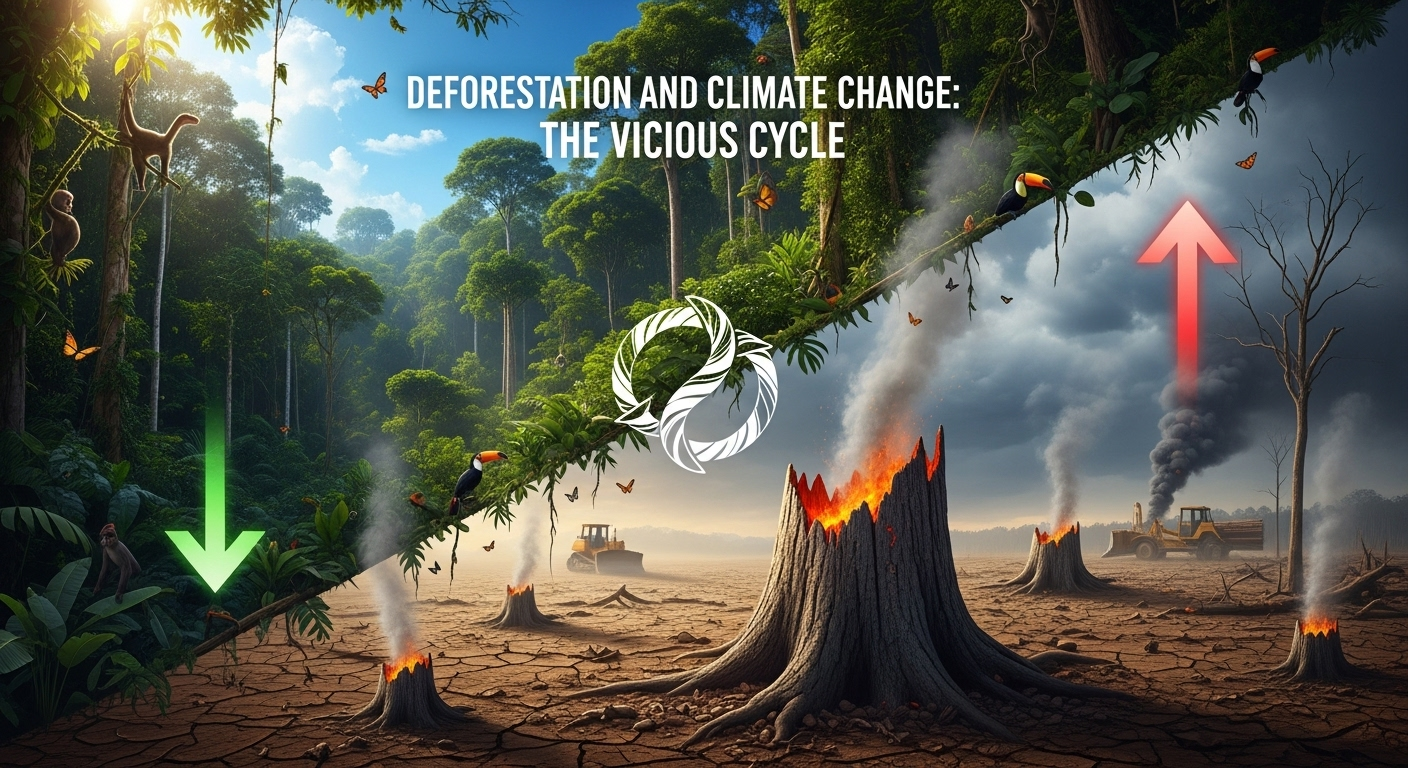
Furthermore, deforestation has severe impacts on soil and water systems. Tree roots hold soil in place, and the forest canopy intercepts heavy rainfall, allowing it to percolate gently into the ground. When trees are removed, bare soil is exposed to the full force of wind and rain, leading to massive soil erosion. This eroded topsoil clogs rivers and streams, degrading water quality and harming aquatic life. It also diminishes agricultural productivity and can increase the risk of landslides and flooding for communities living downstream.
| Feature | Healthy Forest Ecosystem | Deforested Area |
|---|---|---|
| Carbon Regulation | Acts as a major carbon sink, actively absorbing CO2. | Becomes a major carbon source, releasing stored CO2. |
| Biodiversity | High; home to millions of species. | Extremely low; habitat loss leads to mass extinction. |
| Water Cycle | Regulates rainfall through evapotranspiration. | Disrupted; leads to reduced rainfall and regional droughts. |
| Soil Stability | High; roots prevent erosion, soil is rich in nutrients. | Low; high rates of soil erosion, nutrient loss. |
| Human Benefits | Provides clean air, clean water, resources, and climate stability. | Loss of resources, increased risk of floods and landslides. |
Breaking the Cycle: Solutions and Global Efforts
While the picture is dire, the cycle of deforestation and climate change is not unbreakable. A multi-faceted approach involving governments, corporations, and individuals is required to protect existing forests, restore what has been lost, and address the underlying drivers of destruction. The goal is two-fold: stop the bleeding by halting deforestation now and begin the healing process through restoration and sustainable practices.
At the international and national levels, strong governance is key. This includes enforcing laws against illegal logging, protecting the land rights of Indigenous communities (who are often the most effective forest guardians), and creating financial incentives for conservation. Programs like REDD+ (Reducing Emissions from Deforestation and Forest Degradation) aim to provide developing countries with financial compensation for keeping their forests standing. International agreements and corporate commitments to achieving "zero-deforestation" supply chains are also critical levers for change, putting pressure on producers of commodities like palm oil and soy to adopt sustainable practices.
On the ground, these high-level policies must be translated into tangible action. This involves promoting agricultural techniques that are more productive on less land, thereby reducing the pressure to clear new forests. It also means investing heavily in monitoring technologies, such as satellite imagery, to quickly detect and respond to illegal clearing. Ultimately, success hinges on making a living forest more valuable to local communities and national economies than a cleared one.
Reforestation and Afforestation
One of the most hopeful and tangible solutions is the active restoration of forest landscapes. This is typically done through two methods: reforestation, which is the process of replanting trees in areas where forests were previously cleared, and afforestation, which involves planting trees in areas that were not historically forested. Both are powerful tools for drawing down atmospheric CO2 over the long term and rebuilding ecological resilience.
However, it is not a simple fix. Successful restoration is more complex than just planting seedlings. It requires using native tree species that are well-suited to the local climate and soil, and often involves a mix of species to recreate a more natural and resilient ecosystem. Critically, reforestation cannot be seen as an excuse to continue destroying old-growth primary forests. Mature, established forests store far more carbon and harbor vastly more biodiversity than newly planted ones. Protecting what we already have remains the top priority.
Sustainable Agriculture and Land Management
Since agriculture is the primary driver of deforestation, transforming our food systems is non-negotiable. This involves a shift towards sustainable intensification, where farmers are empowered to grow more food on existing agricultural land without expanding into forests. Techniques like agroforestry (integrating trees into farms), improved soil management, and crop diversification can boost yields, enhance biodiversity, and increase resilience to climate change.
On the consumer side, our choices also play a powerful role. Reducing consumption of products heavily linked to deforestation, particularly beef from cleared rainforest land and uncertified palm oil, can significantly reduce the economic pressure driving forest destruction. Shifting towards more plant-rich diets and reducing food waste are also powerful actions that lessen the overall land footprint of our food system, freeing up space for nature to recover.
The Role of Individual Action and Consumer Choice
While systemic change is essential, individual actions, when multiplied across millions of people, can create a powerful force for good. As consumers and citizens, we have a voice and a choice. We can actively support companies that are committed to deforestation-free supply chains and hold those that are not to account. Making informed choices at the grocery store is a direct way to vote with your wallet for a healthier planet.
Here are a few actionable steps individuals can take:
- Check for Certifications: Look for products with credible certifications like the Forest Stewardship Council (FSC) for wood and paper, the Rainforest Alliance seal for various food items, and RSPO (Roundtable on Sustainable Palm Oil) for palm oil products.
- Reduce and Rethink Consumption: Consider reducing your consumption of red meat, especially beef sourced from South America.
- Support Conservation Organizations: Donate to or volunteer with reputable organizations working on the front lines of forest conservation and reforestation.
- Raise Your Voice: Talk to friends and family about the issue. Contact your political representatives and urge them to support strong climate and conservation policies.
Frequently Asked Questions (FAQ)
Q1: Why are tropical rainforests so important for the climate?
A1: Tropical rainforests are crucial for three main reasons. First, they are massive carbon sinks, absorbing and storing huge amounts of CO2. Second, they act as climate regulators, influencing global weather patterns by releasing moisture that creates rainfall (evapotranspiration). Third, they are hotspots of biodiversity, and their health is an indicator of the overall health of the planet.
Q2: What is the single biggest cause of deforestation worldwide?
A2: The overwhelming driver of global deforestation is agriculture. The expansion of land for cattle ranching (primarily for beef), soy cultivation (mostly for animal feed), and palm oil plantations accounts for the majority of tropical forest loss.
Q3: Can planting trees solve climate change on its own?
A3: No, planting trees is not a silver bullet, but it is an essential part of the solution. Reforestation and afforestation are powerful ways to remove CO2 from the atmosphere. However, this must be done in parallel with two other critical actions: aggressively cutting greenhouse gas emissions from burning fossil fuels and protecting existing, mature forests, which are far more effective at storing carbon and supporting biodiversity than new plantations.
Q4: How can I know if a product I'm buying contributes to deforestation?
A4: It can be difficult, but there are clues. Look for credible third-party certifications on packaging. The Forest Stewardship Council (FSC) logo indicates sustainably sourced wood and paper products. The Rainforest Alliance frog seal appears on products like coffee, chocolate, and bananas from farms that meet certain environmental and social standards. For palm oil, look for the RSPO (Roundtable on Sustainable Palm Oil) certification, though researching a brand's specific commitments is often necessary for a clearer picture.
Conclusion
The connection between deforestation and climate change is an undeniable and perilous vicious cycle. Clearing forests pumps billions of tons of carbon into our atmosphere, directly accelerating global warming. In turn, the resulting climate change—with its higher temperatures, severe droughts, and rampant wildfires—degrades and destroys the very forests that remain, further fueling the cycle. This destructive feedback loop threatens not only global climate stability but also the planet's biodiversity, the integrity of our soil and water systems, and the livelihoods of millions of people.
Breaking this cycle requires a decisive and united global effort. It demands that we protect our last remaining pristine forests as an absolute priority, while simultaneously investing in large-scale ecological restoration. It necessitates a fundamental transformation of our global food system to end its reliance on forest destruction. From international accords and corporate supply chains to the daily choices we make in the supermarket, every action matters. The challenge is immense, but the path forward is clear. A future with a stable climate is impossible without healthy, thriving forests.
***
Summary
The article, "Deforestation and Climate Change: The Vicious Cycle," explores the destructive, interconnected relationship between these two global crises. It establishes that deforestation, primarily driven by agriculture for commodities like palm oil, soy, and beef, is a major contributor to climate change. This occurs through two mechanisms: the loss of forests as vital "carbon sinks" that absorb atmospheric CO2, and the direct release of massive amounts of greenhouse gases when forests are burned or cleared.
The article highlights that this relationship is a "vicious cycle," as the effects of climate change—such as increased temperatures, prolonged droughts, and more frequent and intense wildfires—put remaining forests under severe stress, causing further degradation and carbon release. This feedback loop accelerates both problems.
Beyond the carbon impact, the piece details wider consequences, including catastrophic biodiversity loss, soil erosion, and disruption of regional water cycles. Finally, it outlines key solutions, emphasizing a multi-pronged approach that includes:
- Protecting existing forests through better governance and law enforcement.
- Large-scale reforestation and afforestation efforts.
- Shifting to sustainable agriculture and land management.
- Empowering individual consumers to make informed, deforestation-free choices.
The conclusion reinforces that halting deforestation and restoring forests are non-negotiable strategies in the fight against climate change, essential for ensuring planetary stability.
