Lebanon Reports Three Fatalities in Israeli Strike on Beirut Suburb
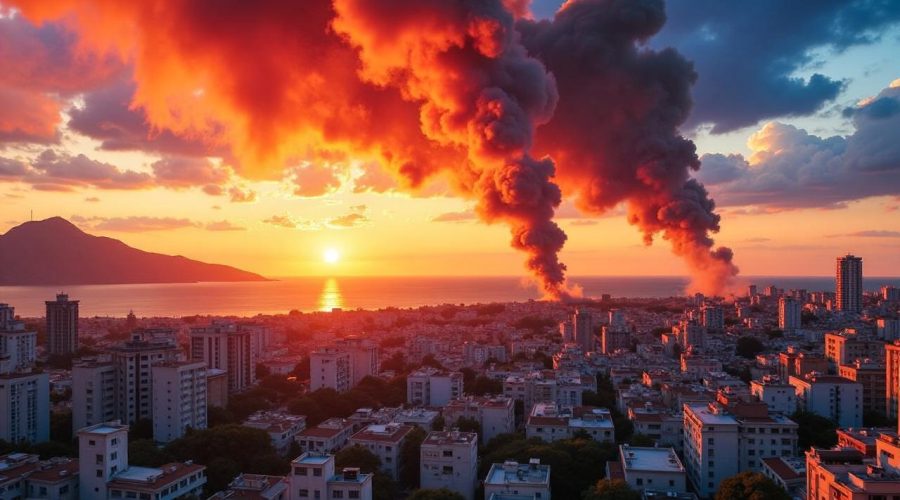
Lebanon says three killed in Israeli – On Sunday, an Israeli air strike targeting a Hezbollah command center in Beirut’s southern suburb caused at least three deaths and 15 injuries, according to Lebanon’s state-run media. The attack, which struck the Dahieh area, was described by the Israel Defense Forces (IDF) as a response to Hezbollah’s recent missile launches toward Israel. The Iran-backed militant group had previously targeted Israeli territory, prompting the IDF to claim it was acting in self-defense. Initial images from the scene revealed severe structural damage around the impacted building, with debris scattered across the neighborhood.
US President’s Response to the Attack
Following the strike, US President Donald Trump took to Truth Social to criticize the action, stating it “should not have happened, particularly on a special day when we are so close to a Peace Deal with Iran.” He argued that Israel’s retaliation was disproportionate, emphasizing that the attack it was responding to was minor and caused no casualties. “There should be no more attacks by Israel anywhere in Lebanon, but there should also be no more attacks by any other party, including Hezbollah, against Israel,” he wrote. Trump’s comments came amid ongoing negotiations between the US and Iran to finalize a landmark agreement aimed at curbing Tehran’s nuclear ambitions.
Iran’s senior military official, Brigadier General Mohammad Jafar Assadi, warned that the Israeli strike could undermine the fragile progress toward the expected deal. The attack, he said, would not go “unanswered,” suggesting that Iran might escalate its own military actions in response. Meanwhile, Mohammad Bagher Ghalibaf, Iran’s chief negotiator in the talks with the US, accused Israel of undermining the peace process by launching strikes in Lebanon. “The attack on Dahieh demonstrates the US is not fulfilling its commitments to the agreement,” Ghalibaf stated, highlighting the tension between the two nations.
Context of the Broader Conflict
Lebanon’s involvement in the regional conflict dates back to March 2, when Hezbollah retaliated against an Israeli strike that killed Iran’s supreme leader, Ayatollah Ali Khamenei. The group launched rockets into northern Israel, drawing a swift Israeli response. Over the following days, Israel intensified its bombing campaign in Lebanon, invading significant portions of the southern territory. This marked the beginning of a prolonged military operation that has since strained relations between the country and its allies.
Earlier in the conflict, on February 28, Israel and the US began conducting strikes against Iran’s nuclear facilities, escalating tensions in the region. These attacks prompted Iran to retaliate, with missile launches directed at Israeli and US-allied targets in the Gulf. The conflict also saw the disruption of the Strait of Hormuz, a critical maritime route for global oil and liquefied natural gas shipments. Despite a ceasefire agreement signed in April, sporadic exchanges of fire have continued, keeping the region in a state of unrest.
Lebanon’s state media has framed the recent strike as a significant blow to the peace deal with the US, while Israeli officials argue the operation is separate from the Iran negotiations. They insist public support remains strong for targeting Hezbollah, which they accuse of launching repeated attacks in northern Israel. The ongoing conflict has raised concerns about the potential for a larger war, with both sides vying for influence in the region.
Iran’s Nuclear Ambitions and Regional Tensions
For years, Iran has faced accusations from Western nations regarding its nuclear program. Critics claim the country is pursuing weapons-grade material to develop nuclear weapons, while Iran has consistently denied these allegations, asserting its program is solely for peaceful purposes such as generating electricity and conducting scientific research. The US-Iran deal, which aims to limit Iran’s nuclear capabilities in exchange for sanctions relief, has been a central focus of the negotiations. However, the Israeli strike on Dahieh has cast doubt on the agreement’s viability, with reports suggesting it could derail the deal entirely.
Analysts note that the strike highlights the growing complexity of the conflict, which now involves multiple fronts. Lebanon, caught between the opposing forces, has become a battleground for the broader geopolitical struggle. The US and Israel’s coordinated efforts against Iran have not only intensified the conflict but also forced Tehran to redirect its military focus toward the Gulf and southern Lebanon. This has created a situation where the regional tensions are increasingly intertwined, complicating efforts to reach a lasting resolution.
Lebanon’s government has called for an end to the violence, but the country’s leadership has also expressed frustration with the ongoing attacks. The strike on Dahieh, which targeted Hezbollah, has raised questions about the group’s role in the conflict and whether its actions will continue to strain relations with Israel. Meanwhile, Iran has used the attack to argue that the US is not honoring its commitments, suggesting that the deal may be at risk unless both sides agree to mutual restraint.
Implications for the Peace Deal
The timing of the strike has added urgency to the peace negotiations, which were expected to finalize a deal by early March. Trump had previously announced that the agreement was “scheduled to get signed tomorrow,” but the attack has cast uncertainty over the timeline. Iranian officials have warned that any further escalation could jeopardize the talks, potentially leading to a breakdown in negotiations. The deal, if successful, would mark a historic step in reducing nuclear tensions and easing regional hostilities.
Israel, however, maintains that its military actions in Lebanon are necessary to counter Hezbollah’s threats. The country has argued that the conflict is separate from the US-Iran negotiations, with public support for the war in Lebanon remaining high. Israeli officials have pointed to the recent missile attacks from Hezbollah as justification for their continued strikes. If Iran successfully links the two conflicts, Israel may be compelled to scale back its operations in the south, raising the possibility of a negotiated settlement.
As the situation evolves, the focus remains on balancing the competing interests of all parties involved. The Israeli strike on Dahieh has not only deepened the rift between Iran and the US but also reinvigorated the debate over Lebanon’s role in the regional conflict. With the ceasefire agreement in place, the hope is that the strike will not derail the peace process, but the immediate reactions suggest the path to resolution may be more challenging than anticipated.