
Sustainable Agriculture Methods for Long-Term Food Security
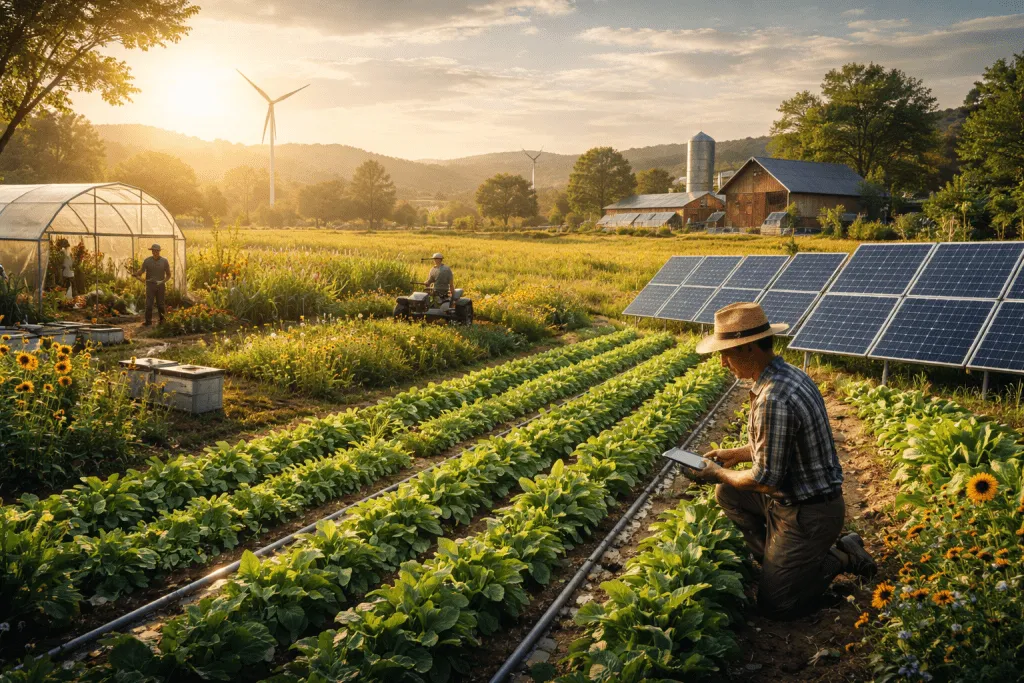
Food security depends on the ability of agricultural systems to produce enough nutritious food without degrading the natural resources that support them. As climate change, soil depletion, and water scarcity intensify, farmers and policymakers are turning to sustainable agriculture methods to ensure long-term productivity. These approaches focus on maintaining soil health, conserving water, protecting biodiversity, and reducing reliance on harmful chemical inputs. By balancing environmental, economic, and social factors, sustainable farming creates resilient food systems that can endure for generations.
The Foundations of Sustainable Agriculture
At its core, sustainable agriculture is built on the principle of meeting present food needs without compromising future production capacity. Sustainable agriculture methods prioritize ecological balance, resource efficiency, and long-term soil fertility. Instead of maximizing short-term yields at any cost, they aim for steady productivity supported by healthy ecosystems.
Healthy soil is the foundation of sustainable farming. Practices such as crop rotation, cover cropping, and reduced tillage help maintain soil structure and nutrient levels. These techniques reduce erosion, improve water retention, and support beneficial microorganisms that naturally enhance plant growth.
Another key pillar is biodiversity. Diverse farming systems are more resilient to pests, diseases, and extreme weather. By integrating multiple crops, livestock, and even agroforestry systems, farmers reduce risk and strengthen ecological stability.
Soil Management and Regenerative Practices
Soil degradation is one of the greatest threats to global food security. Intensive monoculture and excessive chemical inputs have stripped many fields of organic matter and microbial life. Sustainable agriculture methods address this problem by restoring soil health through regenerative practices.
Conservation tillage reduces soil disturbance, preserving organic matter and preventing erosion. When combined with cover crops, it increases carbon sequestration and improves nutrient cycling. These measures enhance long-term fertility while reducing greenhouse gas emissions. Composting and organic amendments are also central to soil regeneration. Instead of relying solely on synthetic fertilizers, farmers apply compost, manure, and plant residues to enrich soil naturally. This improves structure, increases microbial diversity, and reduces dependency on external inputs.
Integrated nutrient management further strengthens soil sustainability. By balancing organic and inorganic fertilizers based on soil testing, farmers prevent over-application and nutrient runoff. This protects surrounding water bodies and ensures more efficient resource use.
Water Conservation and Efficient Irrigation
Water scarcity is becoming a defining challenge for agriculture. Traditional irrigation systems often waste significant amounts of water through evaporation and runoff. Sustainable agriculture methods promote efficient water management to safeguard long-term production.
Drip irrigation systems deliver water directly to plant roots, minimizing losses and improving efficiency. Compared to conventional flood irrigation, drip systems can significantly reduce water use while maintaining or even increasing yields. This approach is particularly valuable in arid and semi-arid regions.
Rainwater harvesting and water recycling are additional strategies. Collecting and storing rainwater reduces reliance on groundwater and surface water sources. Mulching also helps retain soil moisture by reducing evaporation and regulating temperature.
Soil organic matter plays a critical role in water retention. Fields rich in organic content can hold more moisture during drought periods. By integrating soil-building practices, farmers create systems that withstand climate variability more effectively.
Integrated Pest Management and Reduced Chemical Use
Excessive pesticide use has led to environmental contamination, resistance in pest populations, and health concerns. Sustainable agriculture methods promote Integrated Pest Management (IPM) as a balanced alternative.
IPM combines biological controls, cultural practices, and minimal chemical intervention. For example, introducing natural predators such as ladybugs can control aphid populations without synthetic pesticides. Crop rotation and intercropping disrupt pest life cycles and reduce infestation risks.
Monitoring and threshold-based intervention are key principles of IPM. Farmers apply chemical treatments only when pest populations exceed economic damage thresholds. This reduces chemical residues in food and lowers production costs over time.
By encouraging beneficial insects and maintaining habitat diversity, farms become more self-regulating ecosystems. Reduced chemical dependency protects pollinators, soil organisms, and surrounding wildlife, contributing to overall ecological stability.
Agroforestry and Diversified Farming Systems
Diversification strengthens resilience and enhances long-term productivity. Agroforestry, a practice that integrates trees with crops or livestock, is one of the most effective sustainable agriculture methods.
Trees improve soil fertility through leaf litter and nitrogen fixation in certain species. Their root systems reduce erosion and enhance water infiltration. Shade from trees can also protect crops and livestock from heat stress, which is increasingly important under climate change conditions.
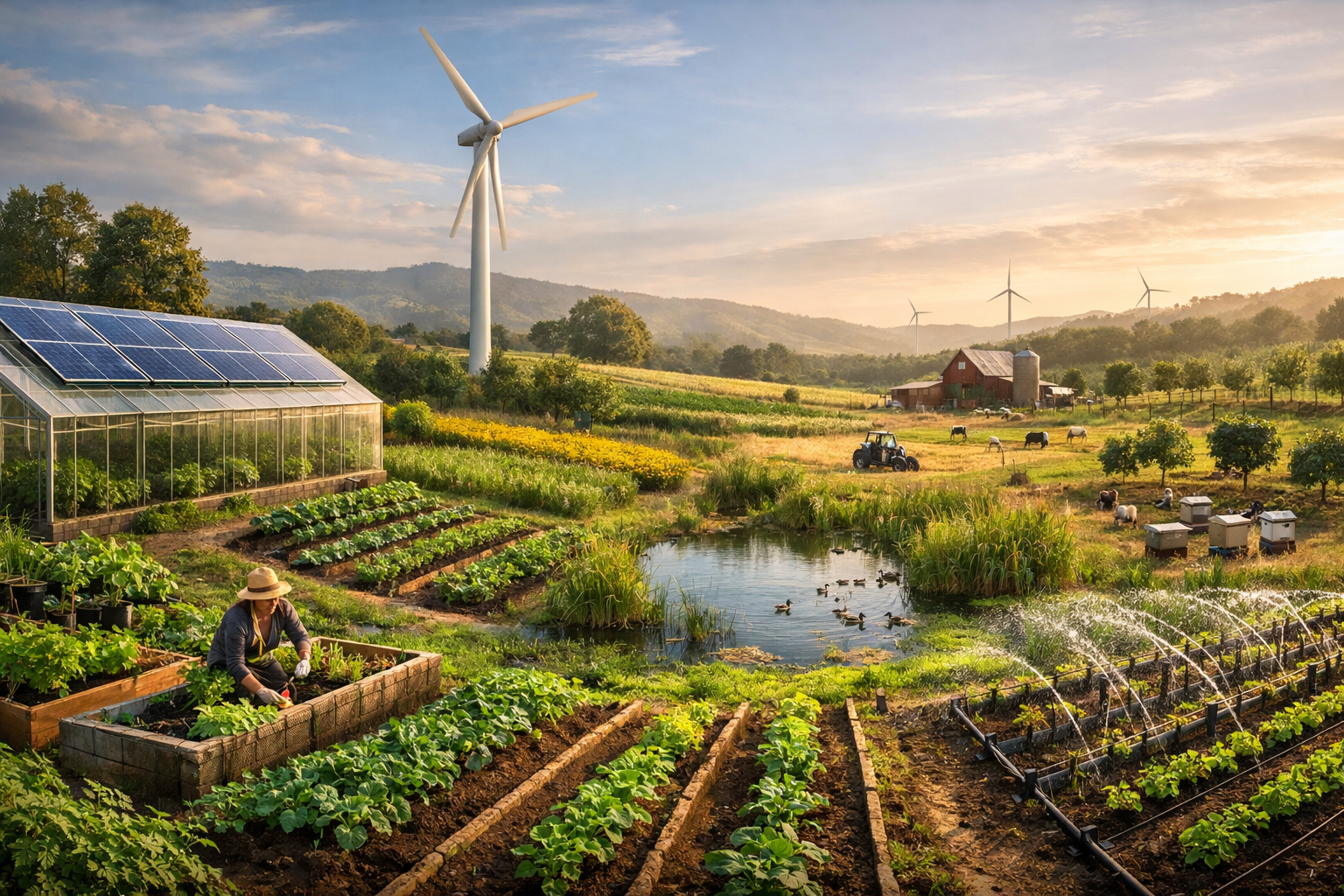
Mixed farming systems that combine crops and livestock create closed nutrient cycles. Animal manure enriches soil, while crop residues provide feed. This synergy reduces waste and reliance on external inputs.
Polyculture systems, where multiple crops grow together, increase biodiversity and reduce vulnerability to pests and diseases. If one crop fails due to environmental stress, others can still provide yield. Such systems contribute to stable income for farmers and consistent food supply for communities.
Technology and Innovation in Sustainable Farming
Modern technology supports the implementation of sustainable agriculture methods. Precision agriculture tools, including GPS-guided equipment and soil sensors, enable farmers to apply inputs more accurately. This reduces waste, lowers costs, and minimizes environmental impact.
Data-driven decision-making improves resource efficiency. Farmers can monitor soil moisture, nutrient levels, and crop health in real time. With this information, they optimize irrigation, fertilization, and pest control practices.
Renewable energy integration is another innovation. Solar-powered irrigation systems and biogas digesters reduce dependence on fossil fuels. These technologies decrease greenhouse gas emissions and operational expenses simultaneously.
Digital platforms also facilitate knowledge sharing among farmers. Access to best practices and climate forecasts supports adaptive strategies. As technology becomes more accessible, sustainable practices can scale globally.
Social and Economic Dimensions of Sustainability
Long-term food security requires not only environmental balance but also economic viability. Sustainable agriculture methods must generate stable income for farmers while ensuring affordable food for consumers.
Local supply chains and community-supported agriculture strengthen rural economies. By reducing intermediaries, farmers retain a larger share of profits. Consumers gain access to fresh, traceable produce.
Fair labor practices and inclusive policies are equally important. Supporting smallholder farmers with training and access to resources enhances productivity and resilience. When farmers adopt sustainable methods, entire communities benefit through improved health, employment, and food availability.
Policy support plays a decisive role. Incentives for conservation practices, research funding, and education programs accelerate adoption. Coordinated efforts between governments, institutions, and farmers create systemic change.
Conclusion
Sustainable agriculture methods provide a comprehensive framework for achieving long-term food security. By restoring soil health, conserving water, reducing chemical dependency, promoting biodiversity, and integrating innovation, these practices strengthen resilience in the face of climate and resource challenges. Sustainable farming ensures that agricultural productivity can continue without exhausting the natural systems that sustain it.
FAQ
Q: What are sustainable agriculture methods? A: They are farming practices designed to maintain long-term productivity by conserving soil, water, and biodiversity while reducing environmental harm.
Q: How do sustainable agriculture methods improve food security? A: They enhance resilience, protect natural resources, and stabilize yields, ensuring consistent food production over time.
Q: Are sustainable farming practices economically viable? A: Yes, they often reduce input costs, improve soil fertility, and increase long-term profitability through efficiency and diversification.
Q: What role does technology play in sustainable agriculture? A: Technology improves precision in irrigation, fertilization, and pest management, reducing waste and environmental impact.
Q: Can small-scale farmers adopt sustainable agriculture methods? A: Yes, many practices such as crop rotation, composting, and water conservation are accessible and adaptable to small farms.
