
Effective Best Practices for Organizing Your Kitchen Cabinets
Effective Best Practices for Organizing Your Kitchen Cabinets
Organizing your kitchen cabinets can significantly enhance the functionality and efficiency of your kitchen space. A well-organized kitchen not only makes cooking and cleaning easier but also helps in saving time and reducing stress. In this article, we will cover the best practices for organizing kitchen cabinets so you can create a more accessible and aesthetically pleasing kitchen environment.
1. Start with a Clean Slate
The first step in organizing your kitchen cabinets is to clear everything out. Take everything out of your cabinets and drawers, and assess the items you have. This is the perfect opportunity to declutter—donate or discard anything that is expired, broken, or never used. A clean slate will give you a better sense of how much space you have and how to organize your items more effectively.
By starting fresh, you’ll be able to optimize your kitchen’s storage by organizing items you actually need and use. Take note of any items that are bulky or difficult to store, as this will inform your decisions for special storage solutions.
2. Group Items by Category
Once you’ve decluttered, it’s time to group your kitchen items by category. Categorizing items is one of the best practices for organizing kitchen cabinets, as it helps you maintain easy access and reduces time spent looking for things. For example:
* Cooking utensils and tools: Store spatulas, tongs, and whisks together. * Canned goods and dry ingredients: Group canned vegetables, soups, and pasta separately from baking supplies. * Tupperware and containers: Nest smaller containers inside larger ones and match lids to avoid unnecessary chaos.
By grouping similar items together, you’ll be able to access them more quickly when cooking. Make sure to place the items you use most frequently in easy-to-reach cabinets.
3. Utilize Vertical Space and Shelving
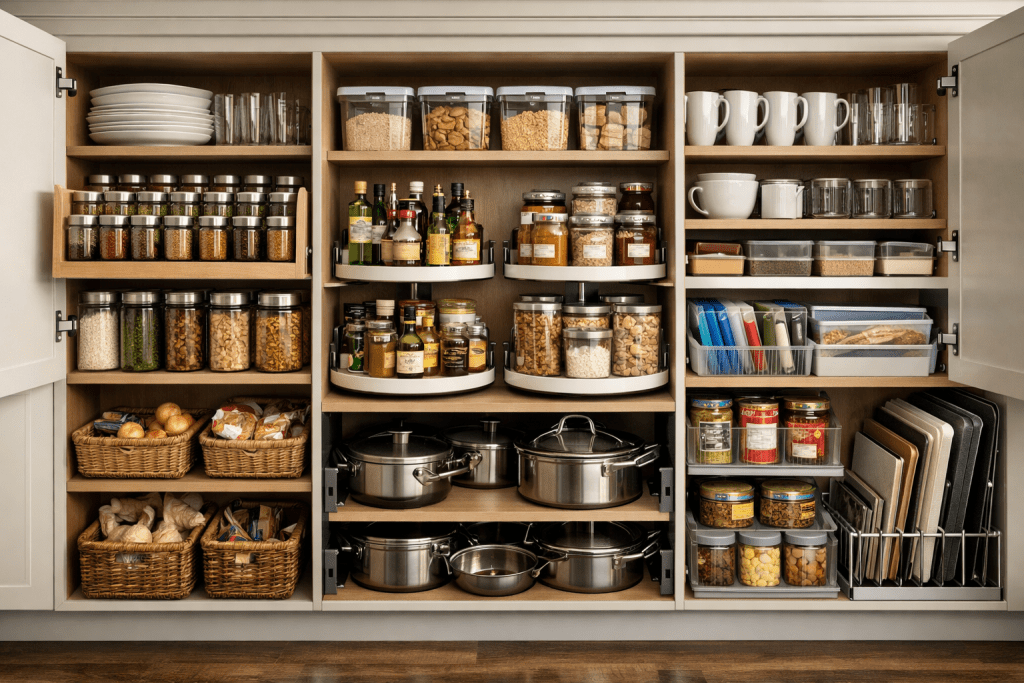
One of the most efficient ways to organize your kitchen cabinets is by taking advantage of vertical space. Add extra shelves inside your cabinets or use stackable storage bins to optimize height. Adjustable shelves can help accommodate taller items like cereal boxes or wine bottles.
Consider installing pull-out shelves or lazy Susans for easier access to deep cabinets. This technique allows you to avoid digging around in the back of your cabinets to find a seldom-used item. Additionally, drawer dividers can keep your utensils neat and easy to grab.
4. Prioritize Frequently Used Items
When organizing your kitchen, it’s essential to prioritize frequently used items for easier access. Place everyday items such as plates, bowls, and coffee mugs in the most accessible cabinets, preferably at eye level. Items that are used less often, like specialty serving dishes or seasonal cookware, can be placed in higher or lower cabinets.
Use drawer organizers to sort smaller items like measuring spoons, kitchen knives, or scissors. Having these items at your fingertips will streamline your cooking process, making it more enjoyable.
5. Label and Use Storage Containers
Labels are a game-changer when it comes to maintaining organization in your kitchen cabinets. Label your containers, shelves, and bins, so everyone in your household knows where things belong. This is especially helpful in a shared kitchen where multiple people are using the same space.
Investing in clear storage containers for things like spices, flour, sugar, or even snacks will help keep your kitchen visually appealing and functional. Opt for airtight containers to preserve the freshness of your ingredients and avoid spills. By having clear containers, you can easily identify what’s inside without opening each one.
6. Regularly Reassess and Maintain
Once your kitchen cabinets are organized, it’s important to regularly reassess your organization system. As your needs change or your inventory fluctuates, you may need to adjust how things are stored. Monthly checks can help ensure your kitchen stays organized.
Maintain cleanliness by wiping down shelves and organizing items when they’re not in use. If necessary, create a system for returning items to their designated spots after each use. This will ensure your kitchen continues to function at its best, day in and day out.
Conclusion
By following these best practices for organizing kitchen cabinets, you can transform your kitchen into a more efficient, functional, and aesthetically pleasing space. Grouping items, utilizing vertical space, and maintaining an organized system will make your kitchen feel more spacious and enjoyable to use. Regularly reassessing your kitchen’s organization will ensure it remains efficient for years to come.
FAQ
Q: How do I organize my kitchen cabinets on a budget? A: Start by decluttering and using inexpensive storage solutions like baskets or drawer dividers. Clear plastic containers are also a budget-friendly way to organize pantry items. Q: What is the best way to organize pots and pans in kitchen cabinets? A: Stack pots and pans by size or use pull-out shelves to make them more accessible. A pot rack can also free up cabinet space. Q: How do I organize a small kitchen with limited cabinet space? A: Use vertical storage, install hooks or racks for hanging utensils, and invest in stackable containers. Optimize every inch of available space. Q: Can I organize my kitchen without spending too much on storage products? A: Yes, by using everyday items like shoe boxes, jars, or leftover packaging, you can create organized sections without the need for expensive storage products. Q: How often should I reorganize my kitchen cabinets? A: It’s a good idea to reassess your kitchen organization every few months to accommodate new items or changes in your cooking habits.
