
The Greens’ Gorton and Denton by-election win was about inclusion — not sectarianism
The Greens’ Gorton and Denton by-election win was about inclusion — not sectarianism
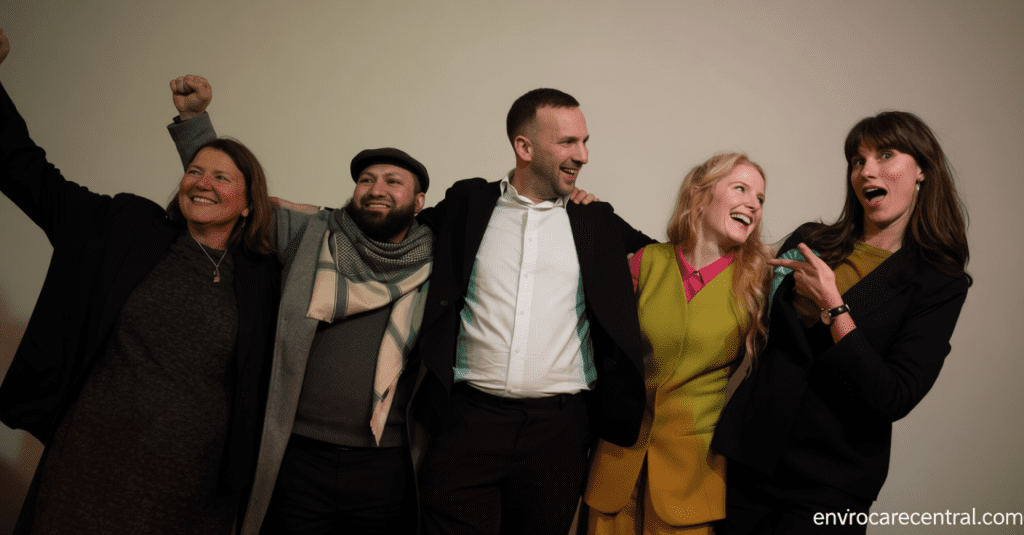
What a night it was. The Green Party’s first-ever parliamentary by-election victory in Gorton and Denton marked a turning point. Not only did they defy expectations, but they also shattered a once rock-solid Labour majority of over 13,000 votes. The win was more than a political shift—it was a declaration of a new kind of movement.
The result wasn’t just about securing a seat or launching a candidate. It signified something broader: the possibility of a politics rooted in hope, not division; in unity, not exclusion. For the first time, the North of England saw a Green MP elected, but this triumph extended far beyond that.
A New Political Language
UK politics has long relied on a single, often exclusionary tone. A monologue, not a dialogue—spoken in the clipped cadence of Westminster, steeped in southern English accents and elitist framing. Reform’s Matt Goodwin, who lost his campaign, epitomized that style with his Kent-based rhetoric.
“You can’t put a price on that—even as the sore losers in Labour and Reform try and invalidate our inclusive campaign as something sinister.”
Yet, in Gorton and Denton, where nearly 40% of residents identify as Muslim and many grow up speaking Urdu, Bangla, Arabic, or other languages at home, this narrow approach failed to connect. To truly resonate, the Greens adapted their messaging to reflect the community’s lived reality.
The Power of Inclusion
While policies and the candidate’s dedication played a role, the campaign’s success hinged on its communication. By creating materials in multiple languages—including a viral Urdu video—the Greens ensured their message reached beyond the familiar. It wasn’t a gimmick, but a deliberate effort to mirror the voices often sidelined in mainstream politics.
Language, in this context, became a bridge rather than a barrier. Residents who might feel unheard in English-speaking debates saw themselves represented in the conversation. The Greens didn’t just talk about issues like rent, bills, the NHS, and peace—they framed them in ways that resonated with the community’s daily struggles.
Some critics, like those who lost the election, dismissed this as divisive or “sectarian.” But their misunderstanding overlooks the core of the strategy: inviting people into the political discourse, not pushing them out. Multilingual outreach isn’t about splitting communities—it’s about expanding them.
Take Zohran Mamdani’s campaign in New York, where Arabic, Spanish, and Urdu videos helped amplify conversations in communities traditionally overlooked. His victory, celebrated by Labour supporters, underscores the power of this approach. In Gorton and Denton, the Greens followed a similar path, proving that inclusivity can be a unifying force.
With a 26.5% swing toward the Greens, the by-election result isn’t just about numbers. It’s a testament to how democracy thrives when people feel seen, when their languages and experiences are valued. This campaign showed that representation matters, not just in policy but in the very way politics is spoken.
To view the video, JavaScript must be enabled and a web browser supporting HTML5 is required. The site also uses reCAPTCHA, with the Google Privacy Policy and Terms of Service applying to user data collection.
Ultimately, the Greens’ win in Gorton and Denton was about one simple truth: everyone deserves a voice. Whether you speak English, Punjabi, Somali, or any other language, your concerns matter. This is the politics they aim to build—one that enfranchises, rather than alienates, the voices that shape our future.
