
Sudan war: Why Hemedti’s legitimacy push in Uganda falters amid RSF atrocities
Sudan War: Why Hemedti’s Legitimacy Push in Uganda Falters Amid RSF Atrocities
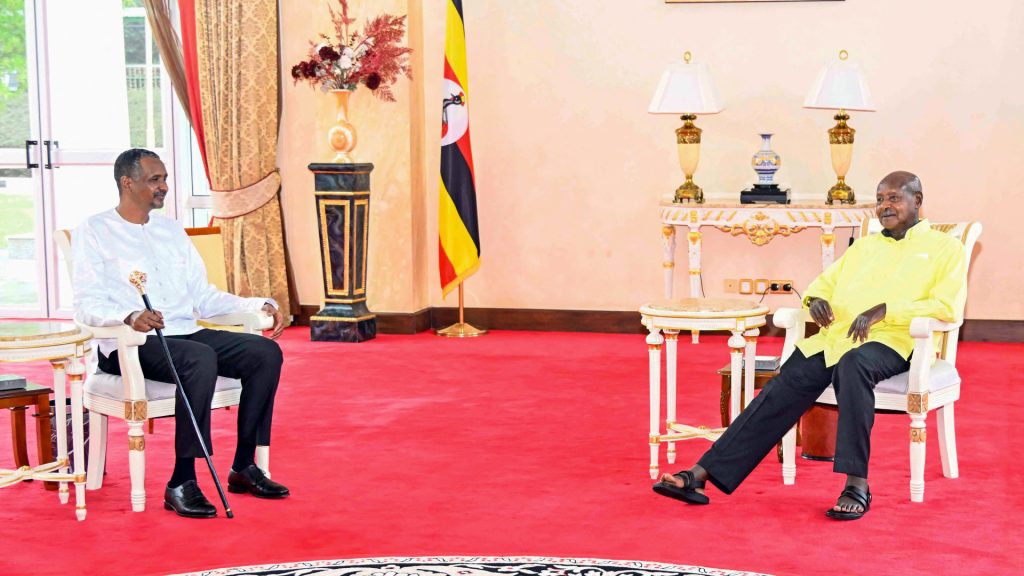
On 20 February, Mohamed Hamdan Dagalo, the commander of Sudan’s Rapid Support Forces (RSF) and commonly known as Hemedti, made his way to Kampala, Uganda, where he met with President Yoweri Museveni. This marked his most public engagement with a foreign leader in several months.
Just a day prior, a UN investigation had revealed that the RSF was responsible for genocide in Darfur. Simultaneously, the United States imposed sanctions on three RSF officials linked to atrocities in el-Fasher. These events underscored the growing international scrutiny of the RSF’s actions.
The visit followed relentless global criticism of the RSF’s conduct, including a December 2023 US ruling that classified its operations in Darfur as ethnic cleansing. Throughout 2024, the UN Security Council also saw repeated briefings and resolutions addressing the RSF’s role in the conflict.
Hemedti brought a group of associates from Nairobi, where he had helped establish a parallel political structure known as “Tasis.” This initiative aimed to position RSF-controlled regions as a civilian-backed alternative to state governance. However, it failed to gain widespread acceptance, rejected by governments, regional groups, and international bodies like the UN.
Sudan’s government criticized Uganda for hosting Hemedti, calling it an insult to the Sudanese people and humanity. By welcoming him, Kampala assumed a dual role—not just as a diplomatic gesture, but as a strategic hub for the RSF to seek recognition beyond its home country.
The RSF now holds administrative authority in regions it controls, fostering alternative governance models alongside state institutions. This development raises concerns about Sudan’s potential fragmentation into autonomous entities.
Hemedti’s trip to Uganda signals a calculated shift in strategy. No longer confined to combat zones or domestic politics, he is positioning himself as a regional figure to reshape narratives, build alliances, and extend influence beyond national borders.
In his speeches, Hemedti highlighted national unity, opposition to partition, and a commitment to dialogue. He framed the conflict as a battle against entrenched Islamist groups, while promoting himself as a leader open to civilian-led political reforms.
“The RSF is no longer just a military force—it seeks to be recognized as a political entity on par with the state.”
His assertions that RSF fighters number over 500,000 and are prepared for broader participation in Sudan’s future appear tailored to bolster internal morale, reassure allies, and assert influence in ongoing negotiations.
While the visit serves to rehabilitate the RSF’s image under international pressure, it also aims to normalize its status as a legitimate political actor. Uganda’s neutral stance in the Horn of Africa and its reputation as a regional leader make it an ideal setting for this effort.
Museveni’s engagement with Hemedti reflects a delicate balancing act. By hosting him, the Ugandan leader elevates Kampala’s role as an intermediary while avoiding alignment with any single Sudanese faction. The visit also ties into broader mediation efforts by the African Union and the Intergovernmental Authority on Development (IGAD).
Analysts at the International Crisis Group warn that Sudan’s war has evolved into a contest over sovereignty, with competing forces vying for legitimacy. Prolonged dual authority in African conflicts often leads to entrenched fragmentation, a risk the RSF may be attempting to mitigate through this regional outreach.
