
U.S. citizen detained for 3 years says he ‘lost everything’ and hopes to rebuild
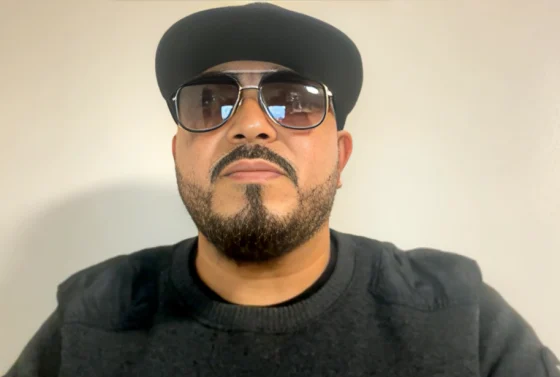
U.S. Citizen Detained for 3 Years Says He ‘Lost Everything’ and Hopes to Rebuild
René López still experiences vivid dreams of the three years he spent in ICE custody. “It’s an experience I wouldn’t wish on anyone,” he shared during an interview with Noticias Telemundo from his Alexandria, Virginia, residence. The legal battle over his citizenship began nearly a decade earlier when immigration officials questioned the validity of the status he inherited through his naturalized mother. This dispute led to deportation proceedings due to a prior drug conviction from his youth.
López arrived in the U.S. as a permanent resident in the 1990s after his mother, a single parent with legal status, completed the necessary paperwork. When his mother became a citizen in 2001, López automatically gained U.S. citizenship through derivative status, a provision outlined in Title 8, Section 1432 of the U.S. Code. That law allows children under 18 to acquire citizenship via their parents’ legal status, including adopted children of U.S. citizens born abroad.
After his mother’s naturalization, López’s life in the U.S. took shape. He finished high school, learned electrical work, and launched his own business. Over more than a decade, he built a family, raised children, and maintained a clean legal record. But in 2016, the Department of Homeland Security reversed its stance, classifying him as a legal resident instead of a citizen. This decision triggered removal proceedings based on his earlier drug offenses.
Legal Dispute and Court Ruling
Detained by ICE in January 2023, López was held at the Caroline Detention Facility in Bowling Green, Virginia. His release came only in February 2023, following a ruling by the 4th Circuit U.S. Court of Appeals. The court not only halted his deportation but also confirmed his citizenship, stating he had been an American citizen since 1998. “The court says in its decision that he has been an American citizen since 1998. That’s why they are releasing him,” explained Benjamin Osorio, his attorney.
“One day I went to work and about eight immigration agents were waiting for me,” López recounted. The agents informed him he was no longer a citizen, citing his mother’s status as insufficient and labeling his drug convictions as “aggravated felonies.”
Throughout his detainment, López consistently maintained his U.S. citizenship, even as officials, judges, and journalists questioned his status. His legal team argued that derivative citizenship laws had not been altered to eliminate his mother’s role. “They concluded that my father never established paternity and never made me a legitimate son, even though his name appeared on my birth certificate,” he said.
Charles Wheeler, a senior attorney with the Catholic Legal Immigration Network, highlighted the government’s position: “He would have had to prove that his father was also naturalized, but apparently his father never had a relationship with him.” The dispute centered on Salvadoran law, which the court examined to determine whether López’s biological father had legally recognized paternity.
Despite the DHS’s 2009 determination that López was a citizen, the agency later contested his status. This shift forced him into a prolonged legal battle, ultimately leading to the 2023 court decision that restored his rights. “The government argued that the Salvadoran constitution removed distinctions between children born in or out of wedlock,” said Wheeler. “But that doesn’t mean derivative citizenship was invalid.”
