
Iran war: How long before Gulf nations stop pumping oil?
Iran War: How Long Before Gulf Nations Stop Pumping Oil?
Oil prices surged to nearly $120 per barrel following attacks on Iran’s energy infrastructure and the temporary closure of the Strait of Hormuz. The disruption has left tankers stranded and Gulf oil facilities damaged, forcing producers to rely on limited storage to keep output steady. On Monday, Brent crude reached $119.50 (€103.30) before retreating to about $100. This volatility highlights growing concerns over energy supply stability amid the escalating conflict.
The war between the U.S. and Iran, now in its tenth day, has intensified with Israel’s strikes targeting Iran’s oil sites and Tehran’s announcement of Mojtaba Khamenei as the new Supreme Leader. These actions have heightened fears in global energy markets, disrupting trade and raising questions about the region’s capacity to sustain production. As the crisis deepens, analysts warn of potential shortages and the threat of prolonged output reductions.
“Crude oil fields in Iraq face an imminent, near-certain shutdown,” warned Rystad Energy, a Norwegian research firm, on Monday. This underscores the fragility of energy infrastructure in the Middle East, where Iranian attacks and the Hormuz blockade have created a precarious situation.
The Strait of Hormuz, a vital waterway linking the Persian Gulf to the Arabian Sea, has been effectively closed by Iran. According to Kpler, a shipping analytics firm, nearly all commercial traffic has halted, impacting about one-fifth of the world’s oil supply. This chokepoint’s closure could trigger a severe global energy crisis if not resolved quickly.
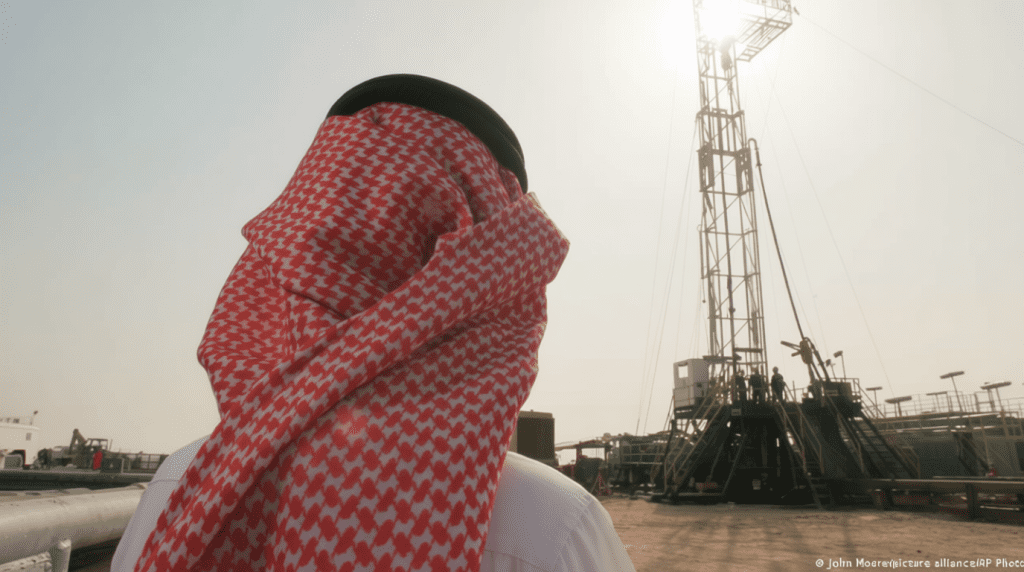
Gulf nations, including Saudi Arabia, the UAE, Qatar, Kuwait, and Bahrain, are under pressure as their storage facilities near capacity. JP Morgan estimates that collectively, they hold 343 million barrels of oil, enough to delay production cuts for 22 days. However, daily exports through the Strait amount to 15 million barrels of crude and over 4 million of refined products, creating a tight timeline for recovery.
Saudi Arabia, with 66 days of storage on February 28, appears to have already begun reducing output, despite its capacity to reroute shipments via the Red Sea. The UAE, meanwhile, has redirected some exports through Fujairah, which was hit by Iranian strikes. Yet, these alternatives account for just a third of usual flows, leaving many Gulf producers vulnerable.
ING reported that Kuwait and the UAE have also cut production, adding to the strain on supply. Restarting operations after a shutdown could take weeks, with risks of equipment failures or other complications. If production halts across the Gulf, global prices could skyrocket, as the region supplies roughly one-third of seaborne crude oil.
Qatar’s Energy Minister told the Financial Times that crude output might be affected, reflecting the broader uncertainty facing the energy sector. With storage limits tightening and alternatives proving insufficient, the question remains: how long before Gulf nations are forced to pause production?
