
They were forced to hand one son over to the Israeli army in return for another. Eight months later he was dead in prison
They were forced to hand one son over to the Israeli army in return for another. Eight months later he was dead in prison
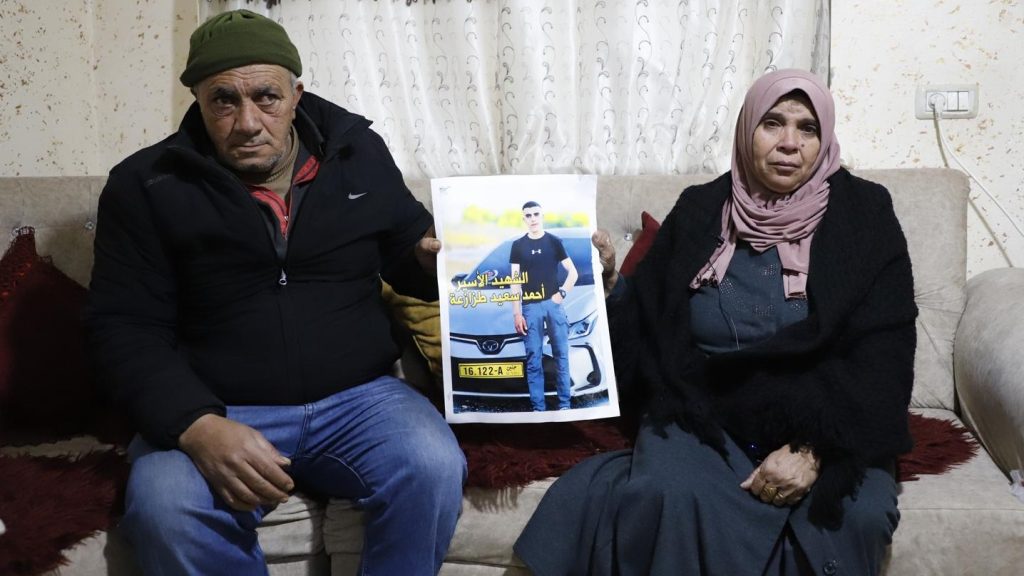
Ahmad Tazaza’s parents are overwhelmed by sorrow and remorse after their son’s death in August 2025 at Israel’s infamous Megiddo prison. The tragedy unfolded when they surrendered him to authorities in the occupied West Bank earlier that year, fearing for his safety.
At 20, Ahmad was a robust young man with no prior medical issues. His family, however, faced relentless pressure from Israeli security forces, leading to their decision to hand him over. The Tazaza household in Qabatiya, a northern West Bank town, endured repeated raids and intimidation, as the family was targeted for his capture.
His brother, Saeed Tazaza, recounted the tense moment when Israeli troops demanded their son be handed over. “They said: ‘We will not release him until you bring your [other] son,’” he recalled, his voice trembling. The family, desperate to protect Ahmad, eventually surrendered him at the Salem checkpoint near Jenin.
“He looked at us and I knew he would not return. I felt he was not coming back when he turned his face and walked away,” said Najah Abdul Qader, Ahmad’s mother.
During his eight-month imprisonment, Ahmad’s parents had limited contact with him, relying on updates from fellow detainees. The post-mortem report, shared with Middle East Eye, suggested he was in good health at detention. Yet, his records noted complaints of a sore throat and symptoms like diarrhoea before his death.
According to the PHRI-affiliated doctor’s findings, Ahmad collapsed during a clinic visit on 2 August 2025, losing consciousness and vital signs. Despite resuscitation efforts, he was pronounced dead. The report raised questions about possible underlying conditions, such as leukaemia or lymphoma, but ruled out sudden death causes.
“Mum, they torture people in prison. I told him, ‘Let them torture you, but not kill you, not shoot you,’” Qader said, reflecting on her son’s final words.
While the Israeli authorities hold his body, the parents contest the official account of his death. They describe a harrowing experience where forces threatened to bomb their home unless Ahmad surrendered himself. On one occasion, he narrowly avoided capture by leaping from a car as an Israeli bulldozer crushed it.
“We handed him over because I was afraid for him. I was afraid he would die,” his father stated, emphasizing their desperation. The family’s sacrifice was made in the hope of sparing Ahmad from harm, though the outcome left them grappling with profound regret.
