
Huge venomous ‘flying’ spiders are beginning to swarm the US
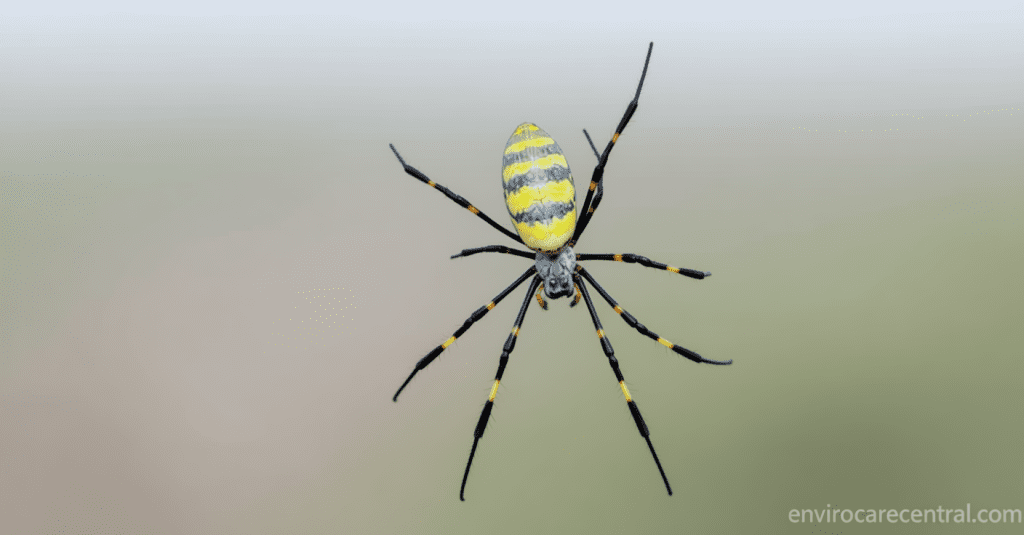
Huge venomous ‘flying’ spiders are beginning to swarm the US
Arachnophobes take note. A surge of large, vibrant yellow flying spiders is now appearing throughout the United States.
Origins and Spread
The Joro spider, not native to this country, has origins in regions of East Asia such as Japan, China, South Korea, and Taiwan. Scientists speculate that the species first arrived in America over a decade ago, likely transported via Asian shipping containers destined for Georgia.
Since its initial presence, the Joro has steadily expanded its range. New reports of sightings emerge annually in previously uncharted locations. A fresh wave is now approaching as the next generation prepares to emerge.
Distinctive Features
Female Joro spiders are particularly striking, displaying a bright yellow exoskeleton adorned with blue markings and red highlights. Their presence is often noted due to the substantial golden webs they construct, which can materialize unexpectedly overnight. These webs are engineered to ensnare prey with remarkable efficiency.
Male spiders, in contrast, are less conspicuous, typically smaller and brown in color. Despite their appearance, they are the ones that frequently draw attention, especially when females are involved.
Expansion Mechanism
One factor contributing to their rapid spread is their unique method of dispersal. Known as ballooning, this technique involves releasing silk strands into the air, allowing them to float and travel. These strands function like miniature sails, enabling the spiders to drift for several feet at a time.
Though not true flight, this process makes long-distance movement surprisingly effortless. Spiders can inadvertently hitch rides on vehicles or be carried by wind currents, facilitating swift regional spread.
Resilience and Adaptation
Researchers have observed that Joro spiders exhibit surprising cold tolerance. In controlled experiments, over 75% of individuals survived exposure to freezing conditions without harm.
Additionally, their behavior seems to favor human proximity. Cities and urban areas are not deterrents for these spiders, which thrive in close environments. Studies at the University of Georgia suggest they can adapt to traffic vibrations, remaining undisturbed even near busy roads.
“There have been no documented fatalities, nor any notable medically significant bites,” stated José R. Ramírez-Garofalo, an ecologist on Staten Island.
“These Joro webs are everywhere in the fall, including right next to busy roads, and the spiders seem to be able to make a living there,” explained Andy Davis from the University of Georgia.
While they are technically venomous, their bites pose minimal risk to humans or domestic animals. They primarily target small insects, with some females even consuming males during mating.
With sightings now spanning from Georgia to Pennsylvania, and even reaching California, their geographic spread is expected to continue. Biological traits such as high metabolic rates and rapid heartbeats, combined with cold resistance, give them an advantage in new habitats. Scientists note these factors contribute to their swift colonization of diverse environments.
