
Syria walks back Damascus alcohol ban after outcry from residents
Syria walks back Damascus alcohol ban after outcry from residents
Damascus officials have revised their alcohol ban following public dissent and claims of religious bias. The initial decree, released on Monday, had imposed restrictions on selling alcoholic drinks in restaurants and nightclubs citywide, with exemptions granted only to the Christian districts of Bab Touma, Qassaa, and Bab Sharqi.
The policy aimed to curb behaviors deemed unbecoming in public spaces, according to officials. However, the city governorate issued a clarification on Sunday, adjusting the restrictions to allow alcohol sales for tourism, including in hotels and designated venues. This change also included an apology to Christian communities, who felt targeted by the original decision.
“The Damascus Governorate apologises to our people in Bab Touma, Qassaa, and Bab Sharqi for the misunderstanding that arose from the decision, which was circulated inappropriately,” stated the clarification.
Officials emphasized that the neighborhoods are central to Damascus’s cultural identity, vowing to reassess the restrictions to ensure they do not marginalize any group. This shift comes as the transitional government, led by President Ahmed al-Sharaa, has faced growing scrutiny over its social policies.
Since taking power in December 2024, the administration has generally avoided imposing strict social rules. Yet, recent measures like a January decree limiting female public sector workers to makeup-free appearances and mandatory full-body swimsuits on beaches have sparked worries about a potential shift toward more conservative policies.
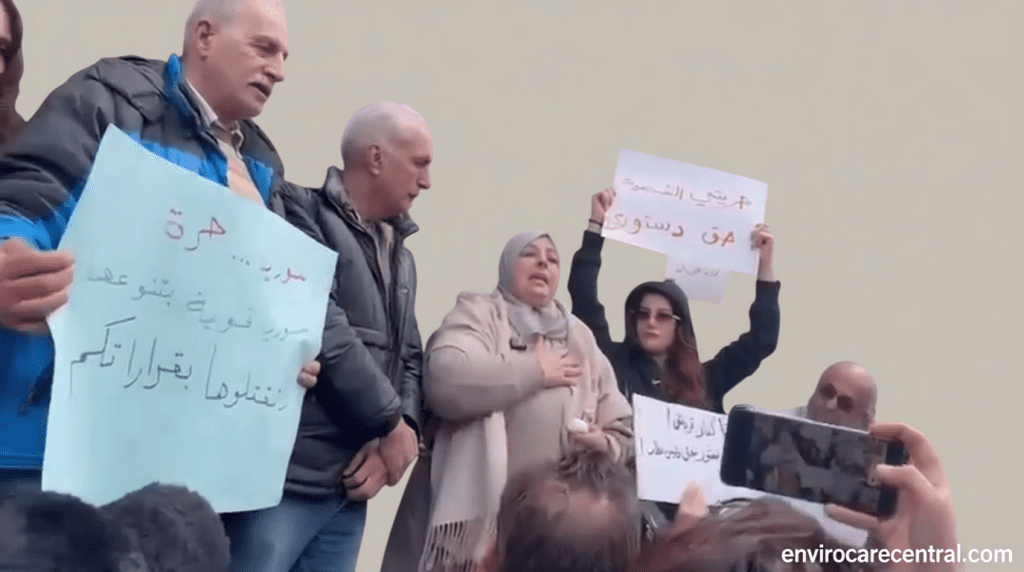
While most Syrians are conservative Sunni Muslims who abstain from alcohol for religious reasons, secular Sunnis and other minorities view the ban as an encroachment on personal freedoms. Protests erupted in Bab Touma, where residents expressed frustration over the restrictions, highlighting their perception of the policy as sectarian.
Christians, in particular, criticized the move, arguing it threatened their community’s safety. “Restricting alcohol sales to Christian areas could make them prime targets for attacks, given the history of targeting Christians in Syria,” a statement from Christian advocacy groups noted.
The transitional government has grappled with domestic instability, Israeli strikes, and maintaining alliances. Parliamentary elections in October saw Sharaa appointing a third of the seats, while local committees selected the rest. Sweida, a Druze-majority region, and the Kurdish-held northeast were excluded, leaving 32 seats vacant.
A temporary constitution from March outlines the parliament’s role until a permanent framework is adopted. The interim authorities claim popular elections are impractical due to the war’s toll, which has claimed hundreds of thousands of lives and displaced millions.
