
The high-stakes diplomacy that led to Pakistan hosting US-Iran peace talks
The high-stakes diplomacy that led to Pakistan hosting US-Iran peace talks
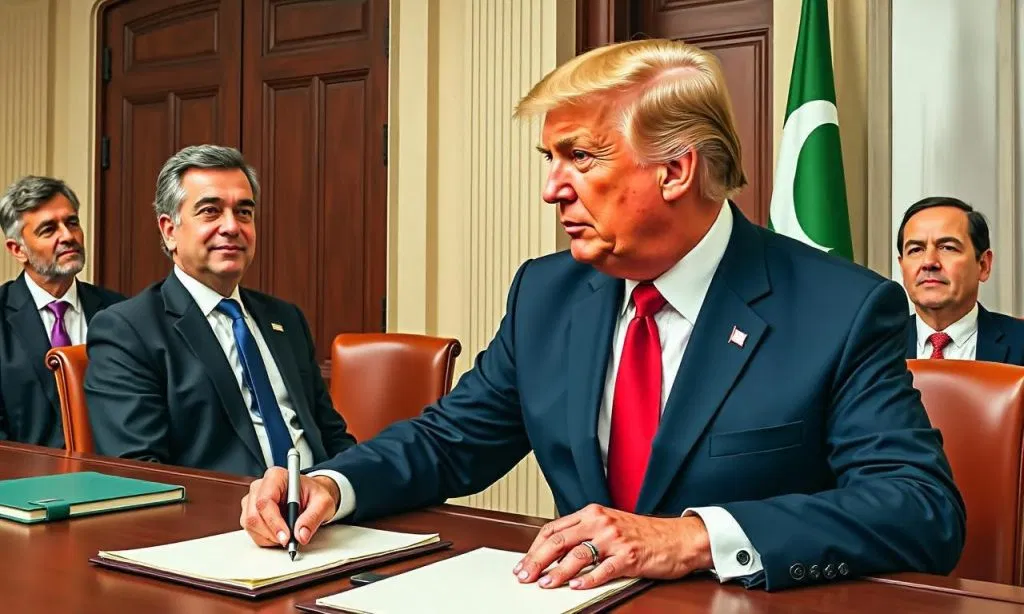
Pakistan’s leaders are gearing up to host peace talks between the US and Iran, following the country’s role in securing a two-week ceasefire. A two-day holiday was announced in Islamabad, Pakistan’s capital, ahead of the event, which is set to begin on Saturday. Though the talks’ confirmation remains pending, the city has already mobilized its security forces, with approximately 10,000 officers deployed to ensure stability.
The global implications of the ceasefire are significant. The Strait of Hormuz, a critical route for about 20% of the world’s oil, has been a focal point of the conflict. Restoring calm in this region is a top priority for nations eager to end the war and stabilize global energy markets. However, Pakistan faces its own challenges, as a collapse in negotiations could thrust it into a regional crisis.
“If talks fail, Pakistan risks three borders turning hot,” explains Abdul Basit, a South Asia expert at Nanyang Technological University. “This includes tensions with Afghanistan, India, and Iran. The country is already engaged in full-scale insurgencies in two provinces. A further conflict would be disastrous.”
Pakistan’s strategic position has made it a key player in US-Iran diplomacy. Trusted by both sides, it has managed to bridge gaps that others could not. The reconciliation effort is spearheaded by military chief General Asim Munir, whom US President Donald Trump refers to as his “favourite field marshal,” according to Mushahid Hussain Syed, a ruling-party senator.
Maleeha Lodhi, a former Pakistan ambassador to the US and UN, highlights Munir’s early contributions to Trump’s administration. After the Kabul airport bombing in 2021, Munir handed over the alleged perpetrator to the US, a move that earned Trump’s praise. Additionally, Pakistan emphasized Trump’s role in preventing a broader India-US conflict, a diplomatic achievement that bolstered his standing.
Pakistan’s alliance with Saudi Arabia, formalized through a mutual defence pact, has also influenced its stance. The country has pledged to uphold its commitments to Riyadh, which could draw it into a conflict with Iran. Despite this, the nation’s social media has erupted with pride, celebrating its role in averting a potential crisis.
The country’s diplomatic efforts are not without reward. In September 2025, Pakistan’s Frontier Works Organisation, a military-linked mining entity, inked a $500m deal with a US firm. The agreement, signed at the Prime Minister House, underscores the growing economic ties. Meanwhile, in January, Pakistan agreed to integrate a stablecoin from Trump’s cryptocurrency venture into its digital-payment system, deepening its engagement with the former president’s circle.
Yet, Pakistan’s alignment with the US has not prevented it from criticizing the first US-Israeli strikes on Iran. When Iran retaliated by targeting Saudi oil facilities, Pakistan swiftly issued a condemnation. On 7 April, it also abstained from a UN Security Council resolution calling for coordinated action to reopen the Strait of Hormuz, reflecting its delicate balancing act between allies and adversaries.
