Israel and Lebanon sign framework agreement after US-brokered talks
Israel and Lebanon sign framework agreement – On Friday, Israel and Lebanon finalized a 14-point accord in Washington following US-led negotiations over multiple days. The agreement marks a significant diplomatic development amid persistent hostilities in southern Lebanon. US Secretary of State Marco Rubio highlighted that the deal aims to create a sustainable foundation for enduring peace and security between the two nations. However, the pact does not resolve the immediate conflict, as limited fighting continues between Israeli forces and the Iranian-backed Hezbollah group.
Hezbollah, which has been a key player in the region, is not directly involved in the Friday agreement. This has raised questions about its willingness to withdraw fighters from the South Litani area, a region in southern Lebanon that has seen frequent clashes. The US has expressed concerns that ongoing tensions could jeopardize its broader peace deal with Iran, which includes a commitment to end hostilities across all fronts. Despite the ceasefire, the agreement’s effectiveness remains uncertain as both sides continue to exchange fire.
The framework agreement includes a mutual recognition of each country’s right to sovereignty and peace. It emphasizes a shared desire to coexist securely, with both nations pledging to cease hostile actions in international political and legal forums. Specific provisions call for the release of detainees and the return of remains, though these are not immediately enforceable. The document also clarifies that the agreement does not restrict either party’s ability to defend itself against external threats.
Lebanon’s commitment to restoring sovereign control over its territory is central to the accord. The Lebanese Armed Forces (LAF) are tasked with reasserting authority across all Lebanese lands, provided non-state armed groups, such as Hezbollah, disband their weapons and dismantle related infrastructure. To support this, Lebanon has requested assistance from international partners, particularly Arab nations under US guidance. A new military coordination group, backed by the United States, will be established to oversee the implementation of the framework.
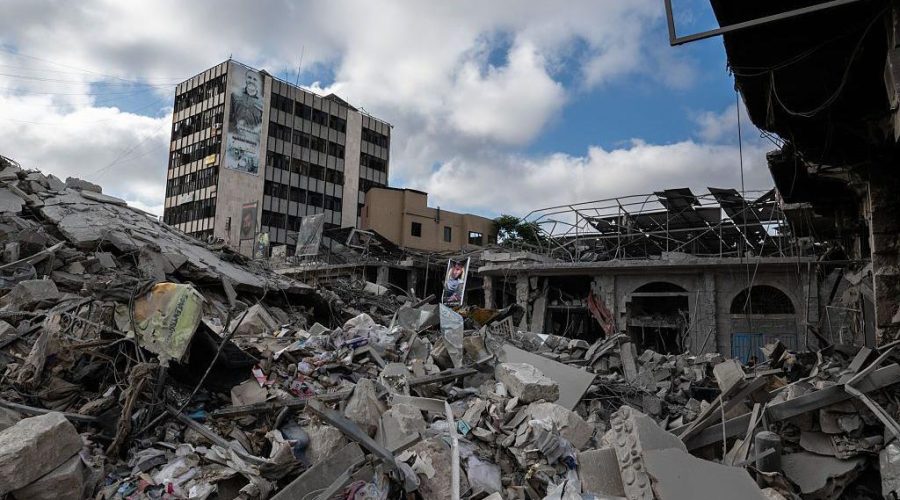
Despite the diplomatic progress, the situation on the ground has shown little improvement. The agreement was signed amid continued skirmishes, with Israeli strikes targeting Hezbollah positions in southern Lebanon. While the intensity of hostilities has decreased recently, both sides have accused each other of breaching the ceasefire. This has kept the region in a state of tension, with the Israeli military maintaining its presence in the south. President Joseph Aoun of Lebanon described the framework as a critical first step toward reclaiming sovereignty, but challenges remain in its practical application.
Israeli Prime Minister Benjamin Netanyahu has reaffirmed that his forces will stay in southern Lebanon until Hezbollah disarms. Currently, Israeli troops occupy approximately 5% of Lebanese territory, with the government allowing the Lebanese army to take over two pilot zones—south and north of the Litani River. Netanyahu’s stance underscores the Israel’s strategic focus on securing its borders, even as the agreement seeks to formalize a shared vision of peace.
From a diplomatic standpoint, the agreement represents a notable achievement. Yet, the ground reality reveals complexities. The US has long sought to mediate peace between Israel and its regional adversaries, including Hezbollah. This effort has been complicated by the conflict’s regional implications, as Israeli attacks in Lebanon have resulted in significant casualties. According to the Lebanese health ministry, at least 4,192 people have died since the current phase of hostilities began, with over 11,600 injured and more than 1.2 million displaced.
“They have a lot of respect for me,” Trump told Axios in an interview last week. “They do as I say.”
US President Donald Trump has been vocal about his role in the conflict, criticizing Netanyahu’s decisions and asserting his ability to direct Israel’s military actions. While Trump acknowledges Israel’s right to defend itself against Hezbollah rocket strikes, he has also claimed that his influence extends to preventing attacks on Lebanese territory. His comments reflect a broader strategy to position the US as a central mediator in the Middle East.
The framework agreement’s final point acknowledges the US’s role in facilitating the deal. Both Israel and Lebanon expressed deep appreciation for Trump’s vision and leadership, which has been a cornerstone of the US’s diplomatic approach. This recognition comes despite the ongoing challenges, including the difficulty of persuading Hezbollah to fully comply with the terms. The agreement’s success will depend on the willingness of all parties to uphold their commitments, even as the conflict persists.
Lebanon’s involvement in the war between the US and Israel against Iran began on 2 March, when Hezbollah retaliated against an Israeli strike that killed Iran’s supreme leader. The subsequent air campaign and ground invasion by Israel intensified the conflict, leading to a US-brokered ceasefire on 16 April. However, this ceasefire failed to halt the fighting, highlighting the fragility of peace efforts in the region.
While the framework agreement offers a pathway to stability, its implementation hinges on cooperation between Israel and Lebanon. The US’s support remains crucial, particularly in ensuring that international partners assist in enforcing the terms. As the conflict continues, the agreement serves as a symbolic step toward peace, but the path to lasting resolution remains uncertain. The numbers of casualties and displacement underscore the human toll, emphasizing the need for sustained diplomatic efforts to address the broader implications of the war.