
How many ships are crossing the Strait of Hormuz?
How many ships are crossing the Strait of Hormuz?
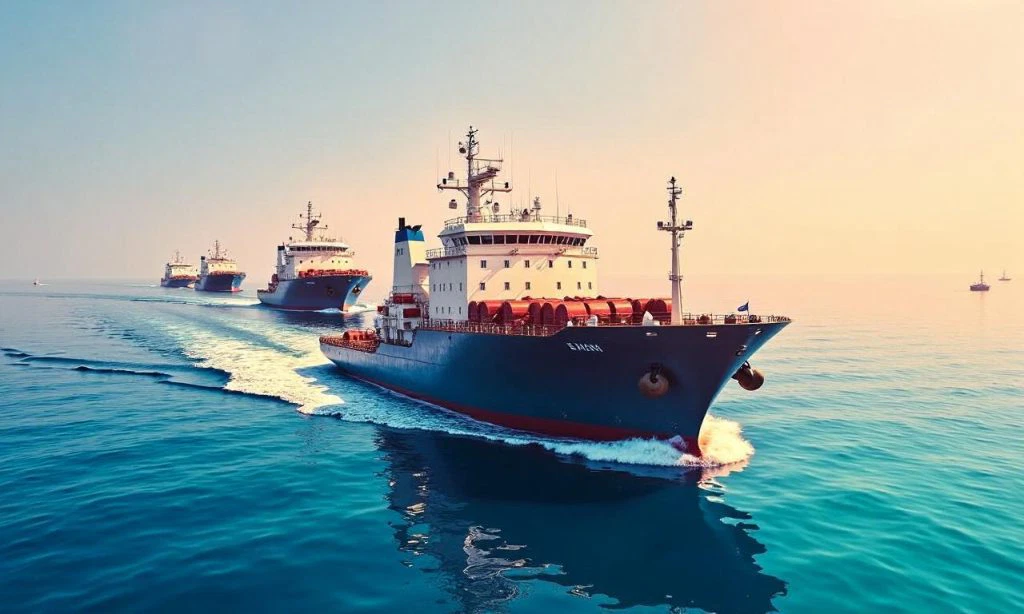
The first vessel to transit the Strait of Hormuz crossed the critical waterway following the US military blockade of Iran’s ports, per ship tracking data. US Central Command declared the blockade on Sunday night, focusing on all maritime traffic entering or leaving Iranian ports, but clarified it would not obstruct ships moving between other countries. A container ship, Paya Lebar, is currently traveling from India to Dubai in the United Arab Emirates.
Before the blockade officially took effect at 14:00 GMT (15:00 BST) on Monday, four vessels had already passed through the strait. These included tankers transporting oil, gas, or chemicals, as noted by MarineTraffic tracking data. Among them, the Auroura is on the US sanctions list for carrying Iranian petroleum products. The NV Sunshine is under suspicion by the US-based group United Against Nuclear Iran for aiding the transport of such goods.
The Strait of Hormuz has emerged as a central point in the escalating tensions between the US and Iran. Since the conflict began six weeks ago, disruptions to shipping have rippled through the global economy, affecting energy prices and highlighting the fragility of international supply chains. President Donald Trump justified the blockade as a response to Iran’s failure to reopen the strait, warning that the US Navy would “blow to hell” any Iranian forces that attacked them.
According to the Joint Maritime Information Centre, an average of 138 ships passed through the strait daily prior to the conflict on 28 February. BBC Verify has recorded 23 vessels transiting the strait since the ceasefire talks between Iran and the US collapsed early Saturday. At least 16 of these ships are associated with Iranian ports, fly under its flag, or have been sanctioned for ties to the country.
Richard Meade, editor-in-chief of Lloyd’s List, highlighted that the priority now is to release fully loaded tankers stranded for weeks. “Nearly 800 ships are stuck, most carrying cargo, so getting them out is the key focus,” he said. Meanwhile, the path of ships has shifted to a northern route near Iran’s coastline, within its territorial waters. This departure from the traditional southerly route through the strait’s center reflects growing caution.
Thomas Kazakos of the International Chamber of Shipping noted the uncertainty surrounding sea mines. “We need clear confirmation that navigation safety and seafarers’ security are assured,” he told BBC Verify. Iran’s Islamic Revolutionary Guard Corps (IRGC) Navy outlined permitted routes to avoid potential collisions with sea mines, designating a central region as “dangerous.” Centcom has deployed two destroyers, the USS Frank E Petersen and USS Michael Murphy, to clear mines previously laid by the IRGC.
Additional reporting by Joshua Cheetham
