Steve Clarke Steps Down as Scotland Coach After World Cup Exit, Calls It an Easy Choice
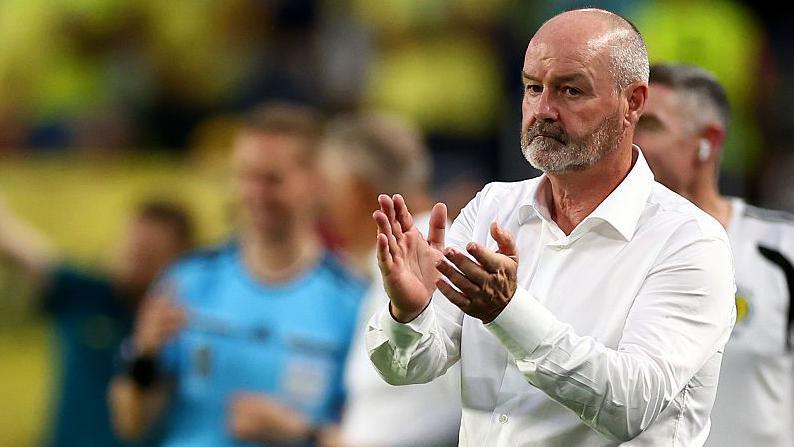
Clarke says standing down easy decision – After seven years as Scotland’s head coach, Steve Clarke has announced his departure following the nation’s failure to advance beyond the group stage at the World Cup. The 62-year-old manager revealed his decision to the players on Saturday evening, at their hotel in Charlotte, North Carolina, just hours after the Scottish team’s elimination was confirmed. His exit marks the end of a significant chapter in the country’s football history, though Clarke described the move as a “clear-cut” choice rather than a difficult one.
Legacy and Exit: A Bittersweet Conclusion
Clarke, who had previously earned praise for transforming Scotland’s squad and instilling a new mindset, expressed pride in his achievements despite the disappointing tournament outcome. He emphasized that his goal was to change the perception of the team and demonstrate their ability to compete at the highest level. “I’m 100% proud of what we’ve accomplished,” he stated, highlighting his belief in the progress made during his tenure. However, the World Cup exit has sparked mixed reactions, with some fans questioning whether the players lived up to the potential Clarke helped cultivate.
“I wanted to make sure that when I felt it was time to step away, it was time to step away,” Clarke said. “Signing the contract before the World Cup was a case of trying to give a little bit of comfort to the players knowing that we could continue the journey.”
The manager’s decision was not made lightly, but he had already set his sights on the long-term vision. “I always had in my head that if we didn’t come out of the group, which is something we’ve tried to do across three tournaments now, then it was probably the right time to step away,” he added. This philosophy was rooted in his belief that the team’s performance had reached a critical juncture, and his exit would allow a fresh start for future ambitions.
The World Cup Context: A Month of Uncertainty
The announcement came exactly a month after Clarke had signed a new four-year contract with the Scottish Football Association, which was set to take the team through Euro 2028 and the 2030 World Cup. At the time, the agreement was seen as a strategic move to secure his leadership for the next major international competitions. However, the recent World Cup results have cast doubt on the long-term viability of this plan.
Clarke’s team was grouped against Brazil, Morocco, and Haiti, a challenging lineup that tested their resilience. Despite efforts to maximize their chances, Scotland’s inability to secure a knockout-stage spot has led to widespread disappointment. The manager acknowledged the pressure of the situation, saying, “It’s obviously an emotional moment when you tell your players you’re stepping away after such a journey together.” He stressed that the players, many of whom had been with him since the beginning, were central to his decision.
“I think seven or eight of them have been with me from the start, right the way through,” Clarke explained. “It was very important to me that the players knew first, and obviously just before I went into the meeting I had to tell my captain [Andy Robertson] because I knew that he’d want to say a few words back to me.”
Clarke’s approach to leadership was characterized by his focus on gradual development. He noted that while the 2021 Euros had been a bittersweet experience due to the pandemic, the subsequent tournament had been a “great” opportunity to showcase Scotland’s potential. “The first Euros were a little bit not the Euros because it was Covid affected,” he said. “The second Euros were fantastic. Getting to Germany was a huge achievement, and I’ve ticked off one of my lifelong goals.”
Reflections on the Tournament: A Mixed Bag of Emotions
Despite the group-stage exit, Clarke remains confident in the experiences gained during the World Cup. “I said I was going to enjoy it,” he remarked, reflecting on the highs and lows of the campaign. The Haitian match, in particular, stood out as a memorable moment, with thousands of Scotland fans cheering passionately in the stands and his family present to support. “Coming out for the Haiti game with the Scotland fans there in their thousands and my family in the stands was just the best moment,” he recalled.
However, the back-to-back defeats to Morocco and Brazil had been tough to digest. Clarke defended the team’s performance, stating, “We played difficult opponents. Morocco and Brazil, both of them can go really deep in the tournament, and we competed with them, no matter what other people might say.” He acknowledged that while the final third of the pitch remained a challenge, the effort and character displayed by the players were commendable. “We showed a lot of character and played some good stuff,” he said, adding that the pursuit of quality in attack had been a consistent theme throughout his time in charge.
The Scottish Football Association has since released a statement on YouTube, confirming Clarke’s resignation and outlining the next steps in the coaching search. While the SFA has not yet announced a successor, the process is already underway, with potential candidates being evaluated for the role. Clarke’s departure has been met with a mix of relief and reflection, as many view his exit as a necessary step to revitalize the team’s prospects for future competitions.
Future Prospects: A New Era for Scotland Football
Clarke’s focus on building a sustainable foundation for the team has left a lasting impact. He believes that the core group of players will continue to play a pivotal role in upcoming tournaments, particularly Euro 2028. “Everybody keeps saying this core group’s finished. They’re not finished yet, because they can all make it for Euro 2028,” he said, expressing confidence in the squad’s ability to bounce back. His successor will inherit a legacy of resilience and progress, though the challenge of improving consistency in key moments remains.
The Tartan Army, Scotland’s loyal fan base, has been a constant source of support throughout Clarke’s tenure. From Boston to Miami, their presence at matches has been a testament to the growing passion for the national team. Even in the face of setbacks, their encouragement has been vital. Clarke, however, feels the weight of the expectations placed on the players, stating that the goal of qualifying for major tournaments was always a central part of his mission.
“I wanted to go to a major tournament with my country. I did that with the Euros. The first Euros [in 2021] were a little bit not the Euros because it was Covid affected. The second Euros were great. The tournament didn’t go as we wanted, but getting to Germany was fantastic. My lifelong ambition was to do a World Cup with my country. I’ve done that, so not a bad time to step aside.”
While the immediate results of the World Cup may not have met everyone’s hopes, Clarke’s journey with Scotland has been marked by determination and growth. His decision to step down, though met with some surprise, was a culmination of years of planning and a commitment to the team’s long-term success. As the search for a new head coach begins, the focus will now shift to building on the foundation he left behind, with the hope that the next chapter will bring renewed optimism and achievement.
The Scottish Football Association has already started the process of evaluating potential candidates, ensuring a thorough search for the right individual to lead the team forward. Clarke’s transition from the role will be carefully managed, with the players and staff receiving support as they adapt to the new leadership. His legacy, however, remains a subject of discussion, as fans and analysts debate whether the team’s performance lived up to the potential he helped create.
Ultimately, Clarke’s decision to step down was driven by a desire to align with the team’s progress and the natural evolution of his role. By leaving when the time felt right, he has set the stage for a new era in Scottish football, one that will carry the lessons learned from his seven-year tenure into the future.