Syria’s Interim President Finalizes 70 Members for New Legislative Body
Syria s president names final 70 lawmakers – Syria’s interim leader, Ahmed al-Sharaa, has completed the appointment of 70 legislators for the country’s post-Assad parliament, marking a key milestone in the nation’s political transition. The new assembly, which will convene for its first session in the coming week, is designed to oversee governance during the transitional phase. Among the 70 lawmakers, 15 are women, a notable inclusion that reflects efforts to balance representation. Additionally, 13 of the appointees were detained during the rule of former President Bashar al-Assad, who was ousted in 2024. However, the exact number of members from religious and ethnic minorities remains unspecified, according to officials.
A Focus on Diversity and Unity
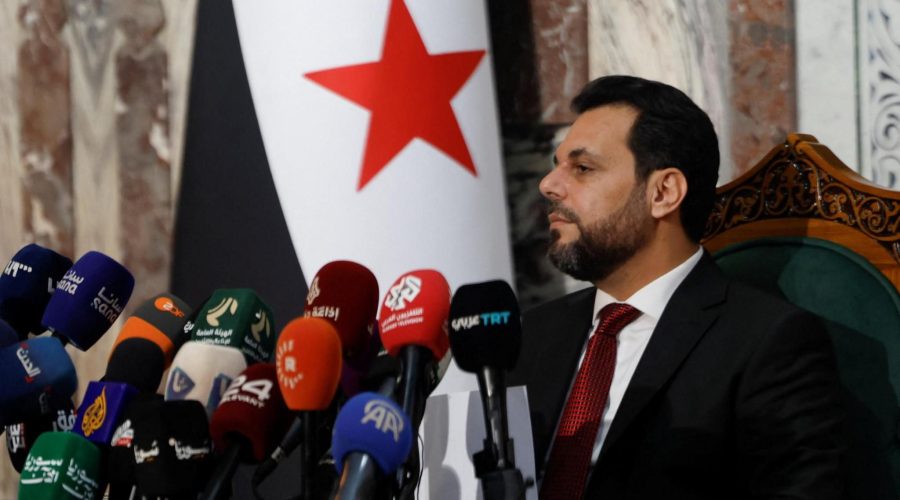
Mohammed Taha al-Ahmed, head of the Higher Committee for the Syrian People’s Assembly Elections, stated that the president’s selections combined “the voice of sacrifice and the voice of experience” within the legislative body. This, he claimed, symbolizes the country’s diverse societal segments and strengthens national cohesion. The appointments reportedly include representatives from various groups, such as relatives of martyrs, survivors of detention and chemical attacks during the 13-year civil war, as well as academics, community leaders, and figures recognized for their integrity and public service.
“The People’s Assembly is intended to embody the pluralistic nature of Syria, ensuring that all voices are heard in the new era of transition,” al-Ahmed remarked.
The process of selecting the assembly’s members was initially handled by regional electoral colleges, which elected two-thirds of the 210 seats in October. These colleges, however, faced criticism for underrepresenting women and minority groups. Only six women and ten candidates from religious or ethnic minorities secured seats through this method, prompting al-Sharaa to step in with direct appointments to address the imbalance. The remaining 70 seats, which are now filled by presidential choices, are meant to ensure broader representation across Syria’s regions and communities.
Regional Disparities and Electoral Delays
The southern province of Suweida, home to a predominantly Druze population, remains a focal point of concern. Electoral college polls in Suweida have yet to take place, as the area has been under government control since the sectarian conflict between state forces, Sunni Bedouin tribes, and Druze militias in July. Al-Sharaa acknowledged this delay, stating that elections in the region will occur “when conditions become suitable,” but expressed hope for their eventual implementation.
Similarly, the northern provinces of Raqqa and Hassakeh experienced a seven-month postponement in their electoral processes. This delay followed the capture of these regions by government forces from the Kurdish-led Syrian Democratic Forces (SDF) militia alliance at the start of the year. While the integration of four SDF brigades into government forces and the release of 1,300 detainees have been highlighted as progress, the transition remains incomplete in areas like Suweida. Cordone, the UN deputy special envoy, emphasized that the road to stability is “at a critical phase,” with both opportunities and vulnerabilities coexisting.
Criticisms of the Electoral System
Despite the appointments, the electoral process has drawn significant scrutiny. Over 20 Kurdish political parties rejected the lawmakers selected by the electoral colleges in May, accusing the system of “exclusion and marginalisation.” They argued that the process failed to adequately represent the interests of Syria’s Kurdish communities, which have long been a key constituency in the nation’s political landscape.
Civil society groups also raised concerns last year about the structural flaws in the system. A coalition of 14 organizations criticized the setup, noting that the president’s influence over the Higher Committee and electoral colleges rendered the elections symbolic rather than transformative. This influence, they warned, could allow al-Sharaa to dominate the parliamentary body, undermining its independence and its role as a reflection of the people’s will. “The president’s power to appoint one-third of the members and replace those who lose their seats creates a risk of centralizing control,” one group stated.
The Path Forward for Transition
As the new parliament prepares to take its first steps, the stakes for Syria’s future are high. UN deputy special envoy Claudio Cordone highlighted the need for the assembly to “begin its work” and for all Syrians to feel “meaningfully represented.” He underscored the challenges ahead, including the drafting and passage of new laws, the review of executive actions, and the reconciliation of diverse political and social interests. “The transitional parliament must navigate a complex array of issues, from economic recovery to the reconciliation of communities fractured by years of conflict,” Cordone said.
“The scale of the challenges cannot be overstated. This institution will serve as a test for Syria’s ability to rebuild trust and foster unity,” Cordone added.
Cordone also noted that the implementation of the ceasefire agreement with the SDF is progressing, with some brigades now integrated into government forces and receiving state salaries. However, he warned that the confidence-building roadmap for Suweida remains stalled. The unresolved tensions in the region, including calls for secession and the lack of accountability measures, threaten to destabilize the fragile peace. “If these underlying issues are not addressed, Syria’s unity and territorial integrity could face further risks,” he stated.
Reflections on a Changing Syria
While the departure of the Assad regime has been seen as a turning point, the new political landscape presents its own set of challenges. Syria TV reported that actress Rouzaina Lazkani is among the newly appointed lawmakers, signaling a shift toward including figures from different backgrounds. However, the success of this transition will depend on the parliament’s ability to act as a unifying force rather than a continuation of Assad-era dominance.
Some analysts suggest that the process is a symbolic first step in a long journey toward justice for Assad’s victims. “The trial of the former president has been viewed as a crucial moment in the struggle for accountability,” said Jeremy Bowen, a correspondent covering the region. Yet, the broader political and social ramifications of the new parliament’s composition remain uncertain. Bowen added that while the country may feel “lighter” without the Assads’ authoritarian weight, new problems are emerging, such as the potential for centralization and the challenges of reconciliation.
For many Syrians, the new parliament represents both hope and a new source of anxiety. The inclusion of women and former prisoners is a positive sign, but the president’s influence over appointments could perpetuate inequalities. As the first session approaches, the focus will be on whether the assembly can fulfill its role as a representative body or if it will become a tool for maintaining power in a changing regime. The road to stability, while paved with progress, still requires careful navigation to ensure that all Syrians, including women and minorities, have a meaningful voice in the nation’s future.