Third UK Heatwave Increasingly Likely as 30C Temperatures Forecast
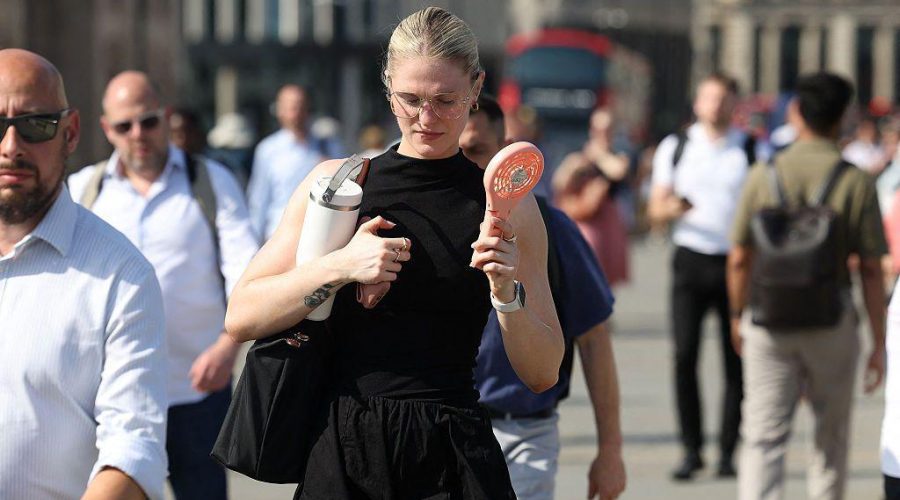
Third UK heatwave increasingly likely as 30C – As the UK grapples with rising temperatures, the likelihood of a third heatwave has grown, with 30C forecasts prompting concern across the country. A commuter uses a personal fan to stay cool while walking through the bustling streets of London Bridge on June 24, 2026, a scene that highlights the daily challenges posed by the persistent heat. Weather experts warn that the country may soon face another round of extreme conditions, as a broad area of high pressure forms over the Azores and moves steadily toward Portugal and Spain.
Heatwave Dynamics and Regional Thresholds
The heatwave is expected to intensify by the weekend, with the most severe conditions anticipated in southern Britain and France. According to the Met Office, June 2026 was the warmest June on record for England, ranking as the second-highest overall for the UK. This trend suggests that the country may be entering a prolonged period of elevated temperatures. However, the Met Office also notes that a heatwave declaration requires specific criteria to be met, varying by region.
For example, in London and the southeast, three consecutive days of 28C are necessary to trigger an official heatwave alert, while northern areas require only 25C for the same designation. Despite this, much of the UK remains below these thresholds for the remainder of the week. By Friday, temperatures in Greater London and the Home Counties could reach 28C, potentially nudging the heatwave declaration to Sunday, when some regions may hit 30C.
Weather Patterns and Heatwave Timeline
High-pressure systems are expected to play a key role in shaping the coming weeks. Initially, westerly winds will bring milder conditions, helping to avoid the extreme temperatures seen in late June. However, as the high-pressure system stabilizes, the air will gradually shift to a southerly direction, bringing warmer conditions to southern and central Britain. The northwest, on the other hand, may remain cooler due to the influence of Atlantic airflows.
By next week, the trend of increasing temperatures is likely to continue, with hot air settling over much of the country. Daily highs are projected to approach or surpass 30C, creating a scenario where heatwaves could become a regular feature of the summer. The Met Office is monitoring the situation closely, as the stability of these patterns could determine the frequency of such events.
Health Alerts and Climate Impacts
The UK Health Security Agency has issued yellow heat health alerts for the East Midlands, East of England, London, southeast, and southwest regions. These warnings emphasize the heightened risk to vulnerable populations, such as the elderly and those with preexisting health conditions. Unlike previous heatwaves, the current conditions are projected to be less humid, offering a slightly more comfortable experience for some.
Meanwhile, northern areas like Belfast, Liverpool, and Glasgow are expected to maintain cooler temperatures, ranging from 20 to 24C. This contrast is attributed to the high-pressure system possibly shifting further south, allowing Atlantic air and scattered rain clouds to reach Northern Ireland, Scotland, and northern England. The jet stream’s influence will play a critical role in determining how far the heat spreads.
Adapting to the Heat
As temperatures climb, the need for adaptation becomes more urgent. From adjusting daily routines to using cooling technologies, individuals and communities are finding creative ways to mitigate the effects of the heat. The Met Office’s data underscores the significance of the current weather patterns, which are already reshaping the UK’s climate landscape. The question remains: are these “heat spikes” becoming the new norm, or is this just a temporary phase?
Blockquote:
How did you cope in the recent heatwave? How did you adapt your day-to-day life? Are ‘heat spikes’ becoming more common?
These questions reflect a growing awareness of the need for long-term strategies to deal with rising temperatures. Experts suggest that the combination of climate change and natural weather patterns could lead to more frequent and intense heat events, challenging the traditional understanding of seasonal weather.
Looking Ahead: A Summer of Unpredictability
While the immediate threat of extreme heat is evident, the future holds more uncertainty. The Met Office’s projections indicate that temperatures will continue to rise, with the potential for multiple heatwaves to occur within a single summer. This scenario raises concerns about the resilience of infrastructure and the health of the population, particularly in regions where heatwaves are more severe.
Climate scientists warn that the UK’s weather is becoming increasingly volatile, with extreme heat events expected to occur more frequently. This shift could have long-term implications for energy demand, public health, and agricultural practices. As the country prepares for what may be a summer of repeated heatwaves, the focus is on how to best respond to these challenges.
Preparing for the Future
The potential for a third heatwave in 2026 underscores the importance of proactive measures. From urban planning to personal health habits, the UK must adapt to a warmer climate. The Met Office’s role in monitoring and declaring heatwaves remains vital, providing critical data to guide public response and policy decisions.
While the exact timing and intensity of future heatwaves are still uncertain, the recent patterns suggest that the UK is entering a new era of weather extremes. The combination of high-pressure systems, shifting wind directions, and rising global temperatures is creating a perfect storm for heat events. This could lead to a summer where heatwaves are not just a possibility, but a reality.
Regional Variability and Long-Term Trends
Despite the overall warming trend, regional differences will continue to play a significant role. Southern and central Britain are most at risk, while northern areas may offer a slight reprieve. However, this variability is expected to diminish as climate patterns stabilize. The Met Office’s data highlights that the UK’s climate is already showing signs of long-term change, with record-breaking temperatures becoming more common.
As the country braces for another heatwave, the focus is on how to stay safe and comfortable. The experience of June 2026, which saw England record its warmest June ever, serves as a warning of what is to come. Whether the UK will face a summer of serial heatwaves depends on the interplay of natural and human-driven factors, a balance that is still being studied by meteorologists and climate scientists.
Conclusion: The Heatwave as a Climate Signal
The upcoming heatwave is more than just a temporary spike in temperatures—it is a signal of changing weather patterns. With 30C forecasts and the potential for multiple heat events, the UK must prepare for a new climate reality. The Met Office’s data, combined with health alerts and regional forecasts, paints a picture of a country on the brink of a prolonged heatwave season.
As the summer progresses, the heatwave may become a recurring feature, challenging the way people live, work, and interact with their environment.