Robots Available for Rent: But What Can They Do?
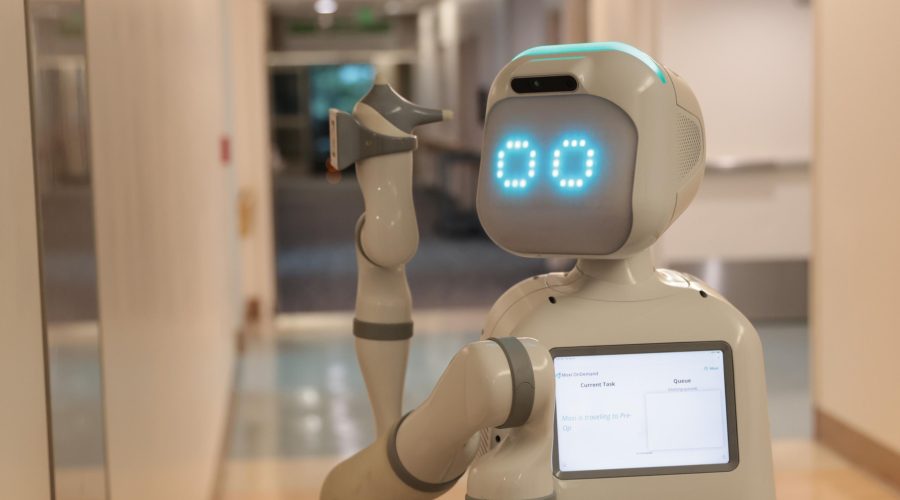
Robots available for rent – In recent years, the integration of robots into daily life has expanded beyond futuristic visions, with healthcare and hospitality sectors leading the charge. One notable example is Moxi, a compact, four-foot-tall robot with a single arm that has become a familiar sight in U.S. hospitals. Designed to transport medical supplies, Moxi’s presence is more than functional—it’s almost social. Nurses often greet it with cheerful interactions, such as handshakes or hugs, while the robot responds with its signature heart-shaped LED eyes and a series of friendly beeps. Todd Brugger, chief operating officer of Diligent Robotics, the company behind Moxi, notes that the robot is perceived as a “part of the team” by many healthcare workers. “We receive a lot of feedback that Moxi feels like a team member,” he says. This sentiment underscores the growing acceptance of robots as collaborative tools rather than mere machines.
From Subscription to Service
Unlike traditional purchases, Moxi is not sold outright. Instead, hospitals can opt for a rental or subscription model, a concept known as robotics-as-a-service. This approach bundles the robot’s hardware, software, maintenance, and updates into a single payment plan. “It lowers the expense and the initial outlay for the hospital because you’re not paying for the full purchase up front,” Brugger explains. The model also allows for continuous improvements. “Secondly, and I think more importantly, this tech is evolving very quickly… we’re routinely evolving the software and capabilities of the robot,” he adds. This adaptability is crucial in a field where technological advancements are rapid and constant.
Robot rentals are no longer limited to hospital settings. Across industries, companies are offering temporary access to machines for a range of tasks. For instance, some platforms provide robot bartenders for events, while others deploy autonomous weeders on farms. These services cater to businesses seeking flexibility without the burden of ownership. The rental model is particularly appealing for early-stage humanoid robots, which are still being refined for practical use. “Given humanoids are still a work-in-progress, they are currently rented out for clearly defined tasks,” Brugger points out. These tasks often focus on entertainment, such as humanoid robots performing dance routines or singing at corporate events. Ethan Qi, an associate director at Counterpoint Research in Beijing, highlights the simplicity of such applications. “You hire a real dancer, record their performance, and then use that video to train the robot,” he says. However, human engineers remain on standby to handle unexpected challenges, ensuring the robot functions smoothly in complex environments.
Subscription Models for Home Use
The appeal of robot rentals extends to personal use. California-based 1X is set to launch its home helper robot NEO later this year, offering customers two options: a one-time purchase of $20,000 or a monthly subscription for $499. Dar Sleeper, vice president of product and design at 1X, emphasizes the affordability of the subscription model. “While many customers will buy a NEO outright, a subscription significantly lowers the upfront cost, making it accessible to a broader audience,” he explains. This model allows users to keep pace with evolving technology without committing to a long-term purchase. “If you splash out on a new humanoid now, it’s likely to become obsolete in a few months,” Qi notes. “But with rentals, you can always upgrade to the latest version.”
Such flexibility is driving demand for robot rentals in both commercial and residential sectors. In addition to Moxi and NEO, industrial applications are gaining traction. Chicago-based Formic operates a fleet of over 250 robots, offering a robot-as-a-service plan that covers everything from maintenance to replacements. “If the robot arm burns out, that’s on us,” says Shawn Fitzgerald, chief revenue officer at Formic. “We need to come bring you a new one.” This all-inclusive model levels the playing field for smaller companies, which may otherwise struggle to afford high-cost industrial robots. Formic is also experimenting with humanoid robots for manufacturing tasks, signaling a shift toward more advanced applications.
Advantages of the Rental Model
Renting robots offers several advantages, including reduced financial risk and ease of integration. For businesses, the subscription model eliminates the need for large capital investments, allowing them to scale operations as needed. It also simplifies troubleshooting, as customers can rely on manufacturers or service platforms for technical support. “It helps to solve technical problems because customers don’t know how to code the robots,” Qi adds. This is especially relevant for early humanoid models, which require specialized programming and maintenance. By outsourcing these responsibilities, companies can focus on their core functions without being bogged down by technical complexities.
Moreover, the rental model aligns with the fast-paced innovation in robotics. As new hardware and software iterations emerge, businesses can avoid the cost of replacing outdated systems. “Every year, robotics companies release a new model, a new iteration of the hardware,” Qi explains. “If you own a robot, you can’t trade it for a new one, but if you rent, you can always upgrade.” This dynamic ensures that users have access to cutting-edge technology without the commitment of ownership. For example, a hospital using Moxi can seamlessly transition to a newer version as capabilities improve, without disrupting operations.
While the rental model is still in its infancy, it’s reshaping how technology is adopted. In healthcare, robots like Moxi are streamlining workflows and improving patient care. In entertainment, humanoid robots are becoming a staple at events, blending automation with human-like interactions. Meanwhile, in homes and factories, subscription-based services are making robotics more accessible. As companies like 1X and Formic refine their offerings, the industry is poised for further growth. The rise of robotics-as-a-service reflects a broader trend: technology is becoming more modular, adaptable, and user-friendly. This shift not only lowers barriers to entry but also fosters innovation by encouraging continuous experimentation and iteration.
The Future of Robot Rentals
As the technology matures, the range of applications for rented robots is expected to expand. From logistics and manufacturing to education and customer service, the potential is vast. However, challenges remain, particularly for humanoid robots. These models require advanced AI and sensor systems, which are still being perfected. “Humanoids are more complex than wheeled robots, so their rental terms are often tailored to specific use cases,” Brugger acknowledges. Despite this, the market is growing rapidly, with more companies exploring partnerships and service-based models.
Marco Wang, an analyst at Interact Analysis, highlights the emergence of diverse payment schemes. While subscription models dominate, some businesses are experimenting with pay-per-use or tiered pricing. “The rental landscape is becoming more competitive, with companies vying to offer better value,” he says. As robotics continues to evolve, the rental model is likely to become the standard for many industries. This approach not only supports technological progress but also ensures that users can benefit from innovations without the financial strain of purchasing the latest versions. In a world where automation is increasingly intertwined with daily life, the ability to rent robots represents a significant step toward widespread adoption.