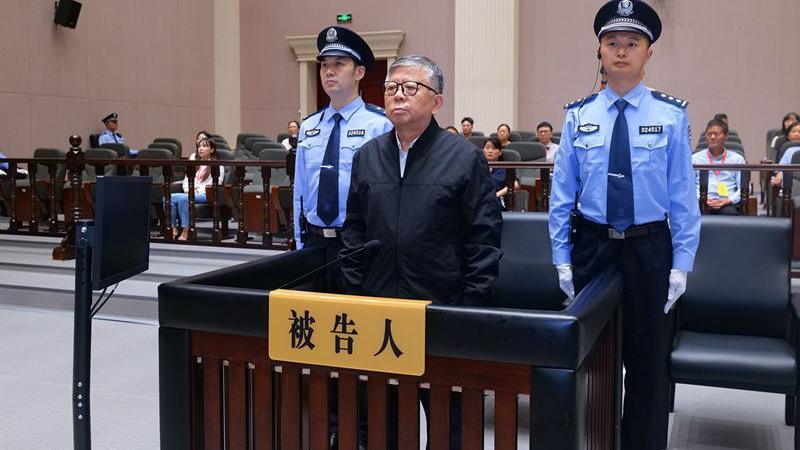
China Sentences Senior Official to Death for Bribery and Embezzlement
China sentences official to death for taking – Authorities in eastern China have sentenced a former city official to death for accepting over 2.2 billion yuan (approximately $325 million; £243 million) in bribes during his three-decade tenure in public service. The conviction, announced by a court in Changzhou, marks one of the most significant corruption cases in recent years, highlighting the sweeping nature of President Xi Jinping’s anti-graft initiatives.
The Corruption Conviction
The court heard that Yang Youlin, who held various government positions in Nanjing from 1993 to 2023, abused his influence to facilitate engineering contracts, land transfers, and financial deals. In exchange for cash, luxury items, and other benefits, he allegedly helped individuals and companies secure lucrative projects. His misdeeds, which totaled over 2.2 billion yuan, were described as “of an extremely serious nature” by the judges, leading to his conviction on multiple charges, including embezzlement, abuse of power, and money laundering.
“Yang Youlin’s actions caused exceptionally heavy losses to the state and the people,” stated the Changzhou court in its ruling.
Yang’s sentencing underscores the severity of his offenses, as his ill-gotten gains exceed the threshold typically required for the death penalty in white-collar crimes. The court noted that his contributions to authorities, though notable, were deemed insufficient to mitigate the gravity of his misconduct. He admitted guilt and expressed remorse in his final statement, as reported by state media.
Xi’s Anti-Corruption Crackdown
Yang’s case is part of a broader campaign launched by President Xi Jinping to root out corruption across government, military, and financial sectors. Since taking power, Xi has prioritized transparency, targeting high-ranking officials and reshaping China’s political landscape. This strategy has led to the prosecution of numerous figures, including those in the military and top banking institutions, often as part of broader investigations into systemic graft.
State media highlighted that Yang’s investigation began as part of this nationwide effort, which has resulted in the removal of thousands of officials. The campaign is not only about punishing individual wrongdoing but also about reinforcing Xi’s authority and consolidating control over key sectors of society. Critics argue that the drive has sometimes been used to eliminate political rivals, but supporters view it as a necessary measure to restore public trust in institutions.
Yang’s career in Nanjing was centered on advancing economic and technological development, a role that placed him in a position to influence major decisions. Over time, his responsibilities grew, and with them, opportunities for personal gain. His actions, according to the court, were part of a pattern where he leveraged his authority to benefit private interests, often at the expense of public funds and resources.
Death Penalty in White-Collar Crimes
While death sentences for white-collar crimes are rare, they are reserved for cases involving particularly large sums of money. The threshold for such penalties typically exceeds 1 billion yuan, with Yang’s total bribes surpassing this amount. Other notable examples include former finance chief Lai Xiaomin, who was executed in 2021 for accepting 1.8 billion yuan in bribes over a decade, and Li Jianping, a former official in Inner Mongolia, who received the death penalty in 2024 for embezzling and taking bribes totaling more than 3 billion yuan.
The use of the death penalty in these cases reflects a shift in China’s approach to corruption. Previously, such punishments were more commonly applied to criminal offenses like murder or theft. However, under Xi’s leadership, white-collar crimes—especially those involving high-level officials—have increasingly been subject to the most severe penalties. This trend has raised questions about the balance between punishment and the role of corruption as a tool for political control.
Despite the frequency of death sentences, many cases result in suspended terms or life imprisonment. Courts often consider mitigating factors, such as the defendant’s cooperation with investigations or the scale of their wrongdoing. In some instances, individuals who reported on other offenders have seen their sentences reduced, indicating a system that rewards self-incrimination and fosters a culture of internal accountability.
The Broader Implications
Yang’s conviction serves as a warning to officials across China, reinforcing the message that corruption will not be tolerated at the highest levels. His 30-year career, marked by both public service and private enrichment, illustrates the challenges of maintaining integrity in positions of power. The court’s emphasis on the “exceptionally heavy losses” caused by his actions highlights the economic impact of graft, particularly in sectors like engineering and finance, which are critical to national development.
State media have portrayed the case as a victory for the anti-corruption movement, emphasizing Yang’s role in securing contracts and his subsequent betrayal of public trust. The decision to impose the death penalty also aligns with Xi’s goal of demonstrating the government’s commitment to eradicating corruption. This approach has been both praised and scrutinized, with some viewing it as a necessary deterrent and others questioning whether it is being used to target specific individuals within the political establishment.
As the campaign continues, the courts are expected to handle similar cases with increasing rigor. Yang’s sentence, however, stands out for its magnitude and the length of his involvement in corrupt activities. His case is likely to be cited as a landmark example of how Xi’s administration is addressing the problem of entrenched corruption, even in long-standing positions of influence. The legal system’s willingness to apply the death penalty in such circumstances signals a new era of accountability in China’s political and economic spheres.
While Yang’s fate is a clear message, the broader implications of the anti-corruption drive remain complex. The campaign has not only reshaped the landscape of public service but also influenced the way officials conduct their duties. With high-profile convictions continuing, the focus on large-scale corruption has become a central pillar of Xi’s governance, ensuring that the consequences of misdeeds are matched by the severity of punishment. Yang’s 69 years of service, now overshadowed by his crimes, serve as a stark reminder of the risks associated with wielding power without ethical constraints.