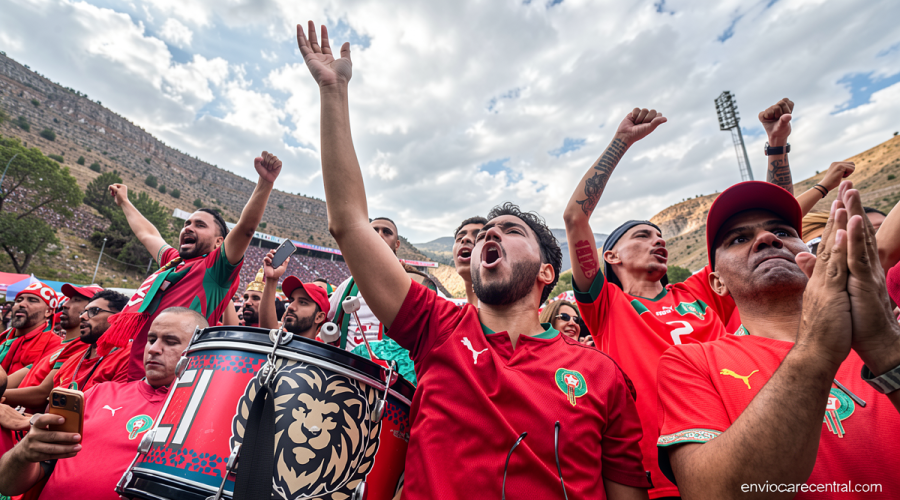
Morocco’s Quest for Redemption Against France in World Cup Quarter-Final
Morocco s unfinished business with France – The upcoming clash between France and Morocco in Boston represents far more than a standard knockout stage encounter. For countless supporters across Morocco and the diaspora, this quarter-final carries the weight of unfulfilled ambitions from four years past. When Les Bleus dispatched the Atlas Lions in Qatar’s semi-final, they halted what many considered an unprecedented journey for African and Arab football.
A Revenge Mission for the 2022 Generation
The memory of that 2-0 defeat still resonates strongly within Moroccan football circles. Hamza Chtioui, a prominent sports journalist from Morocco, has characterized this fixture as a crucial opportunity for redemption. “This is a revenge match for the Moroccan national team,” he explained. “Especially for the players who were part of that 2022 squad. They felt that loss deeply, and now they’re looking to settle the score – for themselves and for the team.”
Standing within Al Bayt Stadium during that emotional evening, one could sense that Morocco had fundamentally altered global perceptions of their footballing capabilities. Reaching the semi-finals was viewed as something extraordinary, almost miraculous. The atmosphere suggested that this was merely the beginning of something special for North African football.
From Dreamers to Contenders
The transformation in Moroccan football extends beyond emotional momentum. Since their remarkable 2022 campaign, the nation has demonstrated sustained progress across multiple levels. The under-20 national team captured world championship glory, while the senior side has ascended to sixth position in FIFA’s official rankings.
“In 2022 we were the dreamers,” Chtioui reflected. “Now people’s expectations are much higher. Anything less than the semi-finals wouldn’t be considered an achievement.”
Hameed Bel Hassan, a seasoned Moroccan journalist, emphasized that Qatar’s success was no accident. “What happened in Qatar wasn’t a fluke,” he stated. “It was the result of years of strategic planning and programmes put in place by the Royal Moroccan Football Federation. This has been a national project. We now have a formidable national team.”
Tactical Strength and Tournament Form
Morocco’s performances throughout this World Cup have showcased a team operating with considerable confidence and tactical discipline. They demonstrated resilience against Brazil before securing victories over Scotland, the Netherlands, and Canada to book their quarter-final place.
France enters this encounter as perhaps the tournament’s most polished side. Kylian Mbappé continues to lead one of the world’s most gifted collections of players, with Les Bleus displaying fluid, attacking football throughout the competition. “Individually they’re stronger,” Chtioui acknowledged. “But Morocco’s midfield is about equal. If they can press France early, like they did against Brazil, they can create problems. The 11 players just need to perform as one.”
The Mother Connection: More Than Sentiment
One of the most distinctive elements of Morocco’s footballing identity has been the visible presence of players’ mothers throughout major tournaments. The viral images of Achraf Hakimi embracing his mother after matches during 2022 captured hearts worldwide. Sofiane Boufal’s joyful dance with his mother on the pitch became equally iconic moments.
This tournament has continued that tradition. Ismael Saibari, who recently suffered an injury setback, ran directly into the stands to celebrate with his emotional mother after scoring the decisive penalty against the Netherlands. These are not random celebrations but part of a deliberate philosophical approach.
RMFF president Fouzi Lekjaa has described having mothers present during tournaments as “one of the most effective and positive psychological support strategies” within the federation’s toolkit. He noted that this practice gives players “real impetus” during crucial moments.
“When the player sees his mother in the stands, it’s a huge boost and motivation,” Bel Hassan explained. “The players themselves have spoken about how supported they feel. A mother’s prayer, nothing really comes close.”
When Morocco returned from Qatar, King Mohammed VI personally welcomed both the players and their mothers together, symbolizing the national importance of this family-centered approach. This emphasis on emotional resilience, combined with systematic investment in youth development, has created a footballing culture that Morocco believes can elevate them to genuine powerhouse status on the world stage.