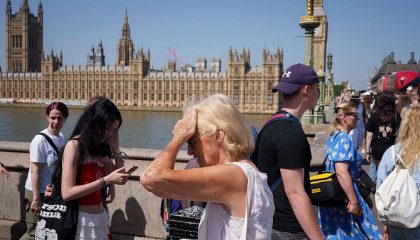
Extended Heatwave Brings Record-Breaking Temperatures Across Britain
UK bakes in 35C highs as heatwave – The United Kingdom continues to experience intense summer conditions, with another day of sweltering 35°C temperatures anticipated. Meteorologists indicate that these heatwave conditions will persist through the conclusion of next week, keeping residents on high alert for prolonged warm weather. Thursday marked a significant milestone as temperatures surpassed 34°C for the eighth consecutive day of the current year, eclipsing the previous record of seven days established simultaneously in both 1976 and 2020.
Overnight conditions proved equally warm, with five monitoring stations throughout England recording what meteorologists classify as a “tropical night.” These locations maintained temperatures above 20°C throughout the night, preventing the usual cooling that occurs during typical summer evenings. The ongoing heatwave, which commenced earlier this week, has demonstrated remarkable staying power and may extend well into the following week before cooler, more unsettled conditions finally arrive.
Weekend Relief and Regional Variations
Residents in certain regions may find some comfort over the weekend as atmospheric patterns shift. A north-easterly wind pattern developing on Saturday is expected to draw cooler air from the North Sea toward inland areas. While this should provide noticeable relief for eastern and northern locations, southern and eastern pockets will continue experiencing heatwave-level temperatures despite the changing conditions.
Amber and yellow heat health warnings, issued by the UK Health Security Agency, remain active across extensive portions of England until 21:00 BST on Sunday. These alerts signal potential impacts on health and social care services, particularly affecting vulnerable populations including individuals aged 65 and older, young children, and those managing pre-existing medical conditions.
Temperature Records and Historical Context
Friday is projected to bring highs reaching 35°C, continuing the pattern established recently. Thursday’s peak temperature reached 35.5°C at Wisley in Surrey, establishing the highest reading for this particular heatwave period. Wales recorded 31.3°C at Bute Park in Cardiff, while Scotland’s Charterhall station measured 29.3°C. Northern Ireland’s Killowen location registered the highest temperature for that region at 27.5°C.
The five English sites experiencing tropical nights recorded the following overnight temperatures: Heathrow in London at 21.3°C, Cippenham South Water Works in Berkshire at 21.2°C, Kenley in Surrey at 20.6°C, St Catherine’s Point on the Isle of Wight at 20.5°C, and Northolt in London at 20.3°C.
While this current heatwave may not shatter daily temperature records, the Met Office confirmed that 2026 has already seen eight days where temperatures reached or exceeded 34°C. This tally includes two days during May’s heatwave, four days in June, and two days so far in the current heatwave, establishing a new calendar year record that surpasses both 1976 and 2020. Another reading above 34°C is anticipated for Friday.
Health Impacts and Pollen Concerns
During June’s earlier heatwave, temperatures peaked at an impressive 37.7°C in Lingwood, Norfolk, breaking the previous June record of 35.6°C. Wales also experienced its hottest June day with 35.9°C recorded in Cardiff, while Northern Ireland matched its June record at 30.8°C in Castlederg, County Tyrone. Scotland came close to its all-time June record of 32.2°C set in 1893, reaching 31.2°C at Threave in Dumfries and Galloway.
The prolonged warm conditions are creating additional challenges beyond temperature alone. Many individuals are simultaneously dealing with elevated pollen levels in the atmosphere. Grass pollen remains dominant during this season, but weed pollen is becoming increasingly prevalent. High temperatures combined with light winds and minimal rainfall create optimal conditions for pollen accumulation. Since rain typically helps clear pollen from the air, the expected continuation of dry weather will allow concentrations to build steadily. Gentle breezes will transport pollen over considerable distances, with an easterly wind anticipated in southern regions beginning Friday.
People are drawing comparisons to 1976, when the UK experienced 16 consecutive days above 30°C, though meteorologists suggest this particular record is unlikely to be broken. The highest temperature ever recorded in the UK occurred during the unprecedented 2022 heatwave, when an astonishing 40.3°C was measured in Coningsby, Lincolnshire.
As the heatwave continues, the combination of elevated daytime temperatures with minimal overnight cooling means bodies receive insufficient recovery time during sleep. This effect, combined with rising pollen levels and the amber and yellow alerts covering all of England except the north-east (which has a yellow alert), creates a complex situation for public health services and individuals alike throughout the coming days.