Why the Super-Sized World Cup Brings Challenges
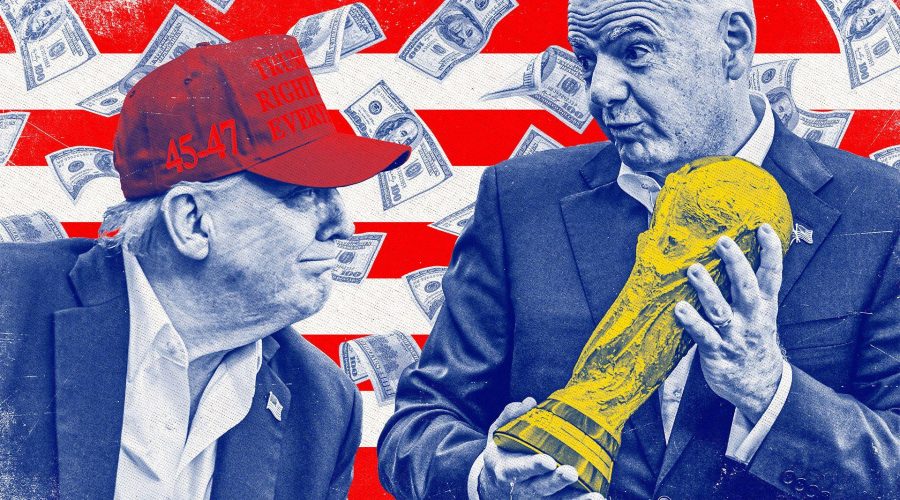
Why super sized and politicised World – The 2026 FIFA World Cup, spanning the United States, Mexico, and Canada, is being hailed by Gianni Infantino, the organization’s president, as the most expansive and unifying sporting event in history. “This is simply the greatest event that humanity, that mankind, has ever seen,” he declared, emphasizing the unprecedented scale of the tournament. With 48 teams and 104 matches, it’s a global spectacle unlike any before, yet its massive footprint has sparked debates about the costs and controversies it incurs. While FIFA aims to position it as a celebration of unity, critics argue it’s also the most politicized and financially demanding World Cup yet.
The Cost of Hosting a Global Event
Spanning three nations, the 2026 World Cup is not only the largest in terms of matches but also one of the most expensive. The sheer logistics of organizing games across 16 cities—each with its own infrastructure, security needs, and cultural dynamics—have raised concerns about financial strain. For instance, ticket prices in the U.S. have been a point of contention, with fans accusing organizers of prioritizing profitability over accessibility. The high costs are compounded by the need to ensure stadiums are state-of-the-art, transport systems are upgraded, and safety measures are robust enough to handle potential threats.
Meanwhile, in Mexico, the Estadio Azteca in Mexico City is set to host the tournament’s opening match, a venue that has already witnessed iconic moments in football history. However, the city is grappling with its own set of challenges. Security threats from cartel violence, which has surged this year, have prompted fears of disruptions. Protests have already targeted player statues in the capital, with demonstrators demanding better wages and threatening to halt matches if their demands aren’t met. These tensions highlight the complex interplay between sport and social issues, as the World Cup becomes a stage for broader geopolitical and cultural debates.
Politicized Tensions and Iran’s Participation
One of the most contentious aspects of the 2026 World Cup is the inclusion of Iran, a nation embroiled in political conflict with the United States. The Iranian team’s decision to base itself in Mexico, rather than Arizona, underscores the geopolitical challenges of hosting a global event. This shift came after the U.S. and Israel launched a military campaign in February, leading to retaliatory strikes in the Middle East. Although a ceasefire was brokered in early April, hostilities have continued, casting a shadow over Iran’s participation.
Iran’s involvement has been a focal point of controversy, particularly with U.S. President Donald Trump’s comments. At one stage, Trump suggested that it was “not appropriate” for Iran to compete in the World Cup, citing concerns for the team’s safety. His special envoy even proposed replacing Iran with Italy, which had failed to qualify for the tournament. Despite these challenges, Iran is poised to participate in a fourth consecutive World Cup, but the country has accused the U.S. of imposing restrictions, such as denying visas to key officials and requiring players to enter and exit the U.S. on the same day of their matches there.
“The revocation of our fan tickets raises serious questions about the interference of non-sporting and political considerations in the organization of the world’s biggest football event,” stated Iran’s football federation, echoing the broader frustration with the tournament’s political dimensions.
Adding to the complexity, FIFA has reportedly moved to ban the pre-revolutionary Iran flag from venues, a decision that has intensified the political atmosphere around the team’s matches. The first two games for Iran will be held in Los Angeles, a city home to a significant Persian community, where the cultural and political stakes are particularly high. This has created a situation where the World Cup is not just a sporting event but also a platform for international rivalries and ideological clashes.
A Legacy of Corruption and Strategic Recovery
The 2026 World Cup’s selection was a strategic move for FIFA, which sought to rebound from the corruption scandal that marred the 2010 World Cup voting process. At that time, Russia and Qatar were chosen to host the 2018 and 2022 tournaments, but allegations of bribery and backroom deals cast doubt on the decision. Hosting the next World Cup in North America was seen as a way to distance from those controversies, leveraging existing stadium infrastructure and a more stable political environment.
Yet, the 2026 edition has not been without its own share of challenges. The three-host model was chosen to maximize global reach, but it also introduces new complexities. For example, the co-hosts must navigate differences in regulations, from immigration policies to environmental standards. The tournament’s organizers face the daunting task of ensuring seamless coordination between the U.S., Mexico, and Canada, which vary significantly in their approach to hosting large-scale events. These differences could lead to logistical hurdles, particularly in managing fan experiences and security protocols across diverse regions.
Moreover, the tournament’s environmental impact has become a point of discussion. With 104 matches and extensive travel requirements, concerns about carbon emissions and sustainability have emerged. The need to balance economic benefits with ecological responsibility is a growing challenge, especially as climate change continues to influence weather patterns. The 2026 World Cup may set a precedent for future events, proving whether large-scale football can be both profitable and environmentally conscious.
The Broader Implications of a Global Stage
As the World Cup unfolds, the questions surrounding its organization and implications will remain central. What is at stake is not just the success of the event but also the perception of FIFA’s leadership. Infantino’s vision of inclusion and unity will be tested against the realities of political tensions, financial pressures, and social unrest. The tournament’s ability to transcend these challenges will determine whether it is remembered as a triumph of global cooperation or a cautionary tale of overreach.
For fans, the 2026 World Cup represents a unique opportunity to witness football on an unprecedented scale. However, the cost of entry—both monetary and societal—may shape how the event is perceived. The historical significance of the Estadio Azteca, where the tournament will officially kick off, adds a layer of anticipation, but the events leading up to it, including Iran’s precarious participation and security concerns in Mexico, will undoubtedly leave their mark. As the world watches, the 2026 World Cup stands as a symbol of football’s reach and the challenges that come with it.
With the tournament approaching, the spotlight is on the co-hosts and their ability to manage these multifaceted issues. The success of the 2026 World Cup will depend on how effectively FIFA and its partners address the concerns of fans, governments, and the global community. Whether it will be celebrated as the most inclusive event or criticized as the most contentious depends on the balance between ambition and accountability. For now, the event remains a landmark in football history, one that promises both excitement and scrutiny.