
‘We can’t take it anymore’: How Trump is pushing Cuba to the brink
‘We can’t take it anymore’: How Trump is pushing Cuba to the brink
A Cuban man approached me on the street, his voice barely audible as he shared a sentiment that echoes across the island. “Let the Americans come, let Trump come, it’s time to get this over with,” he murmured. This is perilous rhetoric in Havana, where the weight of U.S. presidential pressure has reached new heights since the Cold War era. I glanced around to ensure no one was eavesdropping, and checked if my cameraman—filming a segment on the transportation crisis—was nearby to capture the driver’s words. The man, a bicycle-taxi operator, added, “We can’t take it anymore. People can’t feed their families.”
The Weight of Six Decades
Since Fidel Castro’s revolution in 1959, Cuba has endured a series of trials: failed CIA invasions, nuclear standoffs, and mass departures. Now, under the current administration, the nation faces another challenge, this time from Donald Trump. During an interview with CNN’s Dana Bash, Trump declared, “Cuba is going to fall soon,” a claim that carries more urgency than usual due to the swift and precise manner in which his oil embargo has crippled the island’s already struggling economy.
Trump’s campaign against Venezuela and Iran has set a precedent for his approach toward Cuba. In his second term, he has launched aggressive measures to remove leaders from power, and Cuba appears to be the next target. Unlike the 1962 missile crisis, which featured a U.S. naval blockade, the current situation lacks such physical barriers. However, the economic consequences are equally severe. With oil shipments from Havana’s last allies disrupted, the nation’s energy crisis has deepened.
A Nation in Crisis
Many of the newly constructed government hotels, funded by public resources, sit abandoned or closed. Staff have been sent home, and tourists have disappeared. The absence of jet fuel has left no planes to ferry visitors away. “Cuba is not alone,” the government proclaims, yet the island feels more isolated than ever since the Soviet Union’s collapse.
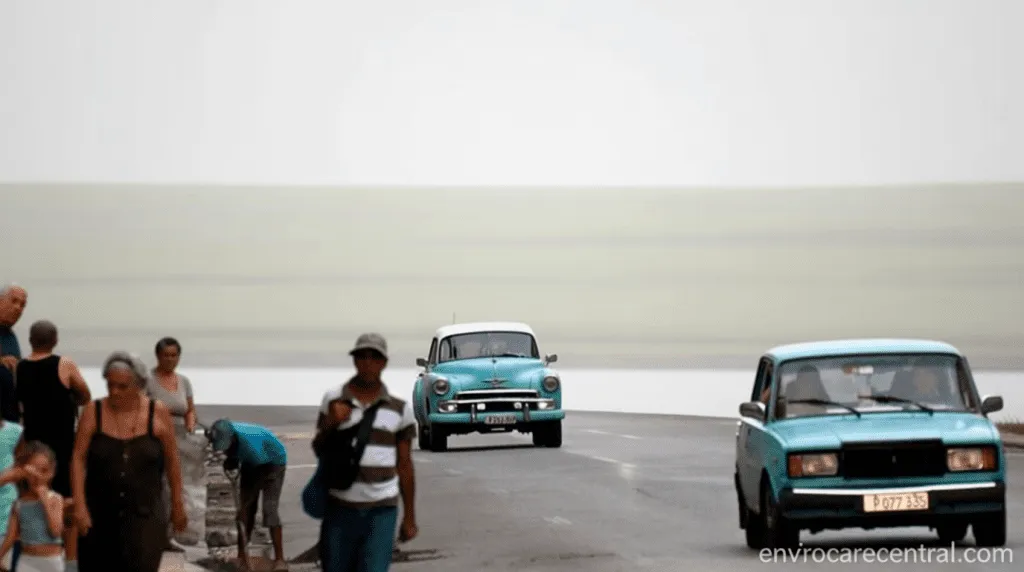
Blackouts, once brief, now stretch for days. When power flickers on in the early hours, Cubans rise to prepare meals and iron clothes with weary determination. During a recent 36-hour outage, a group of men cooked a large pot over burning tree limbs on Havana’s main avenue. “We have returned to the Stone Age,” one man remarked, his tone surprisingly upbeat.
Without fuel, cars are scarce. Government-issued tourist vehicles, known as T-Plate cars, remain the only ones regularly refueling at state-run stations. Cubans siphon fuel from these vehicles to sell on the black market, where a single tank costs over $300—more than the average annual income. Searching through trash for food has become a daily reality for some, even children among them.
Trump asserts the Cuban government is eager to negotiate, but officials I spoke with reject this. “The U.S. will never again dictate terms to our island,” one stated. Despite this, the cry of “The homeland or death. We will be victorious!” still resonates in speeches. Yet, for many, the hope for change persists, no matter its source.
When my cameraman reappeared, I asked the taxi driver if he wished to share his thoughts for the story. He quickly moved away, unwilling to voice his grievances above a whisper—at least for now.
