
Why a delayed Xi-Trump summit could give China a stronger hand
Why a delayed Xi-Trump summit could give China a stronger hand
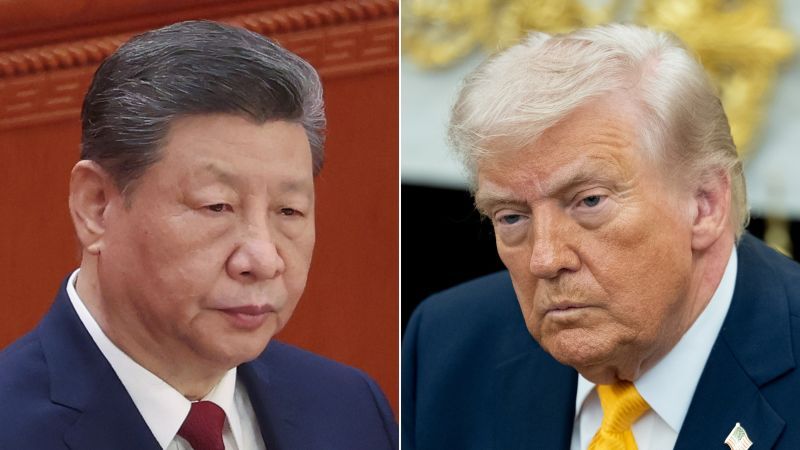
The postponement of Donald Trump’s planned meeting with Chinese President Xi Jinping may benefit Beijing, according to analysts. The delay, proposed by the US leader, could allow both nations to avoid immediate complications tied to the ongoing conflict with Iran, a key ally for China in the Middle East. If the war escalates and threatens global economic stability, it might further weaken Trump’s position during negotiations, experts suggest.
Beijing has not officially confirmed the summit, which was initially set for March 31 to April 2. However, the Chinese government has maintained a cautiously optimistic tone, with Foreign Ministry spokesperson Lin Jian highlighting the “irreplaceable” role of high-level meetings in shaping bilateral ties. Despite this, insiders in Beijing hint that the summit may not proceed as intended, with either side potentially pulling out due to evolving circumstances.
“The longer the war drags on, the greater Trump’s sense of frustration becomes, and his weakness would become even more apparent. Consequently, when dealing with China, he would find himself in yet another disadvantageous position,” said Wu Xinbo, a professor at Fudan University and member of China’s Foreign Ministry advisory committee.
Wu noted that Trump’s delay strategy likely reflects his administration’s uncertainty about the war’s duration. “We will see if Trump has many cards left by then, so it’s better for us to wait a bit rather than act too soon,” he added. The summit, seen as a pivotal moment to reset relations between the world’s top economic and military powers, now risks being overshadowed by the escalating tensions in the region.
China’s position on the delay remains deliberately vague, giving it more flexibility to navigate the situation. Analysts point to the US Supreme Court’s February ruling, which invalidated Trump’s emergency tariffs, as another factor contributing to his weakened stance. The Iran conflict, which has drawn mixed domestic reactions, could further erode his support among voters if it continues beyond his initial promises of a swift resolution.
Despite economic challenges stemming from the war, China is leveraging the crisis to position itself as a more stable and trustworthy global leader. “A lot of countries around the world are now rating China as a more reliable partner than the US. Now that doesn’t mean that China necessarily is a more reliable partner, but rather that changes in the US have made people perceive (it as) so,” explained Rana Mitter, a scholar at Harvard Kennedy School.
With the summit delayed, Beijing aims to capitalize on the geopolitical shift, using the chaos in the region to assert its influence. The outcome of the talks could hinge on whether Trump’s administration can regain momentum or if the delay solidifies China’s advantage in the ongoing strategic competition.
