
10 Inspiring Community-Based Tourism Project Ideas
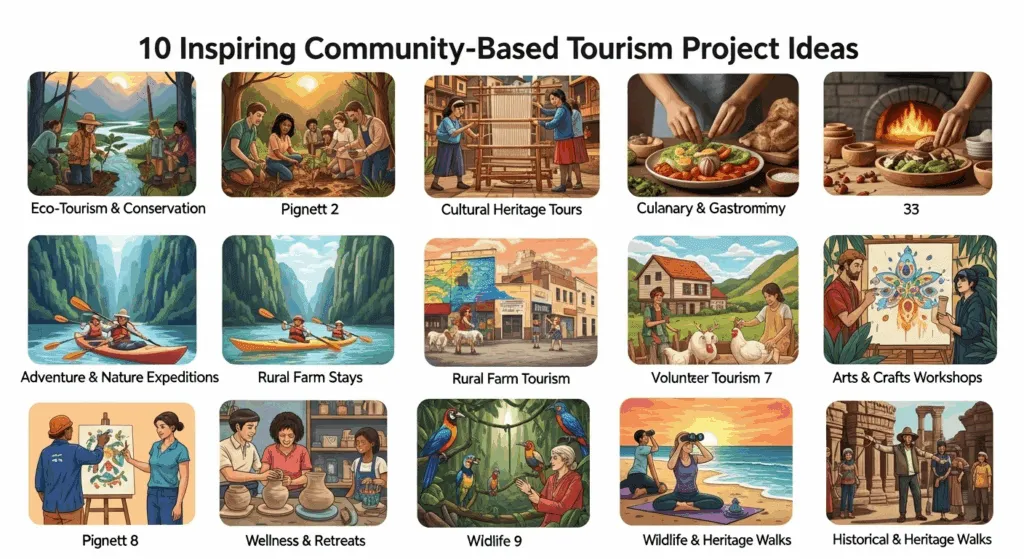
10 Inspiring Community-Based Tourism Project Ideas
From rural villages to coastal hamlets and urban districts, travelers worldwide are seeking authentic, locally led experiences that make a positive difference. If you’re exploring community based tourism project ideas, this guide compiles practical, future-proof concepts that balance cultural integrity, environmental stewardship, and fair livelihoods. Below, you’ll find actionable frameworks, real-world inspiration, and marketing strategies aligned with the latest SEO and sustainability trends to help your project thrive for the long term.
Understanding Community-Based Tourism Today
Community-Based Tourism (CBT) puts local people at the center of planning, ownership, and benefits. While tourism can bring jobs and investment, it can also strain environments and erode traditions if unmanaged. CBT flips the script: communities co-create experiences, set carrying capacities, and retain profits fairly. The result is a tourism model that prioritizes dignity, heritage, and ecosystems.
Over the last decade, the rise of responsible travel, regenerative tourism, and slow travel has accelerated demand for CBT. Visitors want to learn from artisans, farmers, fishers, and storytellers, not just observe them. They value transparency, traceable impact, and quality over quantity—and they’re willing to support destinations that prove it.
CBT also aligns with global frameworks like the UN Sustainable Development Goals (SDGs), particularly those related to decent work, reduced inequalities, climate action, and life on land and below water. By embedding conservation, cultural safeguarding, and inclusive governance, CBT projects can deliver social, economic, and ecological dividends for decades.
Building a Strong Project Foundation
Great ideas rely on solid foundations. Before you launch, invest time in community-led research, capacity building, and fair governance. These pre-launch steps ensure that the experiences you design are resilient, culturally respectful, and financially viable.
Start with a participatory planning process. Host open forums where residents share hopes, concerns, and boundaries. Map local assets—natural sites, craft skills, culinary traditions, festivals, language, and stories—and decide collectively what to showcase, what to protect, and where to set limits. Define who benefits and how revenue flows long before you accept your first booking.
Design a clear operating model and ethical framework. Establish visitor caps, no-go zones, and protocols for culturally sensitive sites. Invest in guide training, safety standards, and first aid. Create a transparent revenue-sharing mechanism so every contributor understands compensation. Finally, adopt a risk register for environmental hazards, occupational risks, and cultural missteps, with response plans co-owned by the community council.
Practical steps to structure your CBT foundation:
1) Conduct participatory asset mapping with elders, youth, women’s groups, and artisans.
2) Co-write a cultural protocol: photography rules, sacred site access, dress codes, and language respect.
3) Develop a fair pricing model with community revenue shares, guide wages, and fund allocations for education or conservation.
4) Build capacity: guest relations, storytelling, digital booking systems, first aid, and waste management.
5) Pilot with small groups, gather feedback, then refine pricing, pacing, and interpretation.
10 Inspiring Community-Based Tourism Project Ideas
Community-based tourism thrives when experiences are locally designed, fairly governed, and environmentally considerate. The following ideas can be adapted to different geographies and cultures. Each combines authenticity with safety, storytelling, and measurable positive impact.
1) Community Food Trails and Heritage Kitchens
Nothing connects travelers to place like food. A community-led food trail weaves family kitchens, street vendors, small farms, and local markets into a tasting journey that supports micro-entrepreneurs. Curate a route through a morning market, a household kitchen workshop, and a farmer’s field focusing on indigenous crops, heirloom grains, or traditional fermentation methods. In some regions, you might feature dishes cooked in earthen stoves, a countryside posada lunch, or a harbor tasting with women fish processors.
To ensure inclusivity, rotate vendors and households so benefits are spread broadly. Offer vegetarian or low-carbon menu options, and highlight food sovereignty stories: seed saving, women-led co-ops, or drought-resilient crops. Train hosts on food safety, guest dietary needs, and storytelling. Package the trail as a half-day experience with a maximum group size to protect household rhythms and maintain dignified interactions.
2) Regenerative Agro-Tourism and Forest Stewardship
Go beyond farm stays and create hands-on activities that restore ecosystems. Visitors can join in agroforestry planting, seedball workshops, invasive species removal, or building terraced swales that prevent soil erosion. Pair fieldwork with lessons on local climate challenges and traditional conservation practices—perhaps a community-managed forest or sacred grove protected for generations.
Keep the experience welcoming and safe. Issue simple tools and gloves, set clear instructions, and monitor for injuries. Use part of the ticket price to fund saplings, water tanks, or biodiversity monitoring. Offer a seasonal calendar so guests know when planting, pruning, or harvesting occurs, and add a campfire storytelling evening where elders share weather lore and biodiversity knowledge.
3) Artisan Heritage Studios and Craft Incubators
Create a living studio where guests meet artisans—woodcarvers, weavers, potters, or instrument makers—and try their hand at a skill. Position the space as an incubator for apprenticeships and product innovation, blending heritage motifs with modern uses. For instance, weave natural fiber baskets designed for laptops or create pottery glazes using local ash in contemporary color palettes.
To avoid commodification, offer context-rich interpretation: the origin of patterns, the symbolism of motifs, and the community’s historical trade routes. Guests can book short workshops or longer masterclasses, and a portion of fees can fund youth apprentices, tool maintenance, and a cultural archive. Pricing should reflect teaching time, materials, and fair wages, with an option to purchase products labeled with artisan profiles and transparent price breakdowns.
4) Living History Walks and Story Circles
Turn your town or village into an open-air museum, led by elders and youth historians. Guests follow a walking route—perhaps a coastal path used by fisher families, a former caravan trail, or an old neighborhood built around a souk. Use hand-drawn maps, QR codes with audio stories, or simple augmented content that reveals hidden histories: resistance movements, migration stories, or the origin of place names.
End with a story circle over tea where visitors ask questions and reflect. Protect vulnerable narratives: decide as a community which stories are public and which are private. Encourage respectful “no-photos” moments and a code of conduct. This experience can be offered in multiple languages and tailored for schools, corporate retreats, or university groups studying anthropology, architecture, or heritage.
5) Women-Led Home Enterprises and Skills Exchanges
Design an itinerary that showcases women entrepreneurs—spice blending, embroidery, pickling, soapmaking, or natural dyeing. Offer respectful, pre-approved home visits or shared workshop spaces to maintain privacy and safety. Include hands-on sessions where travelers learn a skill and leave with a product they helped create.
Create a supportive ecosystem: childcare during workshops, safe transport, and a rotating calendar that aligns with women’s schedules. Name women as co-owners and trainers, and ensure direct payments via digital wallets or community-managed accounts. Share impact reports on how earnings translate into school fees, healthcare, or equipment purchases to build guest trust and inspire repeat bookings.
6) Indigenous Knowledge and Seasonal Calendars
If appropriate and requested by the community, co-create experiences based on indigenous knowledge—like lunar planting cycles, seasonal fishing methods, or traditional architecture such as boma compounds or fale houses. The key is to ensure that what is shared is community-approved, non-sacred, and correctly interpreted.
Visitors might join seasonal camps to learn tracking, plant identification, or water conservation practices. Keep groups small and co-host with cultural custodians. Build content around permission and reciprocity: guests contribute to a community fund, support language preservation, or help document non-sensitive knowledge for school curricula. Avoid “spectacle”—center dignity, consent, and learning.
7) Coastal and River Guardianship Experiences
For waterside communities, combine boat or canoe trips with conservation action. Guests can assist with seagrass monitoring, mangrove planting, beach cleanups, or community-led fishery surveys. Include a safety briefing, flotation devices, and a guide ratio tailored to conditions. Share how these ecosystems store carbon, buffer storms, and support livelihoods.
Blend science with culture: traditional boatbuilding demos, net-mending, or songs sung by fishers. Commit to zero plastic experiences—refillable bottles, reusable snack containers, and local fruit served in compostable wrappings. A portion of revenue should maintain boat engines, safety kits, and the community’s conservation fund.
8) Accessible and Inclusive Rural Homestays
Design homestays that are culturally rich and physically accessible. Retrofit at least one home with ramps, adapted bathrooms, and clear wayfinding visuals. Train hosts in inclusive hospitality and basic sign language or communication boards. Offer flexible itineraries that balance rest with gentle activities like herb gardening, storytelling evenings, or craft circles.
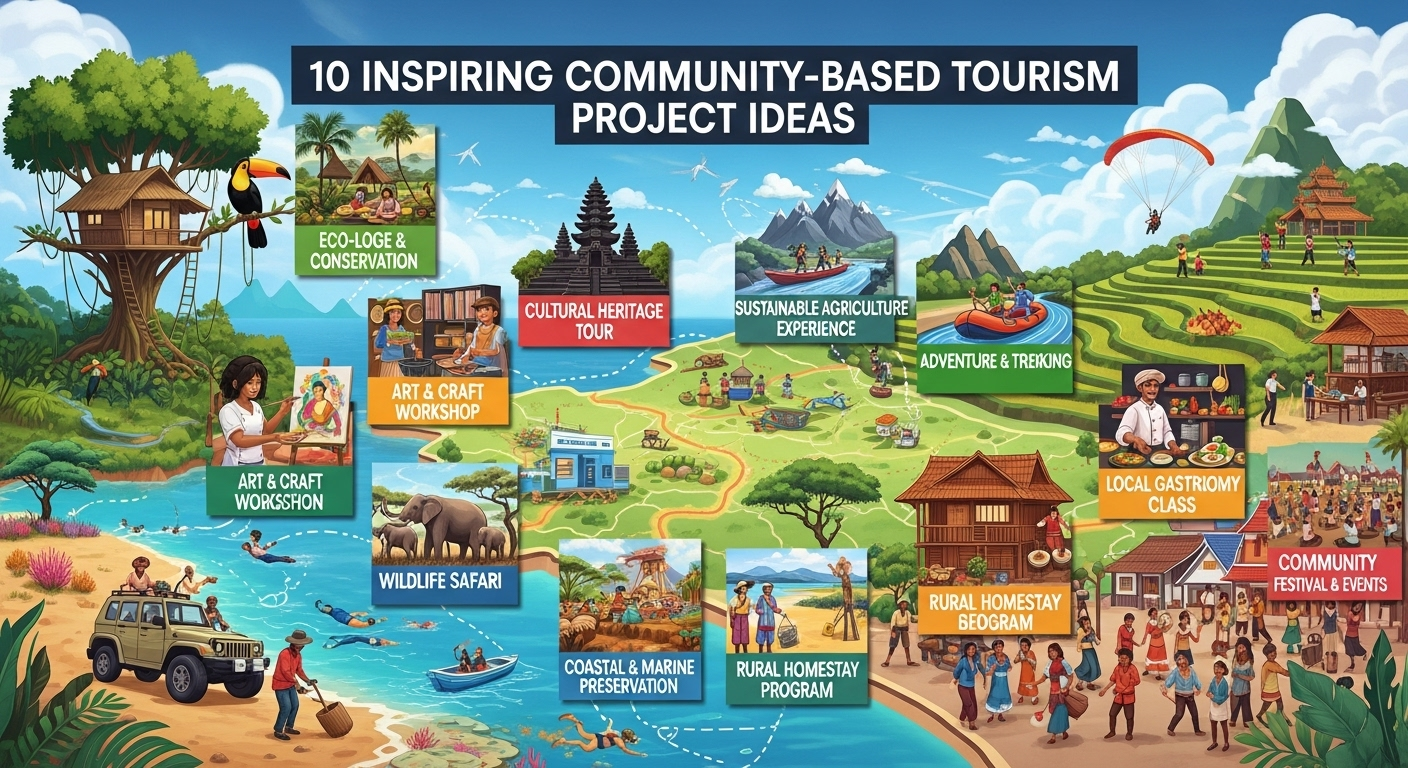
To preserve privacy, set boundaries—quiet hours, no-bedroom photo rules, and designated communal spaces. Curate a host network so bookings rotate fairly. Offer add-ons like farm breakfasts, cycling to nearby sites, or cooking with foraged greens. Use clear house rules and sanitary standards to maintain trust.
9) Community Festivals and Maker Markets
Scale up cultural vibrancy by organizing a small, periodic festival—music, dance, poetry, and a maker market. Keep it community-first: local performers, fair stall fees, and an independent accessibility desk. Avoid single-use plastics and encourage visitors to rent a cup or bring bottles. Workshops can teach dance steps, drum rhythms, or textile prints, with proceeds funding youth arts programs.
Ensure safety: first aid posts, shaded rest areas, and crowd management plans. Pre-sell limited tickets to avoid overcrowding and enforce a local-first vendor policy to protect livelihoods. Gather impact data—vendor income, visitor satisfaction, and noise levels—and refine each edition inclusively.
10) Urban Social-Enterprise Trails
In cities, co-design a trail of social enterprises and neighborhood heroes: community gardens, repair cafés, upcycling studios, culinary co-ops, and youth arts centers. The route can spotlight how urban communities tackle food waste, public space renewal, or heritage preservation. Include an optional “pay-it-forward” ticket that subsidizes local youth participation.
Train guides from the neighborhood and offer micro-grants to featured enterprises for upgrades—signage, safety equipment, or storage. Co-create maps and digital storytelling so guests understand the social issues at play and the solutions being built from the ground up. Keep the narrative strength-based, not deficit-focused, and celebrate local leadership.
Measuring Impact and Ensuring Long-Term Sustainability
Measurement builds trust, attracts partners, and keeps projects on track. Define indicators before launch and report them publicly each season. Focus on community-defined success: school attendance, women’s leadership roles, forest cover, or the number of youth trained—alongside business metrics like occupancy and revenue.
Use simple, low-cost tools. A shared spreadsheet or a community mural chart can capture bookings, distribution of income, and conservation milestones. Combine numbers with stories: case studies of artisans expanding their workshops, farmers adopting soil-friendly practices, or youths becoming certified guides.
Plan for resilience. Develop seasonal pricing, drought plans, off-peak activities, and emergency funds. Offer online classes or product sales during disruptions. Protect culture: rotate participation to avoid burnout, update consent lists for photos and interviews, and maintain a grievance channel run by the community council.
Sample impact dashboard (year 1 targets)
Metric | Baseline | Year 1 Target | Notes
Community income share | 0% | 55–70% of net margin | Paid monthly with public ledger
Local jobs created | 0 | 12–20 part-time roles | Prioritize women and youth
Biodiversity actions | 0 | 2,000 trees planted | Verified by community ranger logs
Waste diverted | 0 kg | 1,500 kg | Composting + recycling partners
Guest satisfaction | N/A | 4.7/5 average rating | Post-visit survey, SMS-enabled
Training hours | 0 | 300 hours | Guiding, first aid, digital skills
Marketing Your CBT Experience for Year-Round Bookings
Marketing is most effective when it mirrors your values: transparent, educational, and community-led. Start with a fast, mobile-friendly website that tells real stories with consented photos, clear pricing, and visible impact metrics. Use structured data (schema markup) to help search engines understand your tours, events, and reviews.
Invest in search intent content. Blog posts like “What to Expect on a Community Food Trail,” “Traveling Plastic-Free in Our Village,” or “Best Time to Visit for Mangrove Planting” align with long-tail keywords and educate guests. Keep titles descriptive, meta descriptions persuasive, and URLs short. Add FAQs to capture voice-search queries and E-E-A-T signals (experience, expertise, authoritativeness, trustworthiness) by crediting local guides as co-authors.
Promote on channels where your travelers hang out:
- Instagram Reels and short-form video to showcase hands-on moments (with consent).
- Google Business Profile for maps visibility, opening hours, and reviews.
- Partnerships with responsible tour operators, universities, and NGOs.
- Email newsletters with seasonal calendars and new workshops.
- Ethical travel platforms that prioritize impact and fair trade.
Risk Management, Ethics, and Community Safeguards
Ethical guardrails protect people and place. Adopt a code of conduct for visitors and staff: respect for cultural norms, zero tolerance for exploitation, and consent for photos or recordings. Share it at booking and on arrival, and enforce it consistently.
Strengthen child protection. Never market “orphanage visits” or volunteer roles involving children. If schools are part of an itinerary, plan with educators and avoid disruptions. Train guides to spot and stop inappropriate behavior, and create a confidential reporting channel.
Environmentally, set a baseline and reduce your footprint. Cap group sizes, adopt refill stations, ban single-use plastics, and choose efficient transport modes. Offset only after reducing emissions, and prefer local nature-based solutions like community forests or seagrass restoration. Build a crisis plan: weather alerts, medical access, and evacuation routes, with clear roles for all staff.
FAQs
Before booking, many travelers ask the same questions. Address them clearly to build trust and reduce friction.
Q: How is revenue shared in a CBT project?
A: Ideally, the community receives a majority share of the net margin, with transparent accounting reviewed monthly. Payments should go directly to contributors—guides, cooks, artisans—plus a community fund for education, health, or conservation.
Q: What makes a tour “community-based” rather than just “local”?
A: Community-based means experiences are co-owned and co-governed by residents, with decisions on visitor caps, cultural protocols, pricing, and benefit-sharing made collectively, not by an external operator alone.
Q: How do you prevent cultural commodification?
A: Limit group sizes, avoid sacred or private rituals, use consent-led storytelling, and rotate participants to reduce fatigue. Provide context-rich interpretation so guests understand meaning—not just photo moments.
Q: Is CBT more expensive than regular tours?
A: Sometimes, because it reflects fair wages, training, small group ratios, and environmental investments. Guests often perceive higher value due to authenticity, depth of learning, and measurable impact.
Q: Can CBT thrive in cities?
A: Absolutely. Urban trails can highlight social enterprises, heritage workshops, community gardens, and upcycling studios—showcasing local innovation and neighborhood pride.
Q: How do you measure impact credibly?
A: Combine quantitative metrics (income share, jobs, waste diverted) with qualitative stories and third-party validation where possible. Share results publicly each season.
Conclusion
Community-based tourism is more than a trend—it’s a blueprint for travel that uplifts people, protects ecosystems, and renews cultures. With the right foundation—participatory planning, clear ethics, rigorous impact tracking, and community-first marketing—your project can deliver repeatable, year-round benefits and unforgettable guest experiences.
The 10 ideas above are adaptable across landscapes and cultures: from heritage kitchens and craft incubators to forest stewardship and urban social-enterprise trails. Start small, pilot thoughtfully, and refine with honest feedback. When communities lead and visitors learn with humility, tourism becomes a force for long-term wellbeing—for hosts, guests, and the planet we share.
Summary (for quick reference)
- Community-based tourism centers local ownership, fair revenue sharing, and cultural and ecological integrity.
- Strong foundations include participatory planning, cultural protocols, transparent pricing, and safety standards.
- Ten project ideas span food trails, regenerative agro-forestry, artisan studios, living history walks, women-led enterprises, indigenous knowledge experiences, coastal guardianship, accessible homestays, community festivals, and urban social-enterprise trails.
- Measure what matters: income distribution, jobs, biodiversity actions, waste diversion, guest satisfaction, and training hours.
- Market ethically with SEO-rich content, storytelling, partnerships, and visible impact reporting.
- Safeguards—child protection, consent, environmental caps, and crisis readiness—ensure longevity and trust.
