
Easy Sustainable Travel Tips: A Guide for Beginners
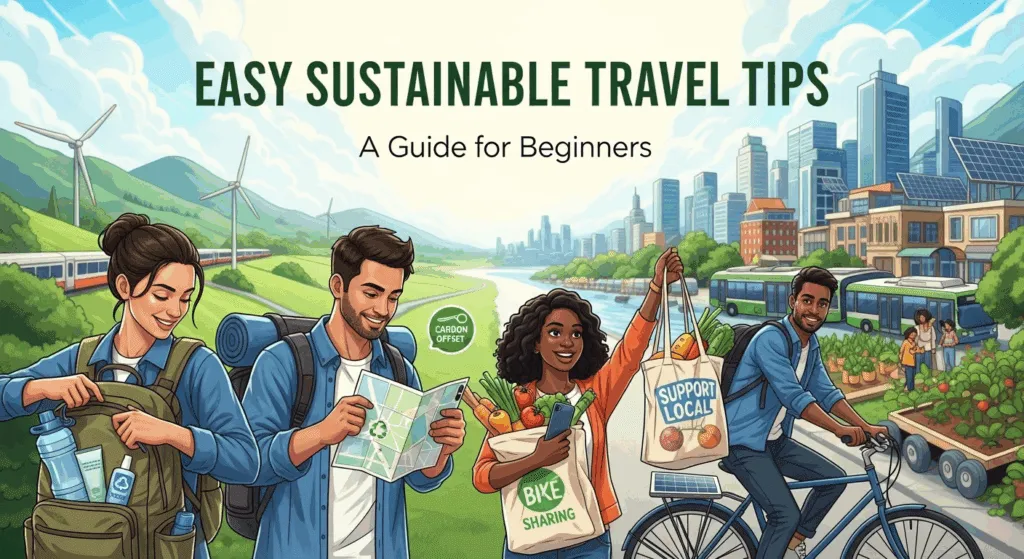
Traveling the world is one of life's greatest pleasures, opening our eyes to new cultures, landscapes, and experiences. But as we explore, it's increasingly important to consider our impact on the places we visit. Sustainable travel isn't about giving up adventure; it's about making our adventures more meaningful and less impactful on the planet and its people. It’s about ensuring that future generations can also enjoy the wonders of our world. If you're new to this concept, don't be intimidated. This comprehensive guide is packed with easy and actionable sustainable travel tips for beginners to help you embark on a journey that is both incredible and responsible.
Understanding Sustainable Travel: More Than Just "Green"
Before diving into the practical tips, it's crucial to understand what sustainable travel truly means. Often, people equate it solely with environmentalism—like reducing plastic or offsetting carbon emissions. While those are vital components, true sustainability rests on three core pillars: environmental, social, and economic. This holistic approach ensures that travel benefits everyone and everything involved, from the local ecosystem to the community that calls a destination home.
The environmental pillar is the most well-known. It involves protecting natural resources, conserving biodiversity, and minimizing our pollution and waste. The social pillar, or socio-cultural pillar, focuses on respecting local cultures, traditions, and heritage. It's about engaging in authentic cultural exchange that honors and empowers local communities rather than exploiting them. Finally, the economic pillar is about ensuring that the financial benefits of tourism are distributed fairly and remain within the local community, contributing to its long-term well-being and development.
For a beginner, this might sound complex, but it boils down to one simple principle: making conscious choices. Every decision, from the flight you book to the souvenir you buy, has a ripple effect. The goal isn't to be a "perfect" sustainable traveler overnight. It's about taking small, manageable steps and continuously learning. By embracing this mindset, you transform from a mere tourist into a mindful visitor who contributes positively to the places you explore.
Planning Your Trip: The Foundation of Sustainability
The most impactful sustainable travel decisions are often made long before you pack your bags. Thoughtful planning is the bedrock of a responsible journey. How you get to a destination, where you stay, and what you pack all play a significant role in determining your overall footprint. Taking the time to research and make conscious choices during this phase will set you up for a more meaningful and low-impact trip.
Transportation, for instance, is one of the biggest contributors to a traveler's carbon footprint, with air travel being the primary culprit. When possible, consider alternatives. Trains are often a fantastic, scenic, and lower-carbon option for overland travel. If flying is unavoidable, opt for direct flights, as takeoffs and landings consume the most fuel. Additionally, consider choosing airlines with more modern, fuel-efficient fleets and a public commitment to sustainability.
The destination itself is another critical factor. The phenomenon of "overtourism" has put immense strain on popular cities like Venice and Barcelona, damaging infrastructure and displacing locals. Consider visiting during the shoulder season or off-season when crowds are thinner. Better yet, explore second-tier cities or lesser-known regions. This not only alleviates pressure on tourist hotspots but also spreads the economic benefits of tourism to areas that need it more, often providing a more authentic and relaxed experience.
1. Choosing Eco-Conscious Accommodation
Where you sleep matters. The hotel industry is notoriously resource-intensive, but a growing number of accommodations are adopting sustainable practices. When booking, look beyond the price and photos. Investigate the property's commitment to sustainability. Do they have policies for water and energy conservation? Do they hire staff from the local community and pay fair wages? Do they source their food from local producers?
Look for certifications that can help you identify genuinely green properties. Globally recognized labels like Green Key, EarthCheck, or LEED certification are good indicators. However, don't discount small, independent establishments that may not have the budget for official certification but are deeply committed to their community and environment. Locally-owned guesthouses, family-run B&Bs, and homestays are excellent choices. Not only do they offer a more authentic cultural experience, but they also ensure your money directly supports local families.
2. The Art of Packing Light and Smart
Packing is more than just deciding which outfits to bring; it’s a strategic opportunity to reduce waste and your carbon footprint. First, pack light. Every extra kilogram in your luggage contributes to the aircraft's weight, causing it to burn more fuel. A lighter bag is not only better for the planet but also much easier to carry around, especially if you're using public transport. Plan a capsule wardrobe with versatile pieces that can be mixed and matched.
Second, pack for a zero-waste journey. Single-use plastics are a global problem, and tourist areas are often the hardest hit. By bringing your own reusable items, you can prevent dozens of plastic bottles, cups, and bags from ending up in landfills or oceans. Here are some essentials for your sustainable travel kit:
- A reusable water bottle: A must-have. Many airports have water refill stations, and you can refill it at your accommodation.
- A solid toiletries bar: Shampoo, conditioner, and soap bars eliminate the need for plastic mini-bottles and are travel-friendly.
- A reusable coffee cup or thermos: Perfect for your daily coffee or tea on the go.
- A reusable tote bag: Indispensable for shopping at local markets or carrying your daily essentials.
- A set of reusable cutlery and a straw: Useful for street food or take-out meals.
On the Ground: Making a Positive Impact During Your Travels
Once you've arrived at your destination, your choices continue to shape your impact. This is where the social and economic pillars of sustainability truly come into play. Being a responsible traveler on the ground means interacting with the local culture and environment in a way that is respectful, supportive, and non-exploitative. It’s about being a guest in someone else’s home, not just a consumer.
A fundamental aspect of this is cultural respect. Before you go, take some time to learn about local customs, traditions, and etiquette. This can include anything from appropriate dress codes (especially for religious sites) to greeting customs. Learning a few basic phrases in the local language, like "hello," "thank you," and "please" (por favor, merci, terima kasih), is a simple gesture that goes a long way. It shows respect and can open doors to more genuine interactions with local people.
Embrace the principle of "leave no trace." This concept, born in the wilderness, is just as applicable in cities and towns. It means leaving a place as good as or better than you found it. Always dispose of your trash properly, and if you can't find a bin, carry it with you until you do. Stick to marked trails when hiking to protect fragile ecosystems. Resist the urge to take natural souvenirs like shells, sand, or stones, as they are part of the local environment.
1. Supporting the Local Economy Ethically
One of the most powerful ways to be a sustainable traveler is to ensure your money benefits the local community directly. When tourism revenue "leaks" out of the local economy to large, international corporations, the destination and its people see very little of the profit. You can actively counter this by making conscious spending decisions.
Eat at locally-owned restaurants and cafes instead of international fast-food chains. Shop at local markets for produce and souvenirs, and hire local guides for tours. When you buy directly from an artisan, you're not just acquiring a unique souvenir; you're supporting a craft, a family, and a culture. Be wary of all-inclusive resorts, as they can be major sources of economic leakage, often importing food and hiring minimal local staff. Choosing to spend your money with small, local businesses is a direct investment in the community's future.
2. Mindful Consumption: Food, Water, and Souvenirs
Your daily consumption habits have a big impact. When it comes to food, eat local and seasonal. This not only gives you a more authentic taste of the destination's cuisine but also reduces the carbon footprint associated with importing food. Be adventurous and try street food from reputable vendors or dine at family-run eateries. This is often where you'll find the best and most authentic meals.
As mentioned in the packing section, avoiding single-use plastic water bottles is critical. If you are in a country where tap water isn't safe to drink, don't immediately resort to buying plastic bottles. Invest in a water bottle with a built-in filter or a portable water purifier like a SteriPEN. These devices allow you to safely drink tap water almost anywhere in the world, saving you money and preventing a huge amount of plastic waste. For souvenirs, choose wisely. Your purchase should be a vote for ethical and sustainable practices.
| Sustainable Souvenir Choices: What to Buy vs. What to Avoid | |
|---|---|
| Choose These 👍 | Avoid These 👎 |
| Handcrafted items bought directly from the artisan (e.g., textiles, pottery, woodwork). | Mass-produced trinkets likely made in a factory far away. |
| Products made from sustainable, local materials (e.g., recycled goods, bamboo). | Items made from endangered species (e.g., ivory, tortoise shell, coral, certain animal skins). |
| Edible goods from a local market (e.g., spices, coffee, specialty oils). | Live animals or plants, which can disrupt ecosystems if transported. |
| Artwork from a local gallery or artist. | Ancient artifacts or stones taken from historical sites. |
Respecting Wildlife and Natural Environments
For many, travel is an opportunity to connect with nature and see incredible wildlife. However, this desire can inadvertently lead to harm if not managed responsibly. The golden rule of wildlife encounters is to observe, not interact. Wild animals are not props for a selfie. Getting too close can be dangerous for both you and the animal, causing stress and disrupting their natural behaviors.
Always maintain a respectful distance, use a zoom lens for photos, and never, ever feed wild animals. Feeding them can make them dependent on humans, aggressive, and susceptible to diseases. When exploring natural areas, whether it's a national park or a local beach, stay on designated paths. Going off-trail can trample fragile flora, disturb nesting sites, and contribute to soil erosion. Follow all park rules and listen to the advice of local guides and rangers.
Unfortunately, the tourism industry is filled with unethical animal "sanctuaries" and attractions that exploit animals for profit. Activities like riding elephants, petting tigers, or swimming with captive dolphins are often backed by immense cruelty. The animals are frequently taken from the wild as infants, "trained" using brutal methods, and kept in wholly unnatural and stressful conditions. Supporting these attractions directly fuels the cycle of abuse.
1. Choosing Ethical Animal Encounters
A truly ethical animal encounter prioritizes the animal's welfare above all else. The goal should be observation in their natural habitat or supporting a genuine rescue and rehabilitation center. For an organization to be considered a genuine sanctuary, it must not allow or promote any direct human-animal interaction like riding, handling, or close photo-ops (selfies).
When researching a sanctuary or wildlife tour, look for these signs of a legitimate operation:
- No breeding: A true sanctuary does not breed animals, as this adds to the captive population.
- Focus on rescue and rehabilitation: Their primary mission is to care for animals that cannot be returned to the wild.
- Educational focus: The experience is about learning about the animals and their conservation, not about entertainment.
- Respectful distance: Visitors are kept at a safe and non-intrusive distance from the animals.
- Accreditation: Check if they are accredited by reputable bodies like the Global Federation of Animal Sanctuaries (GFAS).
Reducing Your Carbon Footprint: Transportation and Offsetting
While planning helps minimize your travel footprint, your choices at the destination also matter. Once you've arrived, resist the temptation to rely on taxis or ride-sharing apps for every trip. Getting around on your own two feet is the most sustainable—and often most rewarding—way to explore a city. Walking and cycling allow you to discover hidden alleys, stumble upon local gems, and experience the destination at a human pace.
For longer distances, make use of the local public transportation system. Buses, trams, and subways are not only incredibly efficient and affordable but also provide a window into the daily life of the city. Using public transport is a great way to reduce emissions, save money, and have a more authentic travel experience all at once. It immerses you in the local rhythm in a way that a private car never could.
Even with the best intentions, some travel, particularly long-haul flights, will generate a significant carbon footprint. This is where carbon offsetting can play a role. It’s not a perfect solution or a license to pollute, but rather a way to take responsibility for the emissions you can't avoid. Offsetting involves calculating your travel emissions and then donating to a project that reduces or removes an equivalent amount of greenhouse gases from the atmosphere.
1. Understanding Carbon Offsetting
Carbon offsetting works by funding projects around the world that lead to a quantifiable reduction in carbon emissions. These projects can range from reforestation and forest protection initiatives to the development of renewable energy sources (like wind or solar farms) or methane capture at landfills. The idea is to balance out the emissions you produced by enabling an equivalent reduction elsewhere.
To offset your flight, you can use one of the many online carbon calculators to estimate your emissions. Then, you can donate to a certified offsetting program. It's crucial to choose a reputable one. Look for projects certified by third-party standards like the Gold Standard or the Verified Carbon Standard (VCS). These certifications ensure that the project is real, effective, and provides genuine environmental and social benefits. Think of offsetting as the final step in your sustainable travel strategy—first reduce your impact as much as possible, and then offset what remains.
—
Frequently Asked Questions (FAQ)
Q: Isn't sustainable travel more expensive?
A: Not at all! In fact, it can often be cheaper. Sustainable practices like using public transport instead of taxis, refilling a water bottle instead of buying new ones, and eating at local eateries instead of expensive tourist-trap restaurants will save you a significant amount of money. While some certified eco-lodges can be pricey, staying in a locally-owned guesthouse is often more affordable than a large hotel chain.
Q: What is the single most important sustainable travel tip for a complete beginner?
A: If you can only do one thing, start by carrying a reusable water bottle. It's an incredibly simple habit to adopt, yet it has a massive and immediate impact by reducing plastic waste. It's an easy first step that builds momentum and awareness for making other conscious choices during your travels.
Q: How can I find sustainable tour operators?
A: Research is key. Look for tour operators that are locally owned and employ local guides. Check their website for a clear and detailed sustainability policy. Responsible operators often emphasize small group sizes, show respect for local culture, and have transparent practices regarding their environmental and community impact. Certifications from organizations like the Rainforest Alliance can also be a good sign.
Q: Is "slow travel" the same as sustainable travel?
A: They are very closely related and often overlap. Slow travel is a mindset that emphasizes connection to one place over a longer period. By staying in one destination for weeks or months instead of jetting between several cities, you naturally reduce your transportation footprint. This slower pace also allows for deeper cultural immersion, more opportunities to support local businesses, and a less stressful, more meaningful travel experience—all of which are core tenets of sustainable travel.
—
Conclusion
Becoming a sustainable traveler is a journey, not a destination. It’s not about achieving perfection but about embracing a mindset of continuous improvement and mindful decision-making. The tips in this guide are designed to be accessible and easy to implement, proving that anyone can make a positive difference. From the way you plan and pack to how you eat, shop, and explore, every small, conscious choice contributes to a larger movement that protects our planet and uplifts its communities.
By traveling with intention, respect, and curiosity, you do more than just see the world—you become a part of its preservation. You create a travel legacy that is not measured in miles flown or countries ticked off a list, but in the positive impact you leave behind. So go forth, explore responsibly, and let your adventures be a force for good in the world.
***
Summary of the Article
The article, "Easy Sustainable Travel Tips: A Guide for Beginners," provides a comprehensive roadmap for new travelers looking to explore the world more responsibly. It begins by defining sustainable travel beyond just environmentalism, introducing its three core pillars: environmental, social, and economic. The guide emphasizes that sustainable travel is about making a series of conscious, small choices rather than achieving immediate perfection.
The main sections are structured to follow the traveler's journey:
- Planning: This foundational stage involves choosing lower-carbon transportation (like trains or direct flights), visiting less-crowded destinations, selecting eco-conscious accommodations (certified or locally-owned), and packing light with zero-waste essentials like a reusable water bottle and solid toiletries.
- On The Ground Actions: During the trip, travelers are encouraged to respect local culture, learn basic phrases, and practice the "leave no trace" principle. A key focus is on supporting the local economy by eating at local restaurants, hiring local guides, and buying authentic, ethically-sourced souvenirs instead of mass-produced goods.
- Wildlife and Nature: The guide stresses the importance of ethical wildlife encounters, advising travelers to observe from a distance and avoid attractions that exploit animals, such as elephant riding. It provides criteria for identifying genuine animal sanctuaries.
- Carbon Footprint Reduction: This section highlights using public transport, walking, and cycling at the destination. It also explains the concept of carbon offsetting as a final step to mitigate unavoidable emissions from flights, recommending certified programs for this purpose.
The article concludes with a practical FAQ section addressing common concerns about cost and implementation, and a final motivating summary. The overarching message is that by traveling with intention and respect, anyone can contribute positively to the destinations they visit, making their adventures both memorable and meaningful.
