
How to Reduce Your Carbon Footprint While Traveling
The allure of travel is undeniable. The thought of exploring ancient ruins, lounging on sun-drenched beaches, or navigating the vibrant chaos of a foreign city is a powerful motivator for many. However, this passion for exploration comes with a significant environmental cost. The tourism industry is a major contributor to global greenhouse gas emissions, and as travelers, we each leave behind an environmental trail. But this doesn't mean we have to hang up our passports for good. The key lies in becoming more conscious and deliberate in our choices. The good news is that learning how to reduce your carbon footprint while traveling is not about giving up exploration, but about embracing a smarter, more sustainable way to see the world. This guide will provide actionable strategies to transform your journeys into a force for good, ensuring the beautiful places we love to visit remain vibrant for generations to come.
Understanding Your Travel Carbon Footprint
Before we can effectively reduce our carbon footprint, we must first understand what it is and where it comes from. Simply put, a carbon footprint is the total amount of greenhouse gases—primarily carbon dioxide (CO2)—that are generated by our actions. When we travel, these actions encompass everything from the flight we take to the food we eat and the hotel we stay in. Acknowledging this impact is the crucial first step toward responsible tourism. It shifts our mindset from being a passive consumer of a destination to an active participant in its preservation.
The largest portion of a traveler's carbon footprint almost always comes from transportation, especially air travel. A single long-haul flight can generate more CO2 than the average person in some countries produces in an entire year. However, it doesn't stop there. Our choice of accommodation, our daily activities, the souvenirs we buy, and the meals we consume all have their own carbon price tag. A luxury, energy-intensive resort will have a much larger footprint than a locally-owned guesthouse. Similarly, eating imported foods that have been flown across the world contributes more to emissions than enjoying a meal made with local, seasonal ingredients.
By breaking down the components of our travel footprint, we can identify the areas where we can make the most significant positive changes. This isn't about achieving perfection, which can feel overwhelming and discouraging. Instead, it's about making a series of small, informed decisions that collectively add up to a substantial reduction in our environmental impact. Every conscious choice—whether it's opting for a train over a short-haul flight or simply carrying a reusable water bottle—is a step in the right direction. This granular understanding empowers us to travel not just with excitement, but with purpose and responsibility.
Rethinking Your Transportation: The Biggest Impact
Transportation is the undisputed heavyweight champion of the travel carbon footprint. How you get to your destination, and how you move around once you're there, will have the most significant effect on your overall environmental impact. Therefore, making smarter transportation choices is the single most powerful strategy for sustainable travel. This requires a shift in perspective, moving away from simply choosing the fastest or cheapest option and instead considering the environmental cost of our journey.
This section will explore the hierarchy of transportation choices, from the most to the least impactful. We'll delve into practical ways to minimize emissions, whether you're crossing continents or simply exploring a new city. The goal is to equip you with the knowledge to make better choices without sacrificing the joy of discovery. After all, sometimes the slower, more scenic route offers a much richer travel experience.
Choose Ground Over Air Travel Whenever Possible
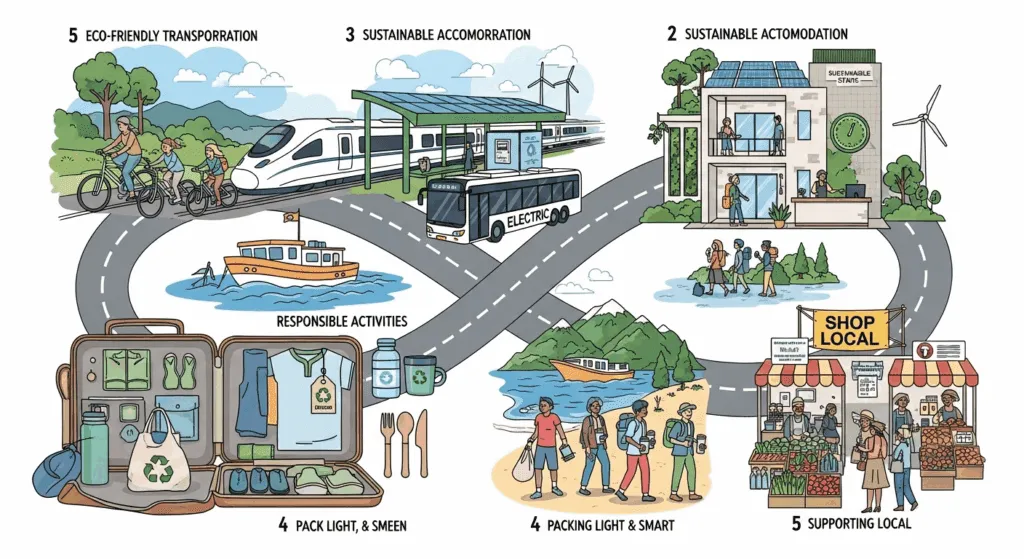
The golden rule for reducing your travel carbon footprint is simple: if you can travel by land, do it. Trains and buses are significantly more carbon-efficient per passenger than airplanes, especially for short to medium distances. A train journey, for example, can produce up to 90% fewer emissions than an equivalent flight. This is a staggering difference that can single-handedly make your trip far more sustainable.
Beyond the clear environmental benefits, ground travel offers a uniquely immersive experience. Instead of a sterile airport and a view of the clouds, you get to watch the landscape unfold before your eyes. You see the transition from city to countryside, pass through small towns you would have otherwise missed, and have more opportunities for spontaneous stops. It embraces the philosophy of slow travel, where the journey itself becomes an integral and enjoyable part of the adventure, not just a means to an end. So, next time you're planning a trip between two European capitals or a journey along the American coast, check the train or bus schedules first.
Fly Smarter, Not Harder
Sometimes, flying is the only practical option, especially for intercontinental travel. However, not all flights are created equal. If you must fly, there are several ways to "fly smarter" and minimize your associated carbon emissions. First and foremost, choose direct flights. A significant portion of a plane's fuel consumption occurs during takeoff and landing. By eliminating layovers, you reduce the number of takeoffs and landings, thereby cutting down on total emissions for your journey.
Furthermore, the class you fly in matters. An economy class seat takes up less space and therefore accounts for a smaller share of the flight's total emissions compared to a business or first-class seat. While it might be less luxurious, flying economy is the more eco-conscious choice. You can also research the type of aircraft used by an airline; newer planes like the Airbus A350 or Boeing 787 are designed to be much more fuel-efficient. Finally, a lighter plane burns less fuel, a topic we will explore further in the section on packing.
Embrace Slow and Local Transport
Once you've arrived at your destination, resist the urge to immediately hop into a taxi or a rental car. The most sustainable—and often most rewarding—way to explore a new place is by using your own two feet or public transportation. Walking is not only carbon-neutral but also allows you to discover hidden alleys, charming cafes, and local details that you would speed past in a car. It connects you to the rhythm of the city in a way no other mode of transport can.
For longer distances within a destination, make use of the local public transit system. Buses, trams, and subways are designed to move large numbers of people efficiently and have a much lower per-capita carbon footprint than individual taxis. Many cities are also investing heavily in cycling infrastructure, making bike rentals a fantastic option for both exercise and exploration. Embracing these slower, more local forms of transport not only slashes your carbon footprint but also deepens your connection with the destination and often saves you money.
Sustainable Accommodation Choices
After transportation, where you choose to lay your head at night has the next biggest impact on your travel footprint. The hospitality industry is resource-intensive, consuming vast amounts of energy for heating, cooling, and lighting, as well as water for laundry and guest use. However, a growing number of accommodations are recognizing their environmental responsibility and are implementing innovative measures to operate more sustainably.
Making a conscious choice about where you stay is a powerful vote with your wallet. By supporting businesses that prioritize sustainability, you encourage the entire industry to adopt greener practices. It's a choice that extends your positive impact beyond your personal footprint and contributes to a broader systemic shift toward responsible tourism.
Seek Out Eco-Certified Hotels and Lodges
One of the most reliable ways to identify a genuinely sustainable hotel is to look for third-party certifications. These labels indicate that the property has met rigorous standards for environmental performance. Look for recognized certifications like LEED (Leadership in Energy and Environmental Design), Green Globe, or region-specific labels like Rainforest Alliance Certified. These certifications aren't just about asking guests to reuse towels; they audit a hotel's operations across a wide range of criteria.
These criteria often include energy efficiency (using LED lighting and renewable energy sources), water conservation (installing low-flow fixtures and rainwater harvesting systems), waste management and recycling programs, and sourcing local, organic food for their restaurants. Staying at a certified eco-lodge or hotel ensures that your money is supporting a business that is actively working to minimize its environmental harm and, in many cases, contribute positively to local conservation efforts.
Consider Homestays and Locally-Owned Guesthouses
Large, international hotel chains can sometimes have a generic feel and a heavy environmental footprint. A wonderful alternative is to opt for smaller, locally-owned accommodations such as guesthouses, bed & breakfasts, or homestays. These options often have an inherently smaller carbon footprint due to their smaller scale and less resource-intensive operations. They typically consume less energy and water per guest than a sprawling resort with multiple pools and 24/7 air conditioning.
Moreover, staying in a locally-owned establishment has profound social and economic benefits. It ensures that your tourist dollars go directly into the hands of the local community, rather than being funneled to a multinational corporation's headquarters. This fosters a more equitable and sustainable tourism model. This choice also provides a more authentic cultural experience, offering a chance to connect with local hosts, get insider tips, and gain a deeper understanding of the place you are visiting.
Conscious Consumption on the Go
Every decision we make as a consumer while traveling has a ripple effect. From the food we eat to the souvenirs we buy, our choices can either support sustainable, local economies or contribute to environmental degradation and waste. Being a conscious consumer on the go is about being mindful of this impact and making choices that align with our values as sustainable travelers. It’s about leaving a place better, or at least no worse, than we found it.
This mindfulness extends to three primary areas: what we eat and drink, how we manage our waste, and what we purchase to bring home. By adopting a few simple habits in each of these areas, we can dramatically reduce our negative impact and enhance the positive contributions we make to the communities we visit.
Eat and Drink Like a Local
The concept of "food miles"—the distance food travels from where it's grown to where it's consumed—is a major factor in the carbon footprint of our meals. Choosing to eat at restaurants that source their ingredients locally and seasonally can drastically reduce these emissions. Embrace the local cuisine! It’s not only more sustainable but is also a core part of the travel experience. Ask where the food comes from and prioritize farm-to-table establishments.
Furthermore, reducing meat consumption, even for a few meals, can make a big difference. The production of meat, particularly red meat, is incredibly resource-intensive and a major source of greenhouse gas emissions. You don't have to become a vegetarian, but opting for plant-based local dishes is a powerful way to lower your dietary carbon footprint while traveling. This approach encourages you to try new foods and explore the richness of a destination's culinary heritage beyond the typical tourist fare.
Pack Smart and Refuse Single-Use Plastics
The global plastic pollution crisis is starkly visible in many beautiful travel destinations, with plastic waste littering beaches and harming wildlife. As a traveler, you can be part of the solution instead of the problem by being prepared and refusing single-use plastics. This starts before you even leave home. Pack a "zero-waste travel kit" that includes:
- A reusable water bottle to avoid buying countless plastic bottles.
- A reusable coffee cup for your morning takeaway.
- A tote bag for shopping to refuse plastic bags.
- Reusable cutlery and a straw to say no to disposable versions.
- Solid toiletries (shampoo bars, conditioner bars, solid toothpaste) to reduce plastic packaging and liquid restrictions at the airport.
This simple kit empowers you to refuse disposables throughout your journey. When you order a drink, ask for it sans straw. At the market, use your own tote bag. In many parts of the world, access to clean drinking water is readily available, and a bottle with a built-in filter can be an excellent investment. Being disciplined about refusing single-use plastics is one of the most visible and immediate ways to travel more sustainably.
Shop Responsibly
Bringing home a memento from your travels is a cherished tradition, but it's important to shop with a conscience. Avoid mass-produced trinkets that were likely made thousands of miles away and imported. Instead, seek out items that are genuinely local, handcrafted, and sold by the artisans themselves. Buying directly from the creator ensures they receive a fair price for their work and helps preserve traditional crafts.
Be extremely cautious about souvenirs made from animal products, such as ivory, coral, tortoise shells, or reptile skins. Purchasing these items often contributes to illegal wildlife trafficking and threatens endangered species. The rule of thumb is simple: if you have any doubt about an item's origin or legality, don't buy it. A beautiful, handmade textile or a piece of pottery tells a much richer story and leaves a positive legacy.
The Role of Carbon Offsetting
Even with the most conscientious travel habits, achieving a completely zero-carbon trip is virtually impossible, especially if flying is involved. This is where the concept of carbon offsetting comes into play. Carbon offsetting is a mechanism that allows individuals and companies to compensate for the emissions they produce by investing in projects that reduce or remove an equivalent amount of greenhouse gases from the atmosphere elsewhere.
It's a controversial topic, with some critics arguing that it gives people a license to pollute without changing their behavior. However, when used correctly—as a last resort after you have already done everything possible to reduce your emissions—it can be a valuable tool in the sustainable traveler's arsenal.
How Does Carbon Offsetting Work?
The process is fairly straightforward. First, you calculate the emissions from your trip. Many online calculators can help you estimate the carbon footprint of your flights, car travel, and hotel stays. Once you have this figure (measured in tonnes of CO2), you can purchase "carbon credits" from an offsetting provider. The money you pay is then invested in a project designed to reduce greenhouse gases.
These projects can vary widely. Common examples include:
- Reforestation and conservation projects: Planting trees that absorb CO2 from the atmosphere.
- Renewable energy projects: Funding the development of wind, solar, or hydro power to replace fossil fuel-based energy.
- Methane capture: Installing technology at landfills or farms to capture and burn methane, a potent greenhouse gas.
- Community projects: Distributing energy-efficient cookstoves in developing nations to reduce a community's reliance on burning wood or charcoal.
Choosing a Reputable Offsetting Program
The effectiveness of carbon offsetting hinges entirely on the quality and integrity of the project you're funding. It is absolutely crucial to choose a program that is certified by a credible, independent third-party standard. This verification ensures that the emission reductions are real, permanent, and "additional"—meaning they would not have happened without the funding from the offset project.
Look for projects certified by standards such as the Gold Standard or the Verified Carbon Standard (VCS). These organizations have rigorous verification processes to ensure the projects are effective and have positive social and environmental co-benefits. Many airlines now offer the option to offset your flight during the booking process. Before you click "buy," do a quick search to see which standard their partner projects adhere to. Investing in a high-quality, verified offset project can be a meaningful way to take responsibility for the unavoidable emissions of your travels.
—
Table: Estimated Carbon Emissions by Mode of Transport (500 km Journey)
| Mode of Transport | Estimated CO2 Emissions (per passenger) | Notes |
|---|---|---|
| Flight (Short-haul) | ~120 kg CO2e | Most impactful. Includes effects of high-altitude emissions. |
| Car (Solo Driver) | ~85 kg CO2e | Highly inefficient for one person. Decreases with more passengers. |
| Bus/Coach | ~30 kg CO2e | Very efficient due to the high number of passengers. |
| Train (Electric) | ~15 kg CO2e | The most sustainable option for medium-distance travel. |
Note: Figures are estimates and can vary based on fuel type, vehicle occupancy, and energy source (for electric trains). CO2e = Carbon Dioxide Equivalent.
—
Frequently Asked Questions (FAQ)
Q: What is the single most impactful thing I can do to reduce my travel carbon footprint?
A: Without a doubt, the most impactful action is to address your transportation. If you can replace a flight with a train or bus journey, you will slash your trip's emissions more than any other single choice. For a 500 km trip, choosing a train over a plane can reduce your transport-related emissions by roughly 80-90%. When flying is unavoidable, choosing a direct, economy-class flight is the next best thing.
Q: Is carbon offsetting just a way to feel better about polluting?
A: It can be, which is why it's a controversial topic. Offsetting should never be the first step. The correct order of operations is: Reduce, Refuse, and then Offset. First, do everything in your power to reduce your emissions by making sustainable choices in transport, accommodation, and consumption. Then, refuse what you don't need (like single-use plastics). Carbon offsetting should only be used as a last resort to compensate for the unavoidable emissions that remain. When you do offset, ensure you're using a high-quality, third-party verified program like those certified by Gold Standard.
Q: Does flying economy class instead of business class really make a difference?
A: Yes, it makes a significant difference. A business or first-class seat takes up much more physical space on an airplane than an economy seat. Since the flight's total emissions are divided among the passengers, those occupying more space are allocated a larger share of the footprint. Depending on the airline and aircraft, a business class seat can have a carbon footprint three to four times larger than an economy seat on the same flight. Choosing to fly economy is a simple and effective way to lower your personal emissions.
Q: Is "eco-friendly" or "green" just a marketing term used by hotels?
A: It certainly can be, a practice known as "greenwashing." Many properties might claim to be eco-friendly simply because they have a towel reuse program. This is why it's so important to look for credible, third-party certifications like LEED, Green Globe, or Rainforest Alliance Certified. These labels require a hotel to meet stringent, holistic standards for sustainability that go far beyond surface-level marketing claims. If a hotel can't point to a recognized certification, be skeptical and ask specific questions about their energy, water, and waste management practices.
Conclusion
Traveling with a smaller carbon footprint is not about sacrificing adventure; it's about enhancing it. It’s about making conscious, informed choices that deepen our connection to the places we visit and the people we meet. It’s about understanding that the journey itself—the slow train ride through a mountain pass, the walk through a bustling local market, the conversation with a guesthouse owner—is as valuable as the destination.
By rethinking our transportation, choosing sustainable accommodations, consuming mindfully, and taking responsibility for our unavoidable emissions, we can transform our role from mere tourists into global citizens. Every decision, from choosing a train over a plane to packing a reusable water bottle, is a powerful statement. These individual actions, when multiplied by millions of travelers, create a collective force that can protect our planet's most precious places for generations to come. Let's travel not just to see the world, but to preserve it.
***
Article Summary
This comprehensive guide details actionable strategies for travelers wondering how to reduce their carbon footprint. The core message is that sustainable travel is achieved through a series of conscious choices rather than forgoing exploration altogether.
Key Takeaways:
- Understand Your Impact: A travel carbon footprint is the total greenhouse gas emissions from your journey, including transport, lodging, and activities. Acknowledging this is the first step.
- Transportation is Key: Your mode of transport has the largest impact. Prioritizing ground travel (trains, buses) over air travel is the most effective way to cut emissions.
- Travel Smart: If flying is necessary, choose direct flights and economy class, as they are more carbon-efficient. At your destination, opt for walking, cycling, and public transit.
- Choose Sustainable Lodging: Support accommodations with verified eco-certifications (e.g., LEED, Green Globe) or stay in smaller, locally-owned guesthouses and homestays that support the local economy and have a smaller footprint.
- Consume Consciously:
- Food: Eat local and seasonal food to reduce "food miles." Reducing meat consumption also helps.
- Waste: Pack a "zero-waste kit" (reusable bottle, bag, etc.) to refuse single-use plastics.
- Shopping: Buy authentic, locally-made crafts directly from artisans and avoid products made from endangered wildlife.
- Carbon Offsetting: Use this as a last resort to compensate for unavoidable emissions. Always choose high-quality, verified programs (e.g., Gold Standard) to ensure the projects are effective.
- Small Actions, Big Impact: Collective individual efforts—from packing light to choosing the right souvenir—contribute to a massive positive shift in the tourism industry.
