
The Benefits of Ecotourism for Local Communities Explained
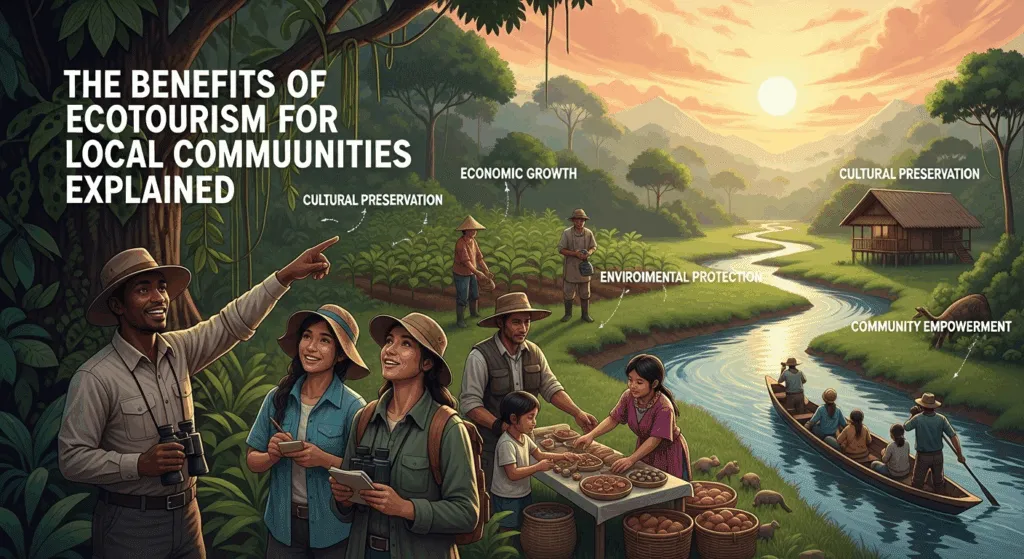
The benefits of ecotourism for local communities extend far beyond short-term income — they can transform livelihoods, strengthen cultural identity, and protect natural assets that communities depend on. This article explains how well-managed ecotourism creates sustainable economic opportunities, empowers local decision-making, and fosters environmental stewardship while addressing common challenges and best practices for long-term success.
Economic Empowerment and Sustainable Livelihoods
Ecotourism can be a powerful engine for economic empowerment in rural and remote communities. When visitors pay for experiences like guided nature walks, homestays, or cultural demonstrations, that money often flows directly to local families, micro-enterprises, and cooperatives. Unlike some mass tourism models where profits leave the region quickly, ecotourism—when locally managed—keeps a larger share of revenue inside the community.
1. Local job creation and entrepreneurship
Local businesses emerge around ecotourism offerings: guides, guesthouse operators, artisans, food vendors, and transport services. These jobs often require low initial capital and leverage existing local skills—knowledge of wildlife, traditional crafts, or native languages. Over time, entrepreneurship can expand into complementary sectors like craft cooperatives, local food supply chains, and sustainable transport services.
Small-scale enterprises typically distribute income across many households rather than concentrating profit in a few hands. This is especially important in areas with limited formal employment opportunities, where ecotourism can reduce out-migration by offering viable livelihoods at home.
2. Diversifying household income streams
Ecotourism provides a supplementary source of income that can reduce dependency on resource-extractive activities (e.g., overfishing, illegal logging). Households combining agriculture with tourism services become more resilient to shocks like crop failure or commodity price drops.
By diversifying income, families can invest in education, healthcare, and small-scale investments that create long-term benefits. This improved financial stability contributes to better community health and social outcomes.
Local capacity-building—training in hospitality, language skills, and bookkeeping—further multiplies economic benefits. Communities that develop these skills can negotiate better partnerships with tour operators and attract higher-value visitors who appreciate authentic, well-run experiences.
Environmental Conservation and Resource Management
Well-designed ecotourism ties economic incentives directly to the conservation of ecosystems, creating a virtuous cycle where protecting nature becomes valuable.
2. Incentives for habitat protection
When tourists come to see intact forests, coral reefs, or wildlife, communities recognize a clear link between conservation and income. This alignment encourages the establishment of community-managed reserves, anti-poaching patrols, and sustainable harvesting rules. In many cases, ecotourism revenue funds conservation patrols and monitoring equipment that would otherwise be unaffordable.
Communities also adopt sustainable land-use practices—such as agroforestry and reforestation—that enhance the natural attractions tourists come to enjoy. These practices improve biodiversity, water retention, and climate resilience over the long term.
3. Environmental education and stewardship
Ecotourism programs often include environmental education for both visitors and residents. Guided walks, interpretive signage, and community museums explain local ecology and the importance of conservation. This raises awareness, particularly among youth, about the value of protecting native species and ecosystems.
As local people take on roles as stewards and interpreters, they develop a deeper commitment to long-term resource management. Community stewardship becomes a marketing advantage—travelers increasingly seek authentic experiences where hosts demonstrate real conservation outcomes.
Cultural Preservation and Social Benefits
Ecotourism can reinforce and revitalize local culture when it respects community values and gives locals control over how their culture is presented.
4. Revitalizing traditions and crafts
Tourists are often attracted to authentic cultural experiences: traditional music, crafts, native cuisine, and storytelling. Selling crafts directly to visitors provides income for artisans while making cultural expressions economically viable. This can lead to the revival of craft techniques and the transmission of cultural knowledge between generations.
Cultural programming—dance performances, cooking classes, or language lessons—can be designed and priced by the community, ensuring that benefits return to local custodians of tradition rather than external intermediaries.
5. Strengthening social cohesion and pride
Managing ecotourism collectively (via cooperatives or community-based organizations) builds social cohesion. Shared goals around tourism income and conservation encourage collaboration, dispute resolution mechanisms, and local governance improvements.
Communities report increased pride and self-esteem when they successfully host visitors and share their heritage. This recognition—combined with tangible benefits—supports community well-being and long-term preservation of cultural identity.
Governance, Ownership, and Capacity Building
For ecotourism to deliver consistent benefits, communities must have meaningful control over management, pricing, and planning.
6. Community ownership models
Community-based tourism businesses—such as cooperatives, community trusts, or social enterprises—ensure that profits are reinvested locally. Models that allocate a percentage of tourism revenue to communal funds for education, health, and infrastructure create broad-based benefits.
Ownership also means communities can set rules about visitor numbers, codes of conduct, and which cultural practices are shared. This authority helps avoid exploitation and preserves community dignity.
7. Training and institutional capacity
Technical training is essential for sustainable ecotourism: business planning, marketing, quality standards, safety, and environmental monitoring. Capacity-building programs help communities negotiate fair contracts with tour operators and ensure compliance with regulations.
Strong institutions—transparent financial systems, good record-keeping, and inclusive leadership—reduce risks like elite capture (where benefits concentrate among a few) and ensure equitable distribution of income. External NGOs, governments, and private partners can play constructive roles as long as they prioritize local leadership.
Challenges, Risks, and Mitigation Strategies
Ecotourism is not a silver bullet; it carries potential risks if poorly managed. Recognizing these risks and deploying mitigation strategies is essential for long-term success.
8. Over-tourism and environmental degradation
Even ecotourism can damage fragile ecosystems if visitor numbers exceed carrying capacity. Trampling, litter, disturbance to wildlife, and pressure on water and waste systems are real concerns. Communities should establish limits on visitor numbers, create seasonal access rules, and invest in low-impact infrastructure.

Regular monitoring and adaptive management—adjusting rules based on ecological indicators—help maintain a balance between income and conservation.
9. Cultural commodification and loss of authenticity
When cultural practices are staged purely for tourists, communities risk commodifying traditions. The solution is community control over how culture is shared, clear benefit-sharing agreements, and opportunities for genuine inter-cultural exchange rather than scripted performances.
Education for visitors—about respectful engagement and the meaning behind cultural practices—fosters deeper appreciation and reduces exploitative behaviors.
10. Economic leakage and unequal benefits
Without proper structures, a large share of tourism revenue can leak to outside operators, hotel chains, or intermediaries. To minimize leakage:
- Prioritize locally owned accommodations and services.
- Create partnerships with fair-trade certification or community-based platforms.
- Encourage operating models that keep value chains local.
Below is a comparison table summarizing key benefits versus common risks and practical mitigations.
Table: Ecotourism Benefits, Risks, and Mitigation Measures
| Benefit Area | Typical Positive Outcomes | Common Risks | Mitigation Strategies |
|---|---|---|---|
| Economic | Job creation, local revenue, diversified income | Economic leakage, seasonality | Community ownership, local supply chains, savings schemes |
| Environmental | Habitat protection, funding for conservation | Overuse, habitat disturbance | Visitor limits, monitoring, visitor education |
| Cultural | Revitalized crafts, community pride | Commodification, loss of meaning | Community control, respectful visitor programs |
| Governance | Stronger institutions, community funds | Elite capture, poor management | Transparent governance, training, inclusive leadership |
| Social | Improved services, reduced migration | Inequitable benefit distribution | Benefit-sharing rules, cooperative models |
Practical Steps to Maximize Community Benefits
Communities and partners can follow practical steps to ensure ecotourism contributes to lasting development.
11. Strategic planning and zoning
Develop a community-led tourism plan that maps attractions, sets carrying capacities, and identifies priority investments. Zoning protects critical habitats while guiding where tourism infrastructure is developed.
A staged approach—piloting small projects, learning, and scaling—reduces risks and builds local confidence.
12. Marketing, quality assurance, and partnerships
Effective marketing helps attract the right kind of visitor: responsible travelers who value sustainability and are willing to pay for authentic experiences. Quality assurance—standards for guides, accommodations, and safety—protects reputation.
Forming alliances with ethical tour operators, platforms that promote sustainable travel, and certification schemes can broaden reach while maintaining standards.
Practical implementation also includes developing simple accounting practices, community funds for maintenance, and reinvestment strategies. These ensure that infrastructure and conservation initiatives remain financially sustainable.
Measuring Impact and Long-Term Sustainability
To ensure ecotourism benefits persist, communities should track both social and environmental outcomes.
13. Indicators to monitor
Key indicators include:
- Income generated and its distribution across households
- Employment numbers and training outcomes
- Visitor satisfaction and repeat visitation rates
- Biodiversity metrics (species counts, habitat quality)
- Cultural indicators (number of artisans, participation rates in cultural events)
Regular monitoring allows adaptive management—adjusting strategies if outcomes are not meeting goals.
14. Feedback loops and adaptive governance
Establish community forums, annual reviews, and transparent reporting so stakeholders can assess progress and make decisions. Adaptive governance—where policies evolve in response to monitoring—keeps ecotourism resilient to change, whether economic, climatic, or social.
Building relationships with research institutions, NGOs, and government agencies can provide technical support for monitoring and scaling successful interventions.
FAQ (Q & A)
Q: How quickly can a community expect to see income from ecotourism?
A: Timeframes vary. Small pilot projects (e.g., homestays, guided walks) can generate income within months, while larger initiatives (lodges, marketing programs) may take 1–3 years to become profitable. It depends on market access, training, and initial investment.
Q: Does ecotourism always help conservation?
A: Not always. Benefits depend on management. Properly designed ecotourism aligns financial incentives with conservation; poorly managed tourism can cause degradation. Community control, visitor limits, and monitoring are key to positive conservation outcomes.
Q: How can communities prevent outsiders from taking control of tourism revenue?
A: Implement clear ownership structures (cooperatives, community trusts), transparent financial practices, and legal agreements with partners that prioritize local employment and procurement. Capacity-building and legal support help communities retain control.
Q: Can ecotourism work in very remote areas?
A: Yes—remote areas can attract niche markets (adventure travelers, birdwatchers, researchers). However, logistics, infrastructure, and marketing present challenges. Phased development and partnerships with specialized tour operators often help.
Q: What are low-cost ways to start ecotourism?
A: Starting points include:
- Guided nature walks or birdwatching tours
- Homestays or guesthouse networks
- Craft markets and cultural nights
- Small food stalls offering local cuisine
These require minimal capital and can test market demand.
Conclusion
Ecotourism offers a pathway for communities to convert natural and cultural assets into lasting social and economic benefits—when local ownership, sound governance, and sustainable practices guide development. The most successful ecotourism models integrate conservation, cultural respect, and equitable revenue-sharing, supported by continuous monitoring and adaptive management. By prioritizing community leadership, training, and fair partnerships, ecotourism can be a durable strategy for sustainable development that empowers people and protects the places they call home.
Summary (English)
This article, "The Benefits of Ecotourism for Local Communities Explained," outlines how ecotourism can generate sustainable livelihoods, support conservation, and preserve cultural heritage when communities have control over management and revenues. Key benefits include job creation, diversified income, habitat protection, cultural revitalization, and stronger local governance. The piece covers common risks—such as over-tourism, commodification, and economic leakage—and offers practical mitigations like visitor limits, community ownership models, capacity-building, and adaptive monitoring. A comparison table summarizes benefits, risks, and mitigation strategies, and a detailed FAQ addresses common concerns. Overall, community-led, well-planned ecotourism is presented as an effective long-term strategy for empowering local communities while protecting natural and cultural assets.
