
Tourism’s Negative Impact on the Environment Discussed
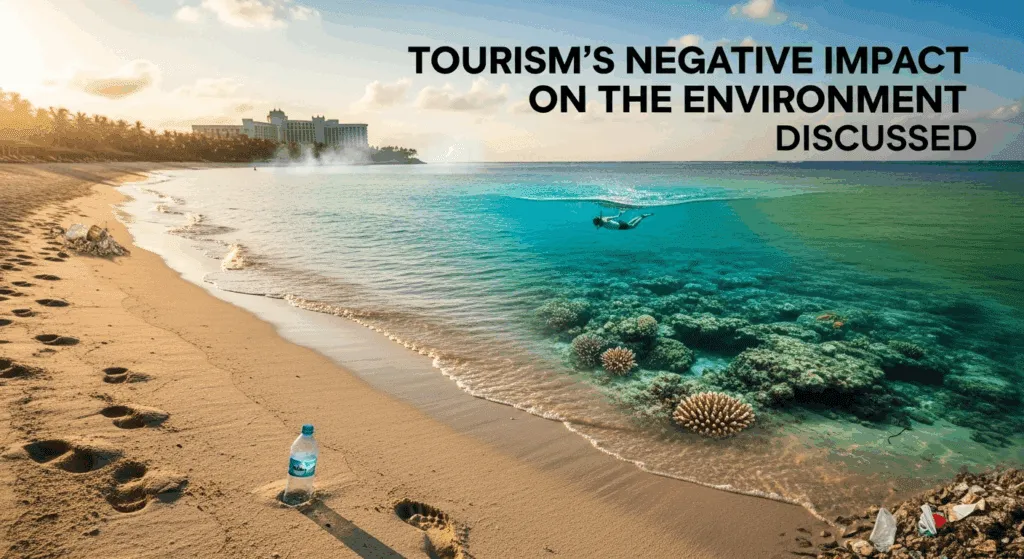
Tourism's Negative Impact on the Environment Discussed
Tourism is a powerful global industry, bringing economic benefits and cultural exchange, but it also carries significant costs. The negative impacts of tourism on the environment are diverse, from carbon emissions and habitat destruction to water stress and waste generation. This article explores those impacts in detail, examines where they are most severe, and outlines practical mitigation strategies that can reduce long-term damage while preserving the social and economic benefits of travel.
Overview of Tourism's Environmental Footprint
Tourism's environmental footprint is multifaceted and often underestimated. International tourist arrivals reached roughly 1.5 billion in 2019, creating large flows of people, goods, and services that strain ecosystems. The carbon footprint of travel, particularly aviation, and the infrastructure required to support millions of visitors play central roles in driving environmental degradation.
Beyond greenhouse gases, tourism intensifies local environmental pressures: freshwater demand spikes in dry regions, waste management systems are overwhelmed by seasonal surges, and fragile habitats are altered to accommodate accommodations, roads, and attractions. These pressures are not evenly distributed; small island states and certain biodiversity hotspots often bear a disproportionate share of the burden.
Understanding the full footprint requires looking at direct and indirect effects. Direct impacts include littering, trampling vegetation, and localized pollution. Indirect effects encompass broader changes such as urbanization to support tourism, shifts in land use, and global emissions from transportation networks. Recognizing these layers is essential for effective policy and business strategies.
- Habitat Destruction and Biodiversity Loss
- Coastal and Marine Ecosystems
Coastal and marine habitats are among the most visible victims of mass tourism. Beachfront development for resorts and condominiums often replaces dunes, mangroves, and other protective coastal ecosystems, leading to increased erosion and reduced natural resilience to storms. Coral reefs—critical for fisheries and coastal protection—suffer from boat anchors, snorkelers, and pollution linked to coastal tourism.
Marine biodiversity also declines when tourism-driven activities increase water pollution. Sewage discharges, runoff containing fertilizers, and plastic waste all reduce water quality and create hypoxic zones that are harmful to marine life. In popular dive and snorkeling sites, repeated human contact can slow coral recovery and facilitate disease spread.
Mitigation in coastal zones requires integrated planning: setting limits on development density, enforcing marine protected areas, and investing in sewage treatment. Protecting mangroves and coral reefs is not just conservation; it is also a form of risk reduction for coastal communities that depend on natural defenses.
- Mountain and Forest Ecosystems
Mountain and forest ecosystems face their own pressures. Trail erosion, campsite expansion, and the construction of access roads fragment habitats and open previously remote areas to exploitation. In fragile alpine zones, vegetation recovers slowly, making repeated trampling particularly damaging.
Forested areas converted to ski resorts or lodges reduce habitat connectivity and can increase the risk of landslides and altered hydrology. Wildlife disturbance from recreational activities and noise can change animal behavior, reduce breeding success, and push species into smaller, less suitable territories.
Sustainable trail design, zoning that keeps development away from critical habitats, and visitor education programs can help minimize impacts. In many biodiverse mountain regions, community-based tourism models have shown promise by aligning local economic incentives with conservation goals.
Pollution: Air, Water, and Noise
- Air Emissions and Climate Change
Aviation and road transport dominate tourism-related greenhouse gas emissions. Flights account for a major share of an individual tourist’s carbon footprint—long-haul travel has especially high emissions per trip. Beyond CO2, aviation releases other warming agents and contrails that amplify climate impacts.
Local air quality can also worsen in tourism hotspots due to increased vehicle traffic, ferry operations, and energy use in hotels. Poor air quality affects human health and can reduce the attractiveness of destinations, creating a negative feedback loop for local economies dependent on visitors.
Addressing aviation emissions requires global cooperation—carbon pricing, investment in sustainable aviation fuels, and improved air traffic management. For local travel, shifting visitors toward rail, low-emission shuttles, and active transport (walking, cycling) reduces both greenhouse gases and congestion.
- Water Pollution and Scarcity
Tourism can dramatically increase water demand, often in regions where water is scarce. Resorts, golf courses, and attractions consume large volumes of freshwater for pools, landscaping, and guest services. This can deprive local communities and ecosystems of vital resources.
Water pollution is another issue: inadequate sewage treatment from hotels and cruise ships discharges nutrients and pathogens into rivers and seas, affecting marine life and public health. Chemical runoff from landscaped areas and contamination from boat operations compound the problem.
Solutions include water-efficient fixtures, greywater recycling, and strict wastewater treatment standards for tourism facilities. Demand management and pricing can also align water use with local supply constraints and encourage conservation.
Resource Depletion and Waste Management Challenges
Tourism concentrates resource consumption in time and space. Peak-season influxes strain local infrastructure for waste collection, energy, and water. Single-use plastics, food waste, and discarded recreational equipment contribute to mounting municipal waste that many destinations are poorly equipped to manage.
Plastic pollution from beach visitors and cruise ships is particularly visible—single-use items and microplastics accumulate in coastal areas and marine food webs. In destinations without robust recycling systems, landfills become overloaded and informal dumping increases.
Addressing these challenges requires both supply-side and demand-side measures:
- Suppliers (hotels, tour operators) should adopt circular practices: reduce, reuse, recycle, and choose low-impact materials.
- Destinations must invest in waste processing infrastructure and enforce littering and waste disposal regulations.
- Visitors should be educated and incentivized to minimize their waste footprint.
Table: Selected Tourism-Related Environmental Metrics (approximate)
| Impact Type | Example | Representative Metric / Note |
|——————————-|————————————–|——————————|
| Global emissions | Aviation + travel | ~8% of global greenhouse gas emissions (pre-pandemic estimate) |
| International arrivals (2019) | Tourist volume | ~1.5 billion arrivals |
| Plastic pollution | Coastal litter, cruise ships | Millions of tons of plastic enter oceans annually (tourism-contribution varies by region) |
| Water stress | Island resorts, arid destinations | Local freshwater demand can increase several-fold during high season |
| Habitat loss | Coastal development, ski resorts | Local biodiversity declines and habitat fragmentation |
This table summarizes relative scales and helps compare impacts, but regional variation is large. Accurate, localized data collection is essential to craft effective responses.

Infrastructure Development and Land Use Change
Tourism-driven infrastructure—airports, highways, hotels, marinas—changes land cover and local economies. While often promoted for development, such projects can lead to irreversible habitat loss and lock-in of high-impact land uses. In some cases, incentives for tourism investment displace traditional livelihoods, shifting land use toward monoculture and paved surfaces.
Zoning decisions made without environmental assessments have caused wetlands to be drained and forests cleared. These changes not only reduce biodiversity but also alter hydrological cycles, increase flood risk, and exacerbate erosion.
To balance growth and conservation, planners should require environmental impact assessments, implement carrying-capacity limits, and favor low-impact infrastructure designs. Investing in regenerative tourism that restores landscapes rather than only consuming them can create long-term resilience.
Socioeconomic Pressures and Community Disruption
Tourism often brings economic benefits, but these can be uneven and generate social pressures that indirectly harm the environment. Rapid tourism-driven price increases for land and housing can push local residents to less suitable areas, intensifying land conversion and forest clearance. Informal economies that develop around tourist demand may prioritize short-term profits over sustainable resource management.
Cultural commodification and restricted access to traditional resource use (fishing, grazing) can erode local stewardship practices. When communities lose control over resources or receive limited benefits, incentives for conservation weaken.
Sustainable tourism development must therefore integrate local communities as decision-makers and beneficiaries. Models that distribute revenue, build local capacity, and respect traditional ecological knowledge help align environmental outcomes with social well-being.
Mitigation, Sustainable Tourism Practices, and Policy Responses
- Business Practices and Traveler Behavior
Tour operators and hospitality businesses can substantially reduce environmental harm by adopting eco-design, energy efficiency, and supply-chain scrutiny. Certifications and transparent reporting (e.g., energy use, water consumption, waste generation) drive accountability and can influence consumer choice.
Travelers also have a role: choosing lower-impact transport, offsetting responsibly when necessary, and supporting businesses that follow sustainable practices. Education campaigns and visible sustainability credentials help customers make informed decisions.
Key actions for businesses and travelers:
- Reduce energy and water consumption with technology and behavior change.
- Transition to renewable energy and sustainable supply chains.
- Minimize single-use plastics and improve waste segregation.
- Policy, Regulation, and International Cooperation
Effective mitigation requires policy frameworks at local, national, and international levels. Regulations might include caps on visitor numbers in sensitive areas, environmental taxes or fees, and strict standards for wastewater and waste disposal. International coordination is especially important for addressing aviation emissions and cruise ship operations.
Economic instruments—such as tourism levies invested in conservation—can internalize environmental costs and fund restoration. Public-private partnerships can accelerate infrastructure upgrades (e.g., sewage treatment) in destinations that lack capital.
Long-term resilience depends on integrating tourism into broader land-use planning and climate adaptation strategies. Policies should be evidence-based, informed by monitoring and local stakeholder input, and designed to incentivize regeneration, not just extraction.
Practical Tools and Innovations
Technology and innovation provide tools for monitoring and reducing tourism impacts. Satellite imagery and mobile apps help track visitor flows and habitat changes. Smart meters and building-management systems optimize energy use in hotels. Waste-to-energy systems and decentralized wastewater treatment can reduce pollution where central infrastructure is lacking.
Emerging trends—like regenerative tourism, community-driven ecotourism, and nature-based solutions—offer potential pathways for destinations to recover lost ecosystem services while maintaining livelihoods. However, scaling these models requires capacity building, funding, and policy alignment.
Bullet list: Immediate steps destinations can take
- Implement carrying capacity limits for sensitive sites
- Require advanced wastewater treatment for new resorts
- Ban or restrict single-use plastics in tourist zones
- Develop off-season strategies to smooth visitor demand
- Invest tourism taxes into conservation and infrastructure
FAQ — Q & A
Q: What are the most damaging forms of tourism for the environment?
A: High-volume mass tourism in fragile ecosystems (e.g., small islands, coral reefs, alpine zones) and carbon-intensive long-haul travel are particularly damaging. Activities that require heavy infrastructure development or generate large amounts of waste and pollution also rank high.
Q: Can tourism be sustainable, or is it always harmful?
A: Tourism can be made significantly less harmful through sustainable practices, regulation, and community involvement. However, sustainability requires systemic changes—modest tweaks alone are rarely sufficient in high-pressure destinations.
Q: Are traveler behavior changes effective?
A: Yes—behavioral changes like choosing slower, lower-carbon transport, reducing waste, and supporting sustainable businesses can reduce impacts. But individual actions are most effective when combined with regulation and business practices that shift supply toward sustainable choices.
Q: What role do governments play in reducing tourism’s environmental impacts?
A: Governments set rules, invest in infrastructure, and can implement economic instruments (fees, taxes) that internalize environmental costs. They also coordinate research, land-use planning, and enforcement—essential for long-term change.
Conclusion
The negative impacts of tourism on the environment are real, varied, and often concentrated in vulnerable regions. From carbon emissions and water stress to habitat destruction and waste overflow, tourism can undermine the very assets that make destinations attractive. Yet tourism also holds potential as a driver for conservation and local development—if governed and practiced responsibly.
Mitigating environmental harm requires a suite of approaches: smarter infrastructure, stronger regulations, private-sector innovation, and informed traveler choices. Central to all efforts is meaningful engagement with local communities, ensuring that the economic benefits of tourism support conservation and social resilience rather than eroding them.
Summary (English)
This article examines the negative impacts of tourism on the environment, covering greenhouse gas emissions, habitat destruction, pollution, resource depletion, and social pressures. It highlights vulnerable ecosystems like coasts, coral reefs, mountains, and islands, and discusses how infrastructure and seasonal visitor surges strain local systems. The piece outlines mitigation strategies—better planning, wastewater and waste management, renewable energy adoption, traveler education, and policy tools such as visitor limits and environmental levies. It concludes that while tourism can harm the environment, systemic changes and community-inclusive models can make tourism sustainable and even regenerative over time.
