
An Iranian to negotiate with: Who is Mohammad Ghalibaf?
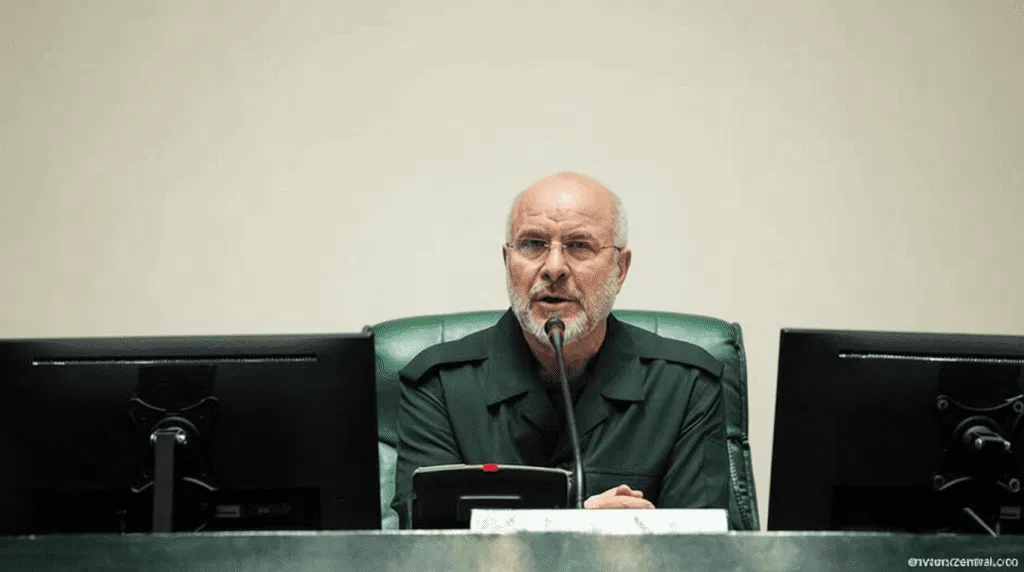
An Iranian to Negotiate With: Who is Mohammad Ghalibaf?
Known for his strong political influence and deep connections to Iran’s military, Mohammad Bagher Ghalibaf has played a significant role in shaping the nation’s policies. However, his career is also marked by allegations of corruption and his involvement in quelling public unrest.
Recently, U.S. President Donald Trump indicated that diplomatic discussions with Iran were underway, igniting optimism for a potential resolution to the ongoing conflict. According to Axios, Egypt, Pakistan, and Turkey had mediated between the U.S. and Iran on Sunday, attempting to schedule a call with Ghalibaf, the speaker of Iran’s parliament, and his team for Monday. Despite these efforts, Tehran’s leadership dismissed the idea, labeling it as “fake news” aimed at influencing global financial and oil markets, as noted by the Wall Street Journal.
Ghalibaf, a 64-year-old former commander of the Islamic Revolutionary Guard Corps (IRGC) and a pilot, holds a doctorate in political geography. His academic work examined the interplay between space, power, the state, and security strategies. During the Iran-Iraq war (1980–1988), he served as a young soldier and ascended through the ranks of the IRGC. Post-war, he led the Khatam al-Anbiya, the IRGC’s engineering division, which focused on rebuilding infrastructure and now operates as the organization’s economic arm.
In 1997, Supreme Leader Ayatollah Ali Khamenei named Ghalibaf as commander of the IRGC air force. He was pivotal in suppressing the 1999 student demonstrations, collaborating with military officer Qassem Soleimani to issue a threatening letter to President Mohammad Khatami. The letter urged the government to cease “tolerating” the protests. In later interviews, Ghalibaf claimed he personally struck protesters with sticks while riding a motorcycle through the streets.
Following this, he became Iran’s police chief, further solidifying his political ambitions. Ghalibaf contested the presidency three times, losing in 2005 to Mahmoud Ahmadinejad, then serving as Tehran’s mayor from 2005 to 2017. In 2013, he ran again but fell short against Hassan Rouhani. By 2017, he withdrew from the race to back another conservative candidate.
“Fake news” designed to manipulate financial and oil markets
Iranian media has reported that during his time as mayor, numerous government properties were sold at significantly reduced prices, sometimes for just half their actual value. Buyers included officials and members of the Ghalibaf family. Additionally, he is accused of funneling large sums from the city treasury to his wife’s foundation, which claims to support single mothers and women as primary earners. The foundation’s operations remain opaque, though investigations into his corruption have been limited due to his proximity to Khamenei.
Recent family-related controversies have also captured public attention. His son, Eshaq, sought permanent residency in Canada since 2019, even filing a lawsuit against immigration authorities for delays. This decision clashed with Ghalibaf’s hardline anti-Western views, sparking discussion. Ultimately, his application was denied. Meanwhile, his daughter and her family’s visit to Turkey in 2022 drew headlines after photos showed them returning from Istanbul with “newborn baby kits,” a detail that intensified criticism amid Iran’s severe economic challenges and soaring inflation.
Despite facing U.S. and Israeli strikes, Ghalibaf has remained a key figure within the IRGC, fueling speculation about his continued influence in Iran’s future political landscape.
