
Balen: From rebel outsider to Nepal’s next prime minister
Balen: From Rebel Outsider to Nepal’s Next Prime Minister
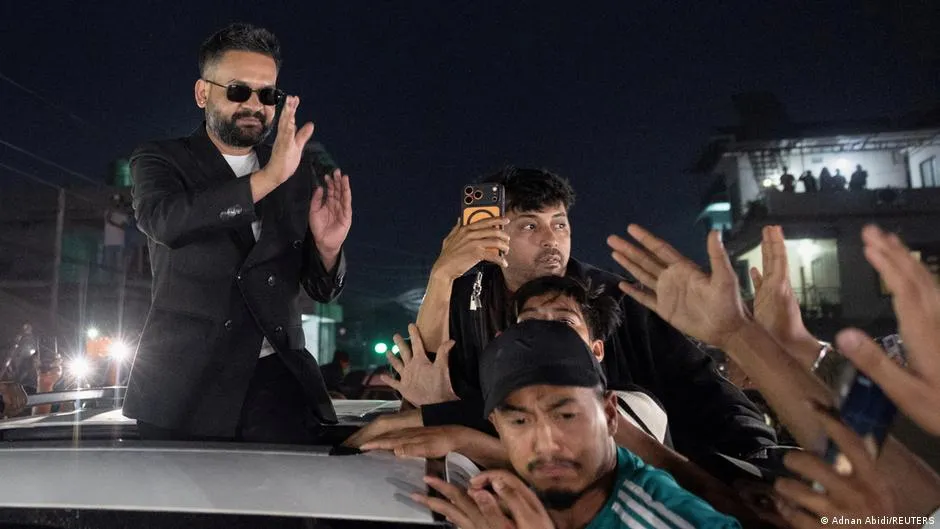
The emergence of Balendra “Balen” Shah from the streets of Kathmandu to the corridors of national power signifies a pivotal moment in Nepal’s political evolution. On March 7, thousands flocked to Damak in Jhapa district, eastern Nepal, creating a vibrant atmosphere of energy and anticipation. The scene unfolded as a slowly moving vehicle carried Balen through the throng, with cheers escalating as he interacted with supporters through a sunroof. His calm gestures and warm greetings became the focal point of the gathering.
Balen, now 35, gained national prominence after serving as mayor of Kathmandu Metropolitan City. His rapid ascent to a key political role has defied expectations, positioning him as a potential prime minister. The Election Commission confirmed his party’s sweeping success on Friday, with the Rastriya Swatantra Party (RSP) capturing 182 seats in a 275-member parliament. This clear majority underscores his impact on the electorate.
Balen’s campaign strategy stood out for its brevity. Known for minimal public speaking, he rarely dominated media attention. When he did address crowds, his words were deliberate, often delivered in local dialects or short phrases. Campaign stops involved face-to-face meetings, where he waved, shook hands, and even shared meals with voters. Yet, he avoided lengthy speeches and grand promises, a tactic analysts believe became central to his appeal.
“Balen has given the youth hope; he has their trust. He’s taken no part in the corruption in Nepal,” one voter told DW.
His reserve extended into victory. From his vehicle’s sunroof, Balen folded his hands in gratitude before quietly displaying a poster: “You deserve congratulations. This victory belongs to you.” Beyond his political persona, he blends engineering expertise with creative passions as a poet and rapper. Joining RSP just before the election, he quickly became a senior leader, announced as the party’s prime minister candidate.
Nepal’s political shift began months earlier. In September, a grassroots “Gen-Z movement” against corruption and ineffective governance forced KP Sharma Oli to step down. President Ram Chandra Paudel formed an interim government, and activists initially saw Balen as a natural successor. However, his support for former Chief Justice Sushila Karki boosted his credibility, allowing him to focus on the parliamentary race.
Despite Kathmandu’s strong base, Balen chose to campaign in Jhapa-5, a constituency historically loyal to Oli. The district had seen him win six of seven elections. But the Gen-Z protests changed the dynamics. Balen’s victory in the constituency, securing 68,348 votes compared to Oli’s 18,734, reflected this transformation. His journey from a reformist figure to a leader with a majority mandate marks a new chapter in the nation’s political story.
