
EU weighs options as Israel threatens Lebanon offensive
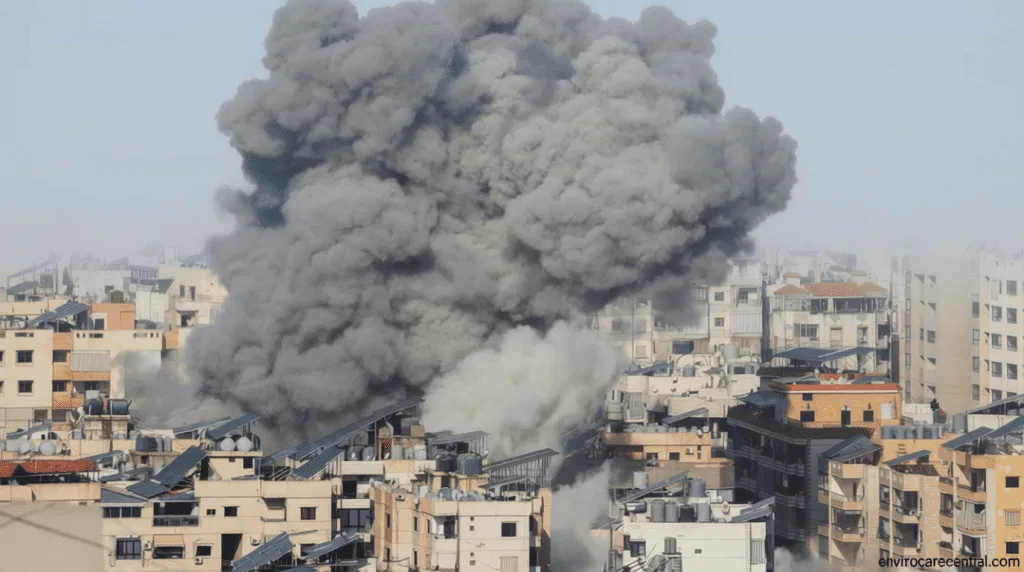
EU Weighs Options as Israel Threatens Lebanon Offensive
The European Union has expressed caution regarding Israel’s potential military actions in Lebanon, urging restraint to avoid broader regional consequences. Yet, the question remains: can European powers effectively pressure Hezbollah to disarm or halt Israeli operations? Recent statements from EU nations highlight their apprehension over the implications of a ground assault.
Israel’s Military Operations and EU Concerns
Israel’s armed forces have acknowledged conducting “limited and targeted ground operations” in southern Lebanon, specifically against Hezbollah, a Shi’a militia backed by Iran. A joint declaration from France, Germany, Italy, the UK, and Canada warns that a major Israeli advance could trigger severe humanitarian impacts and prolong the conflict.
“A significant Israeli ground offensive would result in catastrophic humanitarian outcomes and might escalate into a prolonged regional war,” the EU leaders stated.
Lebanon’s Political Response to Crisis
Lebanon’s parliament recently extended its term for two additional years, delaying national elections originally planned for May. This decision reflects the government’s belief that holding a vote amid ongoing hostilities and widespread displacement is impractical.
Hezbollah’s Role in Escalation
Two weeks prior, Hezbollah launched attacks on Israel following the assassination of Iran’s supreme leader, Ayatollah Ali Khamenei, in retaliation for U.S.-led strikes on Iran. Despite Lebanon’s government urging restraint, the militia’s actions have drawn attention to the risk of the country becoming embroiled in the U.S.-Israel conflict.
Humanitarian and Migration Risks
European leaders are now prioritizing preventing a major crisis in Lebanon, fearing both the devastation of civilian populations and the potential for increased migration to Europe. The nation has already struggled with a severe economic downturn, compounding the stakes of further conflict.
“European statements have increasingly focused on urging Israelis to avoid escalation, whether in Lebanon, Gaza, or other areas. But these have mostly amounted to diplomatic appeals,” noted Julien Barnes-Dacey of the European Council on Foreign Relations.
Internal Lebanese Tensions
The conflict could deepen divisions within Lebanon, as displaced Shi’a communities move into areas dominated by Sunni Muslims and Christians. This shift has raised fears of sectarian clashes, with some groups viewing Hezbollah supporters as potential targets for Israeli strikes.
“The Israeli military’s plan to advance beyond the Litani River could ignite internal strife, creating friction between Lebanon’s diverse communities,” Barnes-Dacey warned.
Impact on Peacekeeping Missions
The UN peacekeepers stationed in southern Lebanon face heightened risks, with reports of being targeted during clashes between Israel and Hezbollah. Recently, the UN Interim Force in Lebanon (UNIFIL) criticized the situation, stating that peacekeepers are “unacceptable” targets under their mandate.
“It is unacceptable that peacekeepers fulfilling Security Council duties are exposed to attacks,” UNIFIL emphasized in a statement dated March 6.
Economic Leverage and EU Strategy
Analysts suggest that the EU’s primary tool for influencing Israel is its economic relationship. With the possibility of suspending the EU-Israel Association Agreement, European nations could leverage trade restrictions to curb Israeli military campaigns. This approach was previously considered to address Israel’s actions in Gaza, raising questions about its viability now.
