
Is Iran’s regime at a breaking point?
Is Iran’s regime at a breaking point?
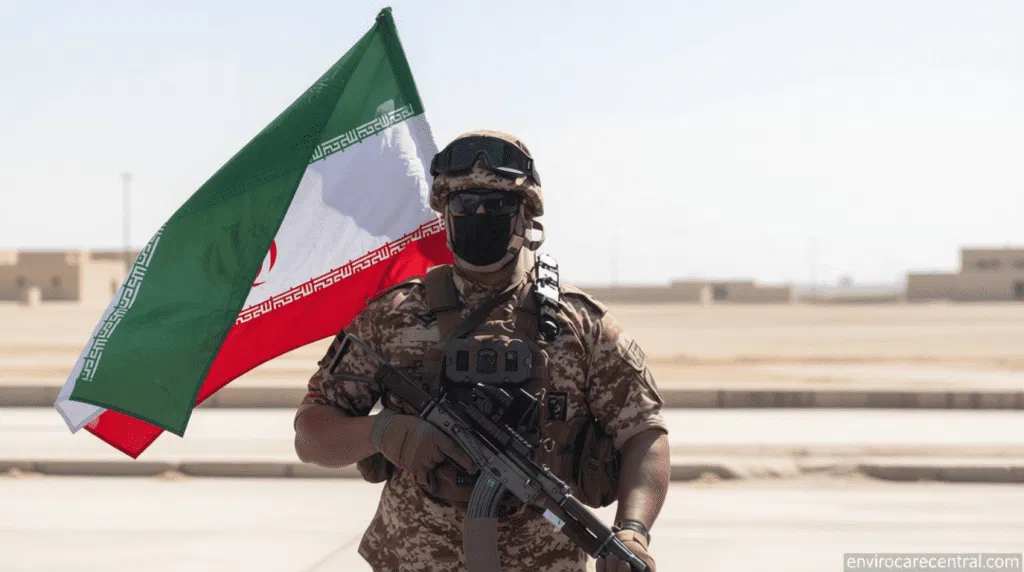
Despite significant losses, Iran’s Revolutionary Guards continue to operate in the ongoing conflict, demonstrating resilience even as the war enters its second week. Analysts note that while the power structure of the Islamic Republic faces challenges, it remains intact, defying early predictions of collapse.
“The initial shock of the attacks has not led to a breakdown of the regime’s core functions,” said Habib Hosseini-Fard, a Middle East expert. “Iran’s leadership has adapted quickly, maintaining cohesion within the military and political systems.”
Israel’s strikes on key figures, including the secretary of the Supreme National Security Council and the head of the Basij militia, have not dented the Revolutionary Guard Corps’ (IRGC) capacity. The group, known for its decentralized command, is still launching operations against the US, Israel, and neighboring Arab states. Recent reports indicate over 300 attacks have targeted multiple countries in the region, with Saudi Arabia intercepting more than 60 drones in a single night.
The United Arab Emirates reported one fatality and an injury in Abu Dhabi, attributed to debris from Iranian projectiles. These incidents underscore the intensity of the conflict and its far-reaching impact. Meanwhile, Iran’s Foreign Minister Abbas Araghchi has dismissed the possibility of ceasefire talks, asserting that the US and Israel’s strikes have not weakened the regime’s resolve.
A Resilient Military Structure
The IRGC, established after the 1979 Islamic Revolution, was initially designed to safeguard the state ideology and prevent a coup. Now, it forms a critical part of Iran’s armed forces, operating under the authority of Supreme Leader Mojtaba Khamenei. With an estimated 200,000 personnel, its networked command system allows provincial units to act independently, a shift that has strengthened its operational flexibility.
“Over the past two decades, the IRGC has transformed from a rigid hierarchy to a decentralized force,” Hosseini-Fard explained. “This adaptability ensures it can sustain attacks even amid persistent aerial assaults.”
US Central Command claims 15,000 Iranian targets have been struck by airstrikes, yet the IRGC remains active. Recent attacks include drone strikes on the US embassy in Baghdad and missile assaults on Israeli cities. Analysts like Reza Talebi emphasize that Iran’s power base is more complex than it appears, with military and security actors deeply tied to the regime’s ideology.
Talebi highlighted that the Revolutionary Guards are not just a military entity but also control economic and ideological networks spanning the Middle East. These structures, including the Quds Force and allied militant groups, ensure Iran’s influence persists despite external pressures.
