
Who is Mojtaba Khamenei, Iran’s new supreme leader?
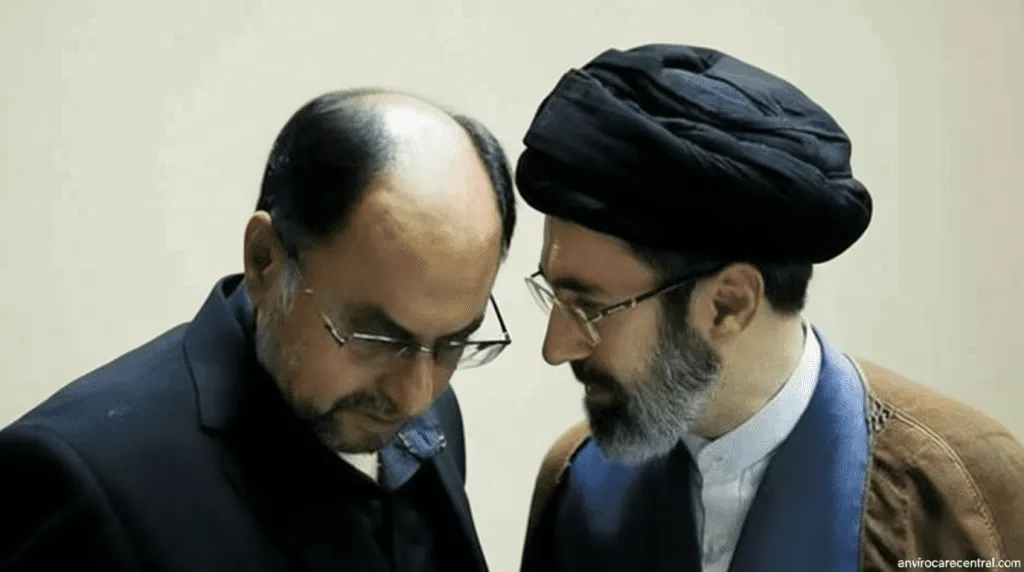
Who is Mojtaba Khamenei, Iran’s new supreme leader?
Appointment and Political Context
Iran’s Assembly of Experts has selected Mojtaba Khamenei, the son of former supreme leader Ali Khamenei, as the country’s new head of state. This decision comes amid ongoing tensions between Iran and its adversaries, including the United States and Israel. The 56-year-old cleric’s ascent to power signals a continuation of the regime’s hardline policies and aggressive stance in the region.
Early Life and Family Ties
Mojtaba was born on September 8, 1969, in Mashhad, Iran. As the second child of Ali Khamenei, who died in an Israeli airstrike on February 28, 2020, he inherits a legacy deeply rooted in Iran’s revolutionary ethos. The Assembly of Experts, comprising 88 members, officially announced his leadership on March 8, a week into a period of heightened conflict with the U.S. and Israel.
Political Influence and Alleged Role
Despite maintaining a low public profile, Mojtaba is regarded as a pivotal figure within Iran’s political landscape. His close relationship with the Islamic Revolutionary Guard Corps (IRGC) suggests significant behind-the-scenes sway. Analysts believe he played a key role in shaping the 2005 presidential election, helping Mahmoud Ahmadinejad, an IRGC-affiliated candidate, secure victory. This maneuver reportedly sidelined former president Akbar Hashemi Rafsanjani, who remained politically embattled but quiet.
“They are wasting their time. Khamenei’s son is a lightweight,” said US outlet Axios, citing remarks from former President Donald Trump.
Similar criticisms arose in 2009, when Ahmadinejad’s re-election sparked nationwide protests. Mojtaba was accused of orchestrating efforts to stifle dissent, with demonstrators chanting “death to Mojtaba” during demonstrations. Reports also linked him to the suppression of the “green movement” and allegations of financial misconduct.
Assets and Economic Control
According to a 2026 Bloomberg investigation, Mojtaba’s financial interests span high-value properties in London and Dubai, along with ventures in shipping, banking, and hospitality across Europe. These assets are reportedly structured through intermediaries and layered corporate entities in multiple jurisdictions. While state media depict him as a modest figure, insiders suggest he holds substantial influence over Iran’s economic framework, which is largely managed by institutions under Ali Khamenei’s control.
Legacy and Future Prospects
Israel’s defense minister once warned that Mojtaba’s father’s successor would be “a target for elimination,” highlighting the risks of his appointment. His father, Ali Khamenei, was a central architect of Iran’s revolutionary policies, and Mojtaba is seen as a direct continuation of that ideology. The new leader’s ability to sustain his father’s policies remains uncertain, especially given the challenges posed by international sanctions and domestic unrest.
Mojtaba’s journey began with his early education in Sardasht and Mahabad, cities in Iran’s northwest. After completing secondary school at Alavi School, he enrolled in the Qom seminary, where he studied under prominent clerics. He joined the IRGC in 1987 and later pursued Islamic scholarship in Qom, solidifying his position within the religious and political establishment.
State media emphasize his simplicity and dedication to Islamic principles, but his role in shaping Iran’s trajectory underlines a complex interplay of power and ideology. The Assembly of Experts has urged the Iranian public to support him, framing his leadership as essential to national unity.
