
Will Ukraine help Gulf states down Iranian drones?
Will Ukraine help Gulf states down Iranian drones?
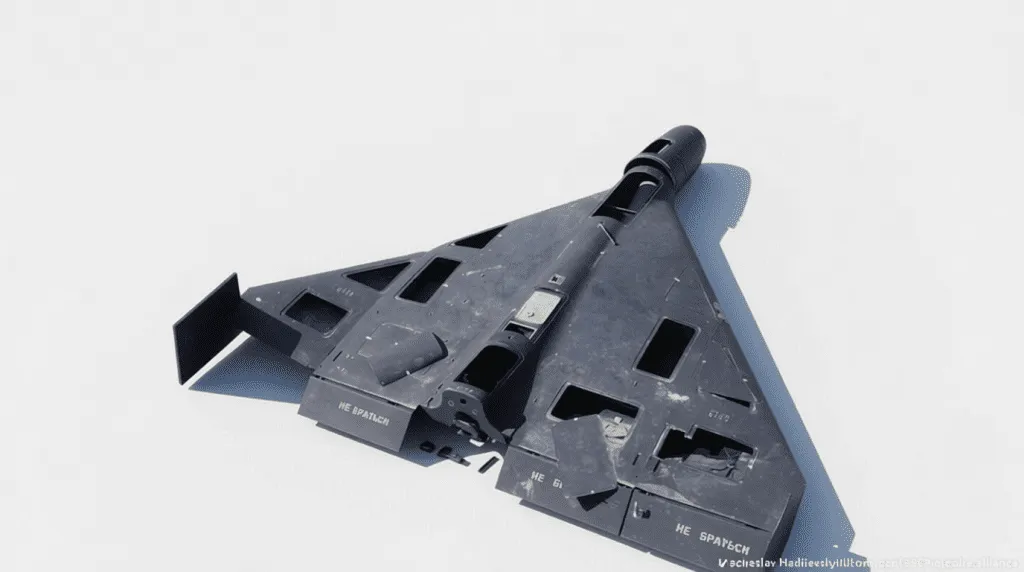
Ukraine has offered to share its expertise in safeguarding Gulf nations against Iranian drone attacks. The country’s leaders emphasize its experience in countering such threats, particularly after witnessing the effectiveness of its drone defense systems during the ongoing war with Russia. President Volodymyr Zelenskyy highlighted this in a recent communication, stating that Ukraine is prepared to assist Middle Eastern countries in their efforts to neutralize Iranian drones, which frequently target critical infrastructure and military installations.
“Leaders of the Middle East have great relations with Russians, they can ask Russia to implement a month-long ceasefire,” Zelenskyy remarked to Bloomberg. Once such a pause is secured, he noted, Ukraine would dispatch its most skilled drone defense operators to the region. “We can help Israel in the same way,” he added.
Ukrainian Foreign Minister Andrii Sybiha echoed this sentiment during an interview with Reuters. He explained that the armed forces could intercept 90% of Iranian Shahed drones, relying heavily on domestically developed systems. Sybiha, however, stressed that Ukraine’s capacity to deploy forces hinges on the assurance of no Russian aggression against its territory.
Expert Perspectives on Collaboration
Oleksandr Chara of the Center for Defense Strategies (CDS) pointed out that Gulf states initially underestimated the significance of Russia’s role in the conflict. Their perception shifted when Iranian drones, incorporating Russian components, began targeting areas in the region. Chara argued that Kyiv’s experience in drone interception could be valuable, especially for countries where economic considerations outweigh tactical ones.
“Shooting down a $30,000 [€25,824] drone with a missile that costs at least $100,000, or tens of millions in the case of a Patriot system, becomes a hopeless endeavor,” Chara explained. “Given the threat posed by Iran, it is logical to invest in Ukrainian defense capabilities.”
Chara outlined three potential scenarios for cooperation between Ukraine and Gulf nations. The first involves deploying seasoned Ukrainian forces with advanced interceptor drones to protect facilities immediately. The second focuses on training Arab drone pilots within their own countries and Ukraine, fostering stronger military ties. The third scenario envisions financial investment from Arab states to scale up drone production in Ukraine’s defense industry.
Financial and Strategic Motivations
Ukraine is also considering transferring aspects of interceptor drone manufacturing to Gulf partners, as disclosed by Zelenskyy to journalists on March 3. In exchange, Kyiv seeks American PAC-3 missiles for the Patriot system, essential for enhancing its air defense capabilities. The Financial Times reported on March 5 that the Pentagon and at least one Gulf state were discussing the purchase of Ukrainian-made interceptor drones, according to an unnamed industry representative.
Ukrainian military expert Oleh Katkov highlighted the Gulf states’ financial strength, noting they can afford advanced equipment. However, he emphasized their lack of data and battle-tested algorithms. “The value lies solely in the fact that we can help build a suitable air defense system based on our own experience,” Katkov stated to DW. “This is an extraordinary amount of [useful] information. Outside of Ukraine, no one has any data on how many mobile fire units are deployed, how much ammunition is required, and which equipment actually works and which does not.”
Zelenskyy’s broader goal, as Chara described, is to leverage Ukraine’s military experience to pressure Russia into ceasing its support for Iran and reducing its involvement in the conflict. This, he called, a “classic win-win situation,” where Gulf countries gain tactical advantage while Ukraine secures vital resources to sustain its own defense efforts.
