
Exploring the Environmental Impact of Meat Production
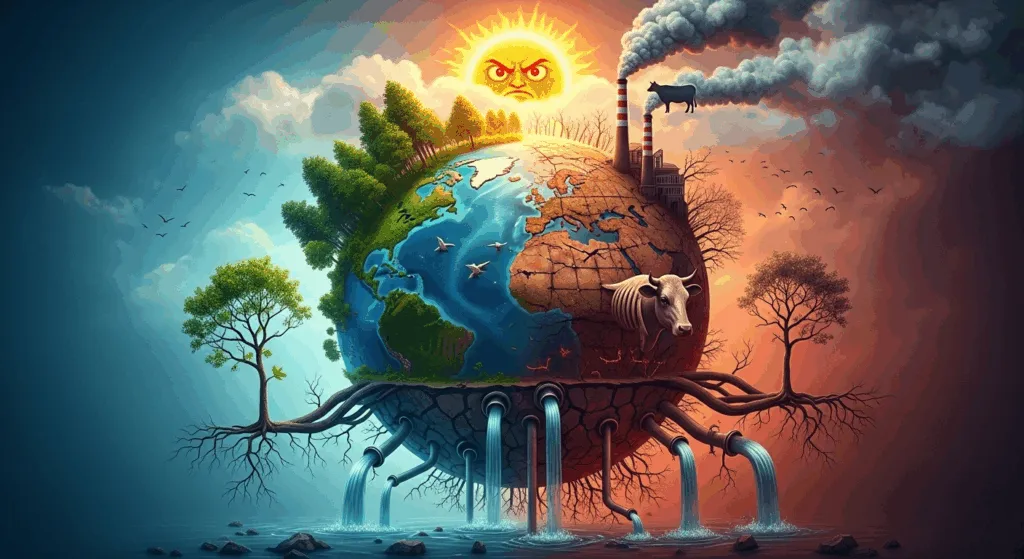
Our dinner plates hold more than just our meals; they hold a story about our planet's health. The journey of meat from farm to fork is a complex process with significant, often overlooked, consequences. As global populations grow and dietary patterns shift, understanding the full environmental impact of meat production has become more critical than ever. This isn't just a conversation for scientists and policymakers; it's a global issue that affects our air, water, land, and the very future of the ecosystems that sustain us. This article explores the multifaceted environmental footprint of the meat industry, from greenhouse gas emissions to water consumption, and discusses the pathways toward a more sustainable future.
Greenhouse Gas Emissions: The Atmospheric Burden
One of the most significant and widely discussed environmental impacts of the meat industry is its contribution to global greenhouse gas (GHG) emissions. The livestock sector is a major player in anthropogenic climate change, responsible for a substantial portion of the world's emissions. According to the United Nations' Food and Agriculture Organization (FAO), livestock supply chains are estimated to account for 14.5% of all human-caused GHG emissions. This figure is comparable to the emissions from the entire global transportation sector, including all cars, trucks, planes, and ships combined. These emissions aren't from a single source but are a cocktail of powerful gases released at various stages of production.
The primary gases involved are methane (CH₄), nitrous oxide (N₂O), and carbon dioxide (CO₂). Methane is famously produced by ruminant animals like cattle and sheep through a natural digestive process called enteric fermentation—in simpler terms, burping. Nitrous oxide is released from animal manure and the nitrogen-based fertilizers used to grow massive quantities of feed crops. Carbon dioxide is emitted through deforestation to create pastures (land-use change), the energy used to power farm machinery and facilities, and the transportation of animals and final products.
Understanding this complex web of emissions is the first step toward appreciating the sheer scale of the industry's atmospheric impact. Each component presents a unique challenge. While CO₂ persists in the atmosphere for centuries, methane is a much more potent gas in the short term, with a warming potential more than 80 times that of CO₂ over a 20-year period. This makes reducing methane emissions a critical lever for mitigating near-term climate change. The global appetite for meat directly fuels this entire cycle, making our dietary choices a powerful factor in the planet's climate equation.
1. Methane (CH₄): A Potent Short-Term Warmer
Methane from livestock is a particularly pressing concern due to its high global warming potential. The main source, enteric fermentation, is a biological process in the digestive systems of ruminant animals. Microbes in the first stomach chamber, the rumen, break down tough, fibrous plants into nutrients the animal can absorb. A byproduct of this process is methane, which is then released primarily through belching. With a global cattle population exceeding one billion, the cumulative effect of this process is immense. Cattle are the number one agricultural source of greenhouse gases worldwide.
The impact of methane is front-loaded; it traps a significant amount of heat in its first couple of decades in the atmosphere before breaking down. This is in contrast to carbon dioxide, which has a less intense but much longer-lasting effect. Therefore, strategies aimed at reducing methane emissions can have a more immediate cooling effect on the planet. Researchers are actively exploring solutions, from dietary supplements for cattle, such as certain types of seaweed (Asparagopsis taxiformis), which have been shown to dramatically reduce methane output, to selective breeding programs for lower-emitting animals. However, the most direct way to reduce methane from this source remains scaling back the global herd size.
2. Nitrous Oxide (N₂O) and Carbon Dioxide (CO₂)
While methane often steals the spotlight, nitrous oxide is another formidable greenhouse gas linked to meat production. With a warming potential nearly 300 times that of CO₂ over a 100-year period, N₂O is no small matter. Its primary sources in the livestock sector are animal manure and the synthetic nitrogen fertilizers used extensively to grow feed crops like corn and soy. When these fertilizers are applied to fields, soil microbes convert a portion of the nitrogen into N₂O, which then escapes into the atmosphere. Similarly, the breakdown of nitrogen in animal waste stored in lagoons or spread on fields also releases significant quantities of this potent gas.
Carbon dioxide emissions are tied to the broader infrastructure of industrial meat production. The most significant source is land-use change, primarily deforestation to create new pastures or agricultural land for feed production. When forests are cleared and burned, the vast stores of carbon held in trees and soil are released into the atmosphere as CO₂. Beyond this, the entire supply chain is energy-intensive. Fossil fuels are burned to operate farm machinery, produce fertilizers, heat and ventilate industrial-scale barns, and transport animals to slaughterhouses and meat products to retailers. Every step, from field to factory to fork, contributes to the industry's carbon footprint.
Land Use and Deforestation: A Disappearing World
The sheer amount of land required for meat production is staggering and represents perhaps its most profound environmental impact. The livestock sector is the single largest human user of land on the planet. Globally, grazing land and cropland dedicated to producing animal feed account for almost 80% of all agricultural land. This means that a vast portion of the Earth's terrestrial surface is dedicated not to feeding people directly, but to feeding the animals that people eat. This immense land footprint is a primary driver of habitat loss, soil degradation, and, most critically, deforestation.
As the global demand for meat continues to rise, especially in developing economies, the pressure to convert natural ecosystems into agricultural land intensifies. Forests, wetlands, and native grasslands—all of which are vital carbon sinks and hotspots of biodiversity—are being cleared at an alarming rate. The Amazon rainforest is a tragic and well-documented example, where cattle ranching is the leading cause of deforestation. This process of "land-use change" not only releases massive amounts of stored carbon but also permanently destroys irreplaceable habitats, pushing countless species closer to extinction.
The inefficiency of this land use is a key part of the problem. It takes significantly more land to produce a calorie of protein from beef or lamb than it does from plant-based sources like beans, lentils, or tofu. This is because energy is lost at each step up the food chain. A large area of land is needed to grow crops, which are then fed to an animal over its lifetime to produce a comparatively small amount of meat. This system puts immense strain on our planet's finite land resources, creating a direct conflict between meat production and the preservation of natural ecosystems.
1. The Scale of Land Occupation
To put the scale into perspective, livestock takes up space equivalent to the size of the Americas combined. This land is divided into two main categories: permanent pasture for grazing and arable land used to grow animal feed. While grazing can sometimes occur on land unsuitable for other types of agriculture, the expansion of pastures is a major driver of deforestation. Furthermore, about a third of all global cropland is used to grow feed for livestock, not for direct human consumption. This includes vast monocultures of crops like soy and corn, which themselves have significant environmental impacts, including soil depletion and high water demand.
This allocation of resources is fundamentally inefficient. Livestock provides only about 18% of the world's calories but uses the vast majority of its farmland. This disparity highlights the opportunity cost of meat-heavy diets. The same land used to grow feed for one cow could, if repurposed for direct human food production, feed many more people. As the global population heads toward 10 billion, the question of how we can use our land most efficiently and sustainably to ensure food security becomes increasingly urgent.
2. Deforestation Hotspots and Drivers
The link between meat production and deforestation is most starkly visible in Latin America. In Brazil, home to a large portion of the Amazon rainforest, cattle ranching is responsible for up to 80% of current deforestation rates. Vast swathes of pristine forest are slashed and burned to make way for cattle pastures. This not only decimates biodiversity but also disrupts regional weather patterns and the livelihoods of indigenous communities. The fires often seen blazing across the Amazon are not just random wildfires; they are a direct tool of land clearance for agricultural expansion.
Another major driver is the cultivation of soy. While soy is a healthy food for humans, the overwhelming majority of the world's soy—around 75%—is used as animal feed, particularly for pigs and poultry. The explosive growth of the soy industry has led to the conversion of other vital ecosystems, such as the Cerrado, a vast tropical savanna in Brazil that is one of the most biodiverse regions on Earth. The demand for cheap meat in Europe and North America directly finances the destruction of these critical habitats thousands of miles away, creating a globalized chain of environmental degradation.
Water Consumption: The Hidden Thirst of Livestock
Beyond land and emissions, meat production is an incredibly water-intensive industry. The "water footprint" of a product refers to the total volume of freshwater used to produce it, measured throughout the entire production chain. For meat, this includes the water animals drink, the water used for cleaning and sanitation in farms and slaughterhouses, and, most significantly, the vast quantities of water required to irrigate the crops that become animal feed. When all these factors are combined, the water footprint of animal products far exceeds that of most plant-based foods.
Different types of meat have vastly different water footprints. Producing one kilogram of beef, for example, is estimated to require an average of 15,415 liters of water. In contrast, producing one kilogram of chicken requires around 4,325 liters, and pork requires about 5,988 liters. These numbers are orders of magnitude greater than those for staple plant crops. A kilogram of vegetables requires only about 322 liters, and a kilogram of lentils requires just a fraction of the water needed for even the most "efficient" meat.
This immense water consumption places a severe strain on freshwater resources, especially in arid and semi-arid regions where many feed crops are grown. Aquifers are being depleted faster than they can be replenished, and rivers are running dry to support an inefficient food system. As climate change exacerbates water scarcity in many parts of the world, the high water demand of the livestock industry is becoming an increasingly unsustainable and critical issue for global water security.
| Food Product (per kg) | Estimated Water Footprint (Liters) |
|---|---|
| Beef | 15,415 |
| Lamb/Mutton | 10,412 |
| Pork | 5,988 |
| Chicken | 4,325 |
| Eggs (per kg) | 3,265 |
| Cheese | 3,178 |
| Rice | 2,497 |
| Tofu | 2,000 (approx.) |
| Wheat Bread | 1,608 |
| Lentils | 1,250 |
| Potatoes | 287 |
| Vegetables | 322 |
Source: Based on data from Water Footprint Network and other academic studies. Figures are global averages and can vary significantly by production system and location.
Biodiversity Loss and Pollution: A Silent Crisis
The environmental impact of meat production extends deep into the fabric of our planet's ecosystems, causing a silent but devastating crisis of biodiversity loss and pollution. The conversion of diverse natural habitats like forests, wetlands, and grasslands into simplified, monoculture systems of pasture or feed crops is the single greatest driver of terrestrial biodiversity loss. When a forest is cleared for cattle, it's not just the trees that are lost; it's the entire intricate web of life that depended on that habitat, from insects and birds to mammals and microorganisms.

In addition to habitat destruction, the waste generated by industrial livestock operations is a major source of pollution. Concentrated Animal Feeding Operations (CAFOs), where thousands of animals are raised in confined spaces, produce enormous quantities of manure. This waste is often stored in massive open-air lagoons, which can leak and contaminate groundwater, or is over-applied to land, leading to nutrient runoff. This runoff, rich in nitrogen and phosphorus, flows into nearby streams and rivers, eventually reaching coastal waters.
This nutrient pollution fuels a process called eutrophication, where excessive algal blooms grow rapidly and then die, consuming dissolved oxygen in the water as they decompose. This creates vast "dead zones"—hypoxic areas where most marine life cannot survive. The dead zone in the Gulf of Mexico, largely fed by fertilizer and manure runoff from farms in the Mississippi River Basin, is a stark example of how industrial agriculture on land can devastate marine ecosystems hundreds of miles away. The use of antibiotics and hormones in livestock rearing also poses risks, contributing to the rise of antibiotic-resistant bacteria and disrupting aquatic ecosystems.
1. Eutrophication and Water Pollution
Eutrophication is a chain reaction with devastating consequences. The excess nitrogen and phosphorus from manure and fertilizers act like a steroid for algae and aquatic plants. This leads to explosive algal blooms that can cover the surface of a body of water, blocking sunlight from reaching plants below. When these massive blooms die off, bacteria that decompose the dead algae consume nearly all the available oxygen in the water. This lack of oxygen, known as hypoxia, makes the environment uninhabitable for fish, crabs, and other marine organisms, which either flee the area or die.
These dead zones are not rare occurrences; there are now over 400 identified hypoxic zones in coastal waters around the world, all linked to nutrient pollution from agriculture and other human activities. They represent a massive loss of productive marine habitat and have severe economic impacts on fishing and tourism industries. By fundamentally altering water chemistry, waste from the meat industry is reshaping aquatic ecosystems on a global scale.
2. The Threat to Wildlife and Ecosystems
The impact on wildlife goes far beyond the direct clearing of land. The fragmentation of habitats by roads, fences, and farms isolates animal populations, making them more vulnerable to genetic decline and extinction. Furthermore, livestock can come into direct conflict with native predators. In many parts of the world, iconic predators like wolves, jaguars, and lions are persecuted and killed to protect cattle and sheep, disrupting natural food webs and pushing these keystone species toward endangerment.
Ultimately, industrial meat production simplifies complexity. It replaces a biodiverse, resilient ecosystem with a fragile, input-dependent monoculture. This loss of complexity makes the entire system more vulnerable to disease, climate shocks, and collapse. The web of life is interconnected, and by dismantling natural habitats to produce meat, we are unraveling the very systems that provide us with clean air, fresh water, and a stable climate.
Pathways to a More Sustainable Future
Acknowledging the heavy environmental toll of meat production is not about assigning blame but about identifying opportunities for change. The challenge is immense, but so is the potential for innovation and positive action. A transition to a more sustainable food system requires a multi-pronged approach that involves changes in consumer behavior, advancements in agricultural technology, and supportive government policies. There is no single silver bullet; instead, a combination of strategies is needed to mitigate the impacts of the current system.
The most powerful levers for change lie in both production and consumption. On the production side, there is a growing movement toward practices that work with nature rather than against it. These include regenerative agriculture, improved manure management, and technological solutions to reduce methane emissions. On the consumption side, a global shift in dietary patterns represents a massive opportunity. Reducing the overall demand for meat, particularly from the most resource-intensive sources like beef, can free up land, save water, and slash emissions more quickly and effectively than nearly any other individual action.
Ultimately, creating a sustainable food future requires a collective effort. Farmers, scientists, innovators, policymakers, and consumers all have a role to play. By supporting better practices and making more conscious choices, we can begin to heal the anetary wounds inflicted by our current food system and build a future where both people and the planet can thrive.
1. Dietary Shifts: The Power of the Plate
One of the most immediate and impactful ways to reduce the environmental toll of meat production is through dietary change. This doesn't necessarily mean everyone must become a vegan or vegetarian. Even modest reductions in meat consumption, particularly red meat, can make a huge difference. Adopting a flexitarian diet—one that is primarily plant-based but occasionally includes meat—can significantly lower an individual's carbon, water, and land footprints. Initiatives like "Meatless Mondays" are simple yet effective ways to encourage this shift on a broad scale.
Focusing on a "less and better" approach is key. When consumers do choose to eat meat, they can support more sustainable production systems. This might mean choosing chicken or pork over beef and lamb, as they have a lower environmental footprint. It could also mean seeking out products from local farms that practice regenerative grazing, which can help restore soil health and sequester carbon. By using their purchasing power to demand more sustainable options, consumers can send a powerful signal to the entire industry to change its practices.
2. Technological and Agricultural Innovations
Innovation is crucial for transforming the production side of the equation. In the realm of livestock farming, scientists are developing feed additives, such as specific strains of seaweed, that can dramatically cut methane emissions from cattle by inhibiting the microbes that produce the gas. Advanced manure management systems, such as anaerobic digesters, can capture methane from animal waste and convert it into biogas, a renewable energy source, while also producing a more stable fertilizer.
Simultaneously, a paradigm shift in farming philosophy is gaining traction: regenerative agriculture. This holistic approach focuses on rebuilding soil organic matter and restoring degraded soil biodiversity. Practices include no-till farming, cover cropping, and managed rotational grazing. Well-managed grazing can mimic the patterns of wild herbivores, stimulating plant growth, increasing soil carbon sequestration, and enhancing ecosystem resilience. While not a solution for the current scale of global demand, regenerative models show that livestock, when integrated properly into an ecosystem, can be part of a solution rather than just a problem.
Frequently Asked Questions (FAQ)
Q: What is the single biggest environmental impact of meat production?
A: While there are many significant impacts, the extensive land use required for livestock and feed production is arguably the single largest. It is the primary driver of deforestation, habitat destruction, and biodiversity loss worldwide. This vast land footprint also directly contributes to greenhouse gas emissions through land-use change.
Q: Is chicken or fish a better choice for the environment than beef?
A: Generally, yes. Both chicken and fish have a much lower carbon, land, and water footprint compared to beef and lamb. However, it's not always simple. Industrial-scale chicken farming has its own issues with waste pollution and antibiotic use. For fish, the sustainability depends on whether it's wild-caught or farmed. Overfishing is a major crisis for ocean ecosystems, while some aquaculture practices can lead to pollution and habitat destruction. Choosing smaller, faster-growing fish or seafood from certified sustainable fisheries is a better option.
Q: Can meat be produced in a truly sustainable way?
A: Yes, it is possible to raise animals in a way that is environmentally beneficial, primarily through well-managed regenerative grazing systems. These systems can improve soil health, sequester carbon, and enhance biodiversity. However, these methods are far less intensive and have lower yields than industrial models. This means they cannot support the current global level of meat consumption. A truly sustainable system would involve producing much less meat overall, reserved as a smaller part of a predominantly plant-based diet.
Q: As an individual, what is the most effective thing I can do to help?
A: The two most effective actions are reducing your overall meat consumption (especially red meat) and minimizing food waste. Shifting toward a more plant-rich diet directly reduces the demand that drives deforestation, water use, and emissions. Additionally, about one-third of all food produced is wasted; by wasting less food, especially meat, you reduce the unnecessary environmental impact that went into producing it.
Conclusion
The environmental impact of meat production is a vast and sobering reality. From potent greenhouse gases warming our atmosphere to the clearing of vital forests and the pollution of our waterways, the consequences of our global appetite for meat are etched across the planet. The industry's immense demand for land, water, and energy makes it a central driver of climate change, biodiversity loss, and resource depletion. The data is clear: our current trajectory of meat consumption is fundamentally unsustainable.
However, this critical examination is not a call for despair but a call to action. The solutions are within our grasp and require a coordinated effort from all sectors of society. By embracing dietary shifts toward more plant-rich foods, we can collectively reduce the enormous pressure on our planet's resources. Simultaneously, investing in and scaling up innovative, regenerative agricultural practices can transform farming from a source of degradation into a force for ecological restoration. The choices we make every day—on our farms, in our policies, and on our plates—will determine whether we can build a food system that nourishes both humanity and the natural world on which we all depend.
***
Summary of the Article
The article, "Exploring the Environmental Impact of Meat Production," provides a comprehensive analysis of the multifaceted environmental consequences of the global meat industry.
- Greenhouse Gas Emissions: The livestock sector is a major contributor to climate change, responsible for approximately 14.5% of all human-caused GHG emissions. This includes potent gases like methane (from cattle digestion), nitrous oxide (from manure and fertilizers), and carbon dioxide (from deforestation and energy use).
- Land Use and Deforestation: Meat production is the world's largest user of agricultural land, occupying nearly 80% of it for grazing and feed cultivation. This is a primary driver of deforestation, particularly in the Amazon, leading to massive carbon releases and habitat destruction.
- Water Consumption: The industry has an enormous "water footprint." For example, producing one kilogram of beef requires over 15,000 liters of water, primarily for irrigating feed crops. This strains global freshwater resources.
- Biodiversity Loss and Pollution: The conversion of natural habitats to farmland is the leading cause of biodiversity loss. Additionally, waste from industrial farms causes nutrient pollution (eutrophication), creating "dead zones" in coastal waters.
- Pathways to a Sustainable Future: Solutions involve a dual approach. Consumers can make a significant impact by shifting to more plant-rich diets ("less and better" meat consumption). On the production side, innovations like methane-reducing feed additives and the adoption of regenerative agriculture, which focuses on soil health and carbon sequestration, offer pathways to mitigate these impacts.
- Conclusion: The article concludes that while the current system is unsustainable, change is possible through collective action involving dietary shifts, technological innovation, and a transition to more restorative farming practices.
