
Denmark’s Frederiksen bruised in election, as voters put Trump’s Greenland ambitions to the side
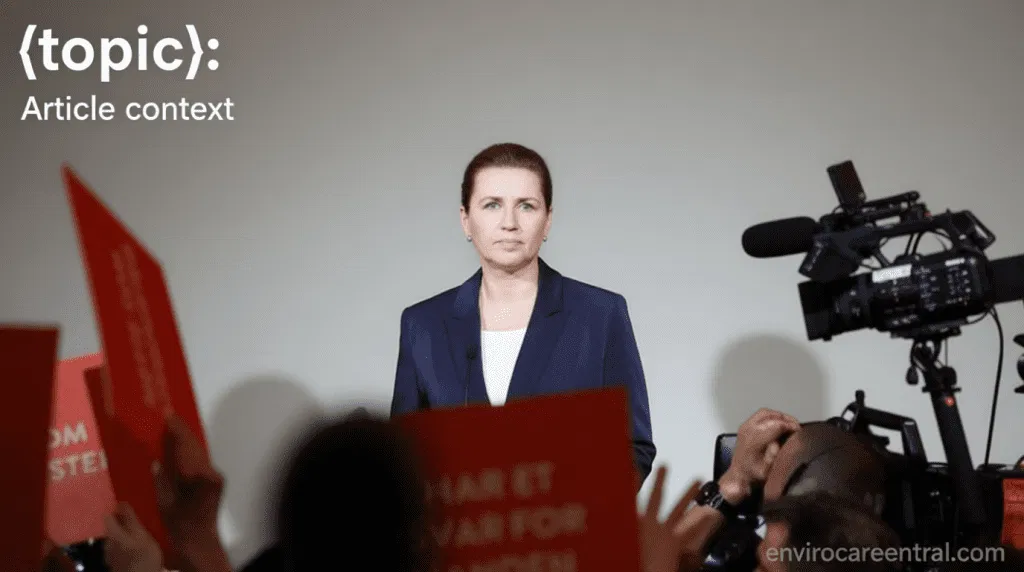
Denmark’s Frederiksen bruised in election, as voters put Trump’s Greenland ambitions to the side
The recent election in Denmark delivered an ambiguous outcome, casting doubt on Prime Minister Mette Frederiksen’s ability to continue her leadership. The campaign centered on everyday concerns rather than her management of the dispute involving U.S. President Donald Trump’s interest in Greenland. Final results revealed that Frederiksen’s center-left Social Democrats saw a decline in support compared to the 2022 election, as did their coalition partners. Neither the left-leaning nor right-leaning blocs secured a parliamentary majority, positioning former prime minister Lars Løkke Rasmussen as a pivotal figure in determining the nation’s political direction.
Rasmussen, head of the centrist Moderate party with 14 seats in the 179-member Folketing, has the potential to influence whether Frederiksen can remain in power. She expressed confidence in her continued role, stating,
“The world is unsettled. There are strong winds around us. Denmark needs a stable government, a competent government. We are ready to take the lead.”
Meanwhile, Rasmussen urged rivals to temper their campaign positions, suggesting,
“Denmark is a small country of 6 million people in a world of 8 billion, which is in upheaval — and there is war in Iran, and there is war in Ukraine. We are one tribe. We must come together. We must not be divided.”
Despite Trump’s lingering influence, voters prioritized domestic matters. Defense Minister Troels Lund Poulsen, leading the center-right Liberal party, indicated his group would not rejoin Frederiksen’s government. While the Social Democrats remained the largest party, their 21.9% share of the vote fell short of the 27.5% recorded in 2022. Frederiksen, 48, has long championed Ukraine’s defense against Russia and maintained a strict stance on immigration, echoing broader Danish political trends.
Frederiksen had called the election earlier than required, hoping to leverage her strong stance against Trump’s Greenland push. She emphasized solidarity in Europe, but critics noted that focusing on external tensions may have cost her some domestic support. “I have been in charge of this wonderful country for nearly seven years,” she acknowledged, comparing the current result to her party’s 25.9% in 2019. “We have weathered the pandemic; we have had to deal with war. We have been threatened by the American president, and in those nearly seven years, we have seen a four percent decline.”
Greenland, once a major topic of debate, became less central in the campaign as consensus emerged on its integration into the Danish kingdom. Although Frederiksen warned in January that U.S. control of Greenland could signal the end of NATO, tensions eased after Trump retreated from imposing tariffs on Denmark and other European nations. Technical discussions on an Arctic security agreement between the U.S., Denmark, and Greenland are now underway. The Folketing, Denmark’s single-chamber parliament, is elected every four years, with 175 seats allocated to Danish lawmakers and two each to representatives from Greenland and the Faroe Islands.
