
Solving Common Garden Pest Problems: Simple Fixes That Work
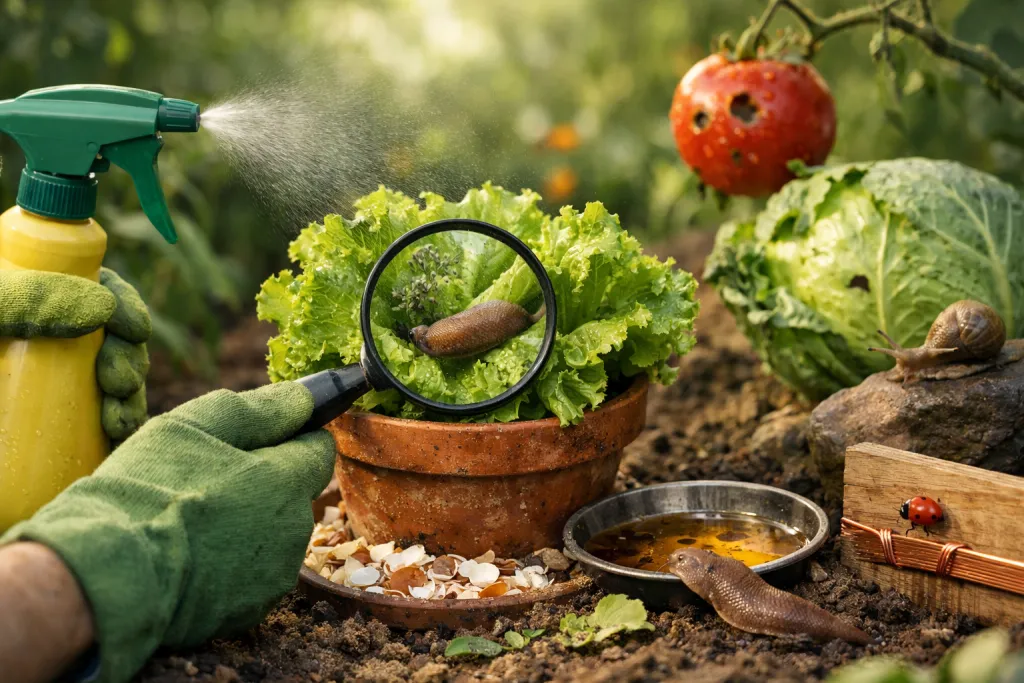
Garden pests can quickly turn healthy plants into damaged leaves, stunted growth, and disappointing harvests. Solving common garden pest problems starts with understanding what is attacking your plants, why it happens, and how to respond with targeted, simple solutions. Most infestations can be managed without harsh chemicals if addressed early and consistently. The key is observation, correct identification, and applying practical fixes that match the pest and the environment.
Identifying the Most Common Garden Pests
Effective pest control begins with accurate identification. Aphids, caterpillars, spider mites, whiteflies, slugs, and beetles are among the most frequent culprits in home gardens. Each pest leaves distinct signs, such as sticky residue from aphids, skeletonized leaves from beetles, or fine webbing from spider mites.
Aphids cluster on new growth and feed on plant sap, causing curling and yellowing leaves. Caterpillars chew irregular holes and often leave visible droppings on foliage. Slugs and snails create smooth-edged holes and are most active at night or after rain.
Misidentification leads to ineffective treatment. For example, nutrient deficiencies can resemble pest damage, and overwatering can weaken plants, making them more vulnerable. Careful inspection of leaves, stems, and soil helps distinguish between environmental stress and actual pest activity.
Proper identification forms the foundation of solving common garden pest problems because each pest responds best to a specific control strategy.
Natural and Organic Control Methods
Many gardeners prefer organic pest control methods that protect beneficial insects and soil health. One of the simplest solutions is manual removal. Handpicking caterpillars or knocking aphids off plants with a strong stream of water can significantly reduce populations.
Neem oil and insecticidal soap are effective against soft-bodied insects like aphids and whiteflies. These treatments disrupt feeding and reproduction without leaving long-term toxic residues. Applications should target the undersides of leaves, where pests often hide.
Diatomaceous earth works well against crawling insects such as beetles and slugs. It damages their outer layer, causing dehydration. The powder must remain dry to be effective, so reapplication after rain is necessary.
Encouraging beneficial insects is another powerful strategy. Ladybugs, lacewings, and parasitic wasps naturally reduce aphid and caterpillar populations. Planting flowers like dill, fennel, and marigolds attracts these natural predators and supports long-term pest balance.
Organic solutions may require repeated applications, but they build resilience into the garden ecosystem.
Cultural Practices That Prevent Infestations
Prevention is more effective than reacting to severe infestations. Healthy plants are naturally more resistant to pests. Proper watering, adequate spacing, and nutrient-rich soil reduce plant stress and limit pest attraction.
Crop rotation helps prevent soil-borne pests from establishing permanent populations. Avoid planting the same vegetable family in the same location each year. This disrupts life cycles of insects that depend on specific host plants.
Mulching can deter certain pests while improving soil moisture retention. However, overly thick mulch may create hiding spots for slugs. Adjust thickness based on climate and pest pressure.
Regular pruning improves air circulation and reduces conditions favorable to fungal diseases and mites. Removing heavily infested leaves early prevents pests from spreading to healthy parts of the plant.
These cultural practices are fundamental to solving common garden pest problems because they address the root causes rather than just symptoms.
Mechanical and Physical Barriers
Physical barriers provide immediate protection without chemical intervention. Row covers shield plants from flying insects such as moths that lay eggs on leaves. They are especially effective during early growth stages.
Copper tape or rings can deter slugs and snails due to a mild electrical reaction when they contact the metal. This method protects seedlings and tender crops without harming other organisms.
Sticky traps help monitor and reduce flying insect populations. Yellow sticky cards are particularly useful for detecting whiteflies and fungus gnats. Monitoring tools also provide early warning signs before infestations escalate.
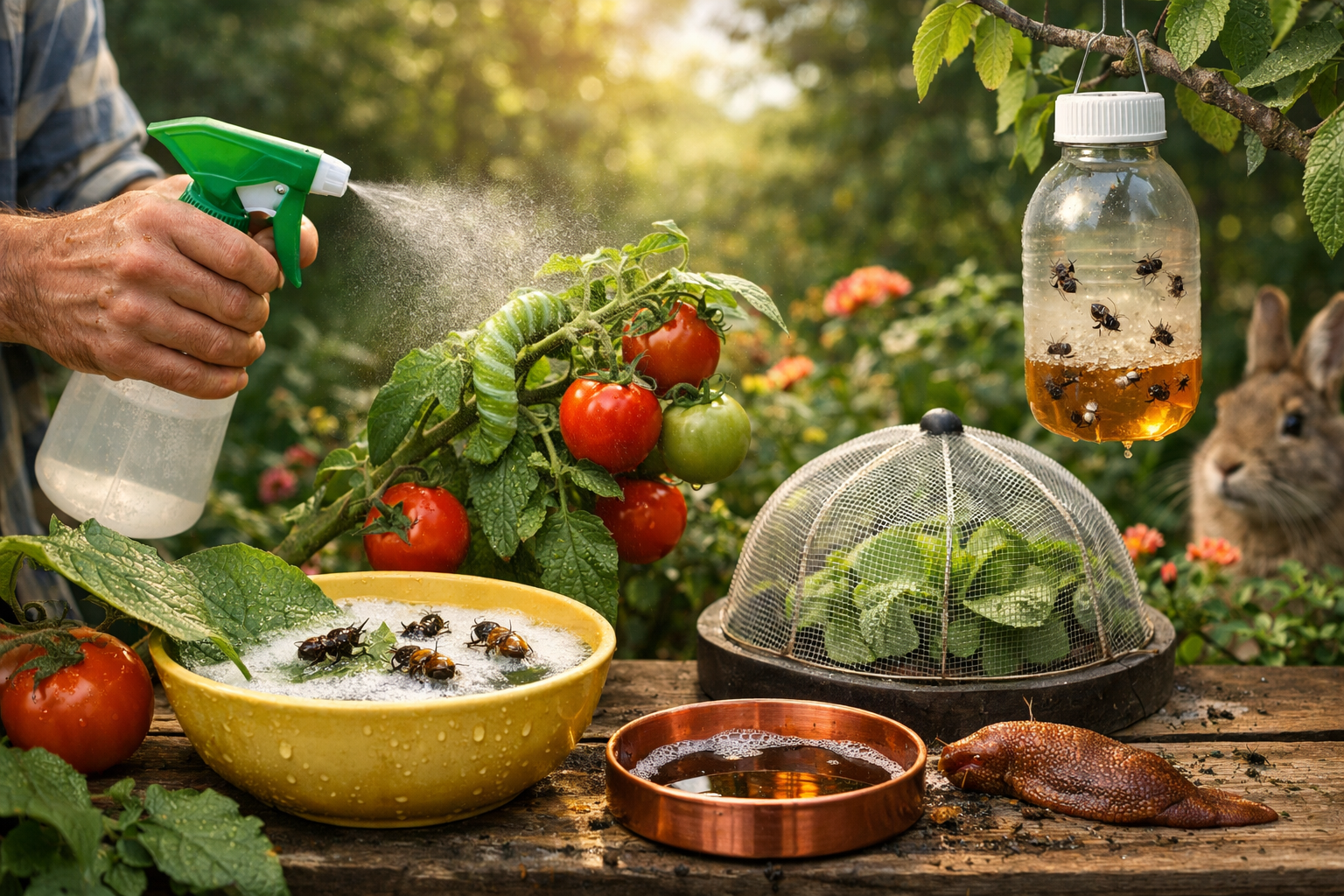
Fencing and netting protect gardens from larger pests like rabbits and birds. Fine mesh netting prevents access while allowing sunlight and airflow.
Mechanical methods are often overlooked but remain among the simplest and most reliable tools in solving common garden pest problems.
When and How to Use Chemical Controls Responsibly
Chemical pesticides should be considered a last resort. When used improperly, they can harm pollinators, beneficial insects, and soil organisms. If chemical intervention becomes necessary, select targeted products designed for the specific pest.
Apply treatments during early morning or late evening to minimize exposure to bees and other pollinators. Avoid spraying during windy conditions to reduce drift. Always follow label instructions precisely.
Systemic pesticides may provide longer-lasting protection but can affect nectar and pollen. For edible crops, verify pre-harvest intervals to ensure food safety.
Responsible chemical use focuses on precision rather than blanket application. Integrating chemicals into a broader pest management strategy prevents resistance and long-term ecological imbalance.
Building a Long-Term Integrated Pest Management Strategy
The most sustainable approach combines multiple methods into an Integrated Pest Management (IPM) system. IPM emphasizes monitoring, threshold levels, and strategic intervention rather than routine spraying.
Regular inspections allow early detection before pests multiply. Setting action thresholds prevents unnecessary treatment when minor pest presence does not threaten plant health.
Combining cultural practices, biological controls, and physical barriers creates layered protection. For example, healthy soil, beneficial insects, and row covers together dramatically reduce risk.
Documentation also improves future outcomes. Keeping records of pest outbreaks, weather patterns, and treatment results helps refine strategies over time.
Long-term success in solving common garden pest problems depends on consistency, observation, and balanced intervention rather than single-solution thinking.
Conclusion
Solving common garden pest problems requires accurate identification, preventive care, and practical control methods applied at the right time. Organic treatments, cultural practices, physical barriers, and careful chemical use all play defined roles in maintaining plant health. A structured, integrated approach reduces damage while preserving the natural balance of the garden ecosystem.
FAQ
Q: What is the fastest way to control aphids in a home garden? A: A strong spray of water combined with insecticidal soap effectively reduces aphid populations within days.
Q: Are chemical pesticides necessary for solving common garden pest problems? A: Most common infestations can be managed using organic and mechanical methods without chemical pesticides.
Q: How often should I inspect my garden for pests? A: Inspect plants at least once or twice per week to detect early signs of infestation.
Q: Do companion plants really help reduce pests? A: Yes, certain companion plants attract beneficial insects that naturally control pest populations.
Q: What causes repeated pest infestations each season? A: Poor crop rotation, stressed plants, and lack of monitoring often allow pest populations to reestablish year after year.
