
Kazakhstan: Largest country in Central Asia approves new constitution
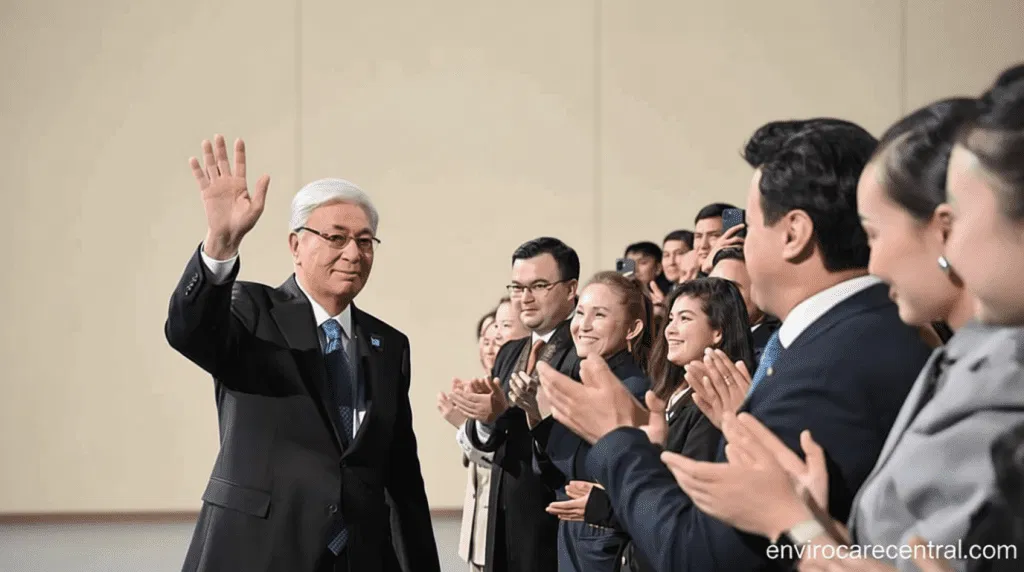
Kazakhstan: Largest Country in Central Asia Approves New Constitution
On March 15, Kazakhstan’s citizens voted in favor of a constitutional overhaul, as confirmed by the Central Electoral Commission. President Kassym-Jomart Tokayev, who spearheaded the reform, addressed the public late into the night, highlighting the significance of the decision. “Today marks a pivotal moment for our nation,” he stated. “The people have chosen to embrace a new constitutional framework, shaping the path of our future.”
The referendum, held on March 15, saw preliminary results reflect widespread support for the changes. According to exit polls, the public’s approval signals a shift in governance priorities. The new constitution enhances the president’s authority, allowing appointments to key institutions with Senate endorsement. These include the Constitutional Court, Supreme Judicial Council, National Bank, National Security Committee, and Prosecutor General. Additionally, the president gains the power to name heads of the Supreme Court, Central Electoral Commission, Supreme Audit Chamber, State Security Service, and Human Rights Commissioner.
“Official documents in Kazakh will carry the greatest legal authority,” explained political scientist Gaziz Abishev. “If discrepancies arise between Kazakh and Russian versions of a document, the Kazakh one will prevail.”
A notable amendment involves the status of Kazakh and Russian languages. While the previous constitution mandated equal use, the new version specifies they will be used “alongside,” potentially favoring Kazakh. This change has sparked debate among experts. Meanwhile, the scope of personal data protection has been broadened, with clearer provisions on state-religion separation.
Presidential Powers and Kurultai
The reform also grants the president the ability to appoint 10 Constitutional Court judges, six Central Electoral Commission members, and eight Supreme Audit Chamber officials—all under the approval of the Kurultai, a new unicameral legislative body. However, if the Kurultai rejects presidential nominations twice, the president can dissolve the parliament. In such cases, he would hold temporary authority to issue decrees equivalent to constitutional laws.
Further, the Kurultai chairperson and vice president would be subject to this dissolution rule. The reinstatement of the vice presidential role, which was eliminated in 1996, adds another layer of executive structure. The vice president’s responsibilities now include representing the nation abroad and engaging with domestic and international cultural, scientific, and social groups, while their other duties remain under presidential guidance.
Freedom of Speech and International Relations
Freedom of speech provisions have been expanded to include protections for scientific, technical, and artistic creativity. This revision aligns with broader efforts to redefine national priorities. The new constitution also adjusts the balance between international commitments and domestic law. While international obligations still hold weight, Kazakhstan no longer explicitly binds itself to “renounce the first use of armed force,” a provision previously included in the old document.
The reform coincides with recent legislative actions, such as the ban on LGBTQ+ propaganda, which now supports the redefinition of marriage as a union between a man and a woman. Kazakhstan remains a member of numerous global organizations, including the UN and the Paris Agreement, but the constitutional changes signal a renewed emphasis on sovereignty and national direction.
