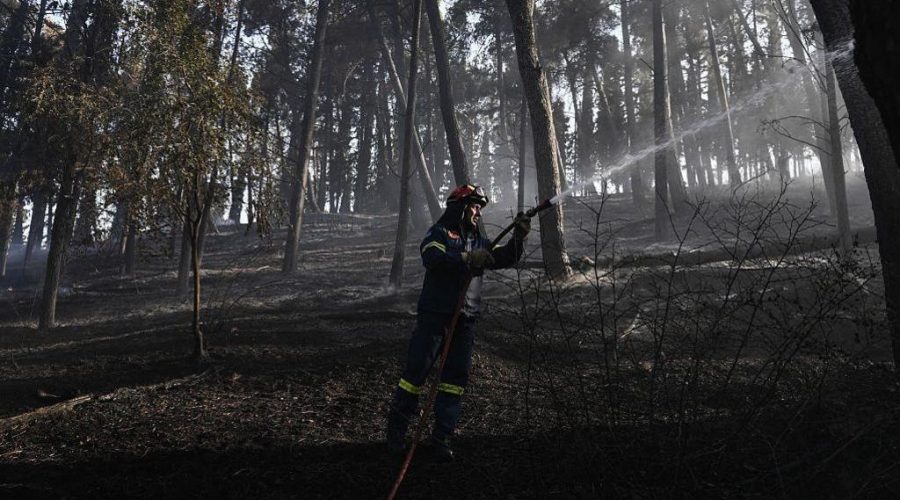
Deadly Wildfire Threatens Northern Greece, Sparks Emergency Response
Firefighters struggle to contain deadly Greek – On Tuesday, a severe wildfire ignited in northern Greece, prompting an urgent mobilization of over 100 firefighters to the affected area near Thessaloniki. The blaze, which has already claimed two lives, continues to spread rapidly, forcing nearby residents to evacuate their homes. As the situation escalates, authorities have warned of the fire’s potential to reach the village of Melissochori, just a few kilometers away from the initial outbreak. The emergency response has included not only ground crews but also a fleet of fire engines and at least seven aircraft, working tirelessly to combat the flames.
A Tragic Loss and a Missing Child
Authorities reported that the bodies of two individuals were discovered in the charred remains of the area near Liti, a village approximately 15 kilometers northwest of Thessaloniki. The first victim, a man, was found in a heavily burned zone, while the second body—yet to be identified—was located in a house situated within a forested area. The man’s wife, who had been rescued nearby, is currently recovering from burn injuries in a hospital. Her condition is described as stable, though she remains under medical observation.
Further details emerged as the fire raged through the region. Emergency services confirmed that a 12-year-old child is missing, believed to be the son of the deceased man and the injured woman. This adds to the growing sense of alarm, as the fire not only threatens lives but also disrupts the daily lives of those in the surrounding communities. The search for the missing child continues, with teams deploying drones and ground units to scour the affected zones.
Challenges in Containment
The firefighting operation faces significant obstacles, including the fire’s unpredictable behavior and the challenging terrain. Firefighters are battling a wall of flames stretching over five kilometers, which has been exacerbated by the region’s high wildfire risk status. Officials have noted that the blaze broke out at around 2:30 PM local time (11:30 AM GMT), quickly spreading to nearby forests due to the intense heat and gusty winds.
“The fire is moving faster than expected,” said a spokesperson for the local fire department, highlighting the difficulty in containing the flames. “We’ve seen repeated flare-ups that have forced crews to adjust their strategies constantly.” The intensity of the fire has also made it hard to reach certain areas, leaving some residents stranded in their homes. Despite these challenges, the operation remains ongoing, with additional resources being called in as the situation evolves.
Environmental Conditions and Risk Factors
The region has been under a high wildfire risk warning for several days, with conditions worsening due to prolonged dry spells and strong winds. These factors have made the fire particularly dangerous, as vegetation is highly flammable and the spread rate is difficult to control. The area’s geography, with its dense forests and steep slopes, further complicates efforts to establish firebreaks or evacuate affected populations efficiently.
“We’ve been preparing for this for weeks,” stated a regional weather analyst. “The combination of high temperatures, low humidity, and strong gusts creates a perfect environment for rapid fire growth.” This has led to a heightened state of alert, with residents in Liti urged to flee their homes as the fire approached the village. Some properties have already been damaged, according to Greek broadcaster ERT, which reported that the flames have caused destruction in several areas.
Broader Implications for Greece
The incident marks another in a series of wildfires that have plagued Greece in recent weeks, as the country approaches its peak tourist season. This period, typically marked by high temperatures and dry conditions, has become a recurring challenge for emergency services and local communities. The current fire is part of a larger trend, with officials warning that the summer months could see an increase in such disasters.
“Greece has been dealing with frequent wildfires for years,” noted a spokesperson for the National Fire Service. “This year, the situation is particularly critical due to the severity of the drought and the intensity of the heatwaves.” The country’s fire management systems are under strain, with crews working around the clock to prevent further damage. The incident has also raised concerns about the safety of residents and the potential impact on infrastructure and tourism, which are vital to the region’s economy.
As the fire continues to burn, authorities are emphasizing the need for public cooperation. Evacuation routes have been established, and residents are being advised to keep emergency supplies ready. Local schools and businesses have also been affected, with some forced to close temporarily to ensure the safety of students and staff. The broader community is rallying together, with volunteers and residents joining the firefighting efforts in a show of solidarity.
Investigation into the Cause
While the cause of the blaze remains under investigation, officials have not ruled out human error as a potential factor. Early reports suggest that the fire may have started accidentally, possibly due to a discarded cigarette or a spark from a vehicle. However, this is still being confirmed, and forensic teams are working to analyze the scene for clues.
“We’re examining all possibilities,” said a fire department official. “The initial spark could have come from any number of sources, and we’re not yet sure.” The investigation is also considering the role of natural causes, such as lightning strikes, which are common during the summer months. Until the cause is identified, the focus remains on containing the fire and protecting lives.
As the sun sets over northern Greece, the situation remains tense. Firefighters are on high alert, with hopes that the ongoing efforts will prevent the fire from spreading further. Meanwhile, the community continues to grapple with the aftermath, as families mourn the loss of their loved ones and prepare for the uncertainty ahead. This incident serves as a stark reminder of the destructive power of wildfires and the need for proactive measures to mitigate their impact.
Global Context and Climate Trends
Experts have linked the recent increase in wildfires to broader climate trends affecting the Mediterranean region. Rising global temperatures and shifting weather patterns have led to more frequent and intense heatwaves, creating conditions that are ideal for wildfires to take hold. “This isn’t an isolated event,” said a climate scientist. “It’s part of a larger pattern of environmental change that’s increasing the risk of such disasters.”
With the fire season intensifying, officials are calling for increased funding and resources to enhance preparedness. The current incident has highlighted the importance of early warning systems and community education in reducing the risk of wildfires. As Greece continues to face these challenges, the focus remains on protecting both people and the environment, ensuring that the region can weather the storm of rising temperatures and dry conditions.
Residents of the affected areas are expressing concern about the future, with many fearing that the fire could be just the beginning. “We’ve never seen anything like this before,” said a local resident. “It’s terrifying to watch our homes burn and not know if we’ll be safe.” As the fire rages on, the story of resilience and determination in the face of nature’s fury becomes ever more critical, not just for Greece but for other regions facing similar threats.